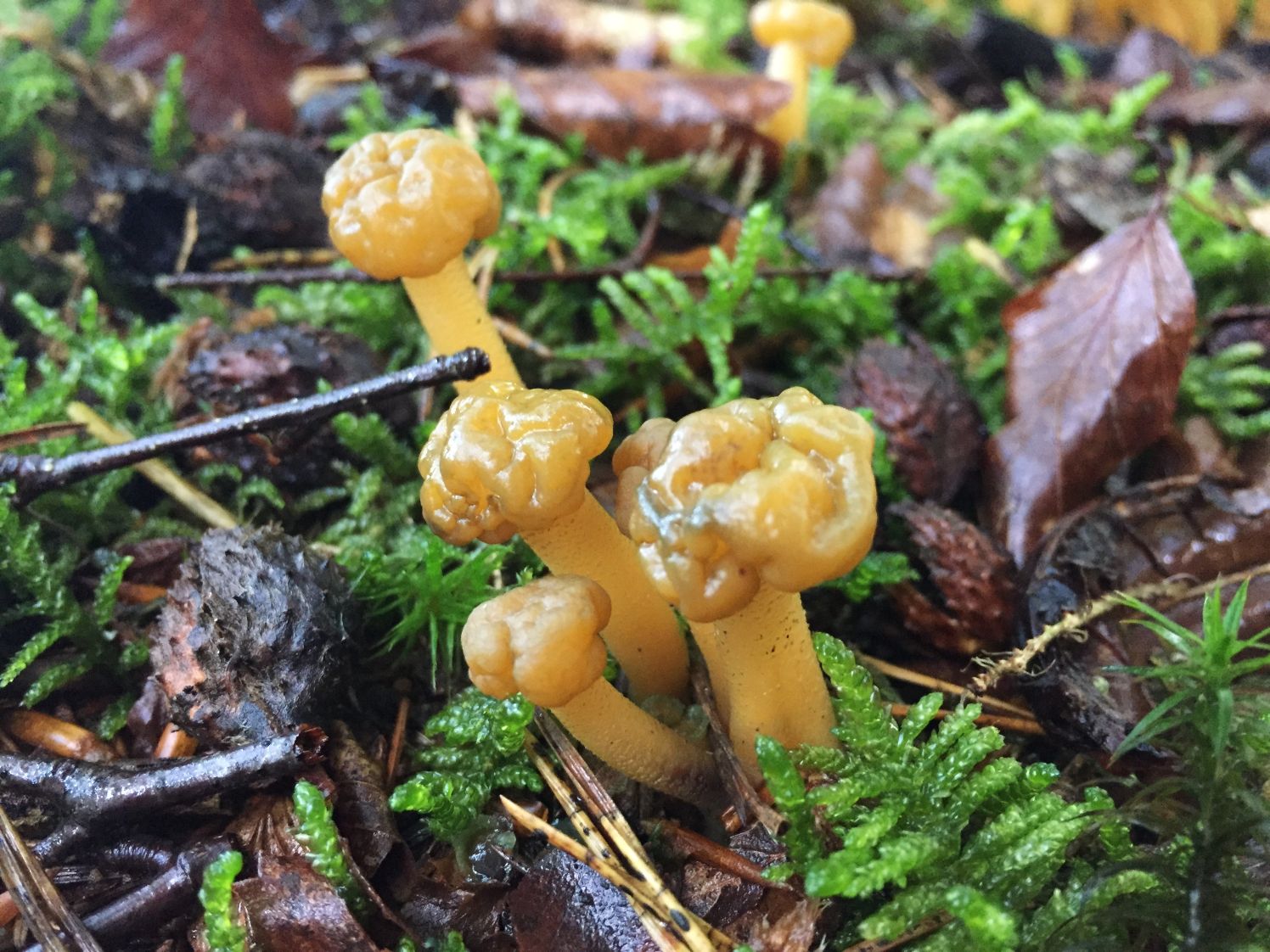
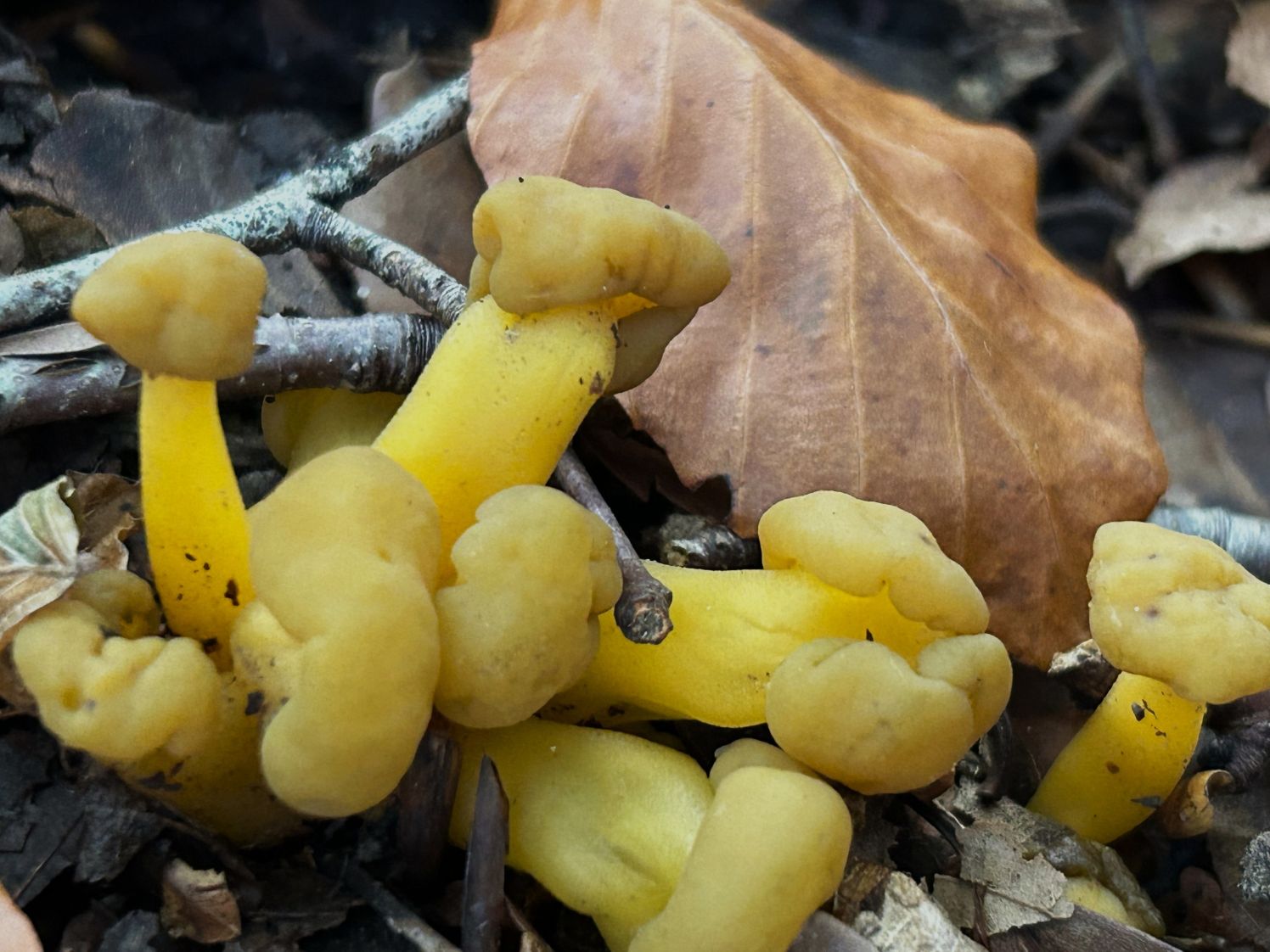
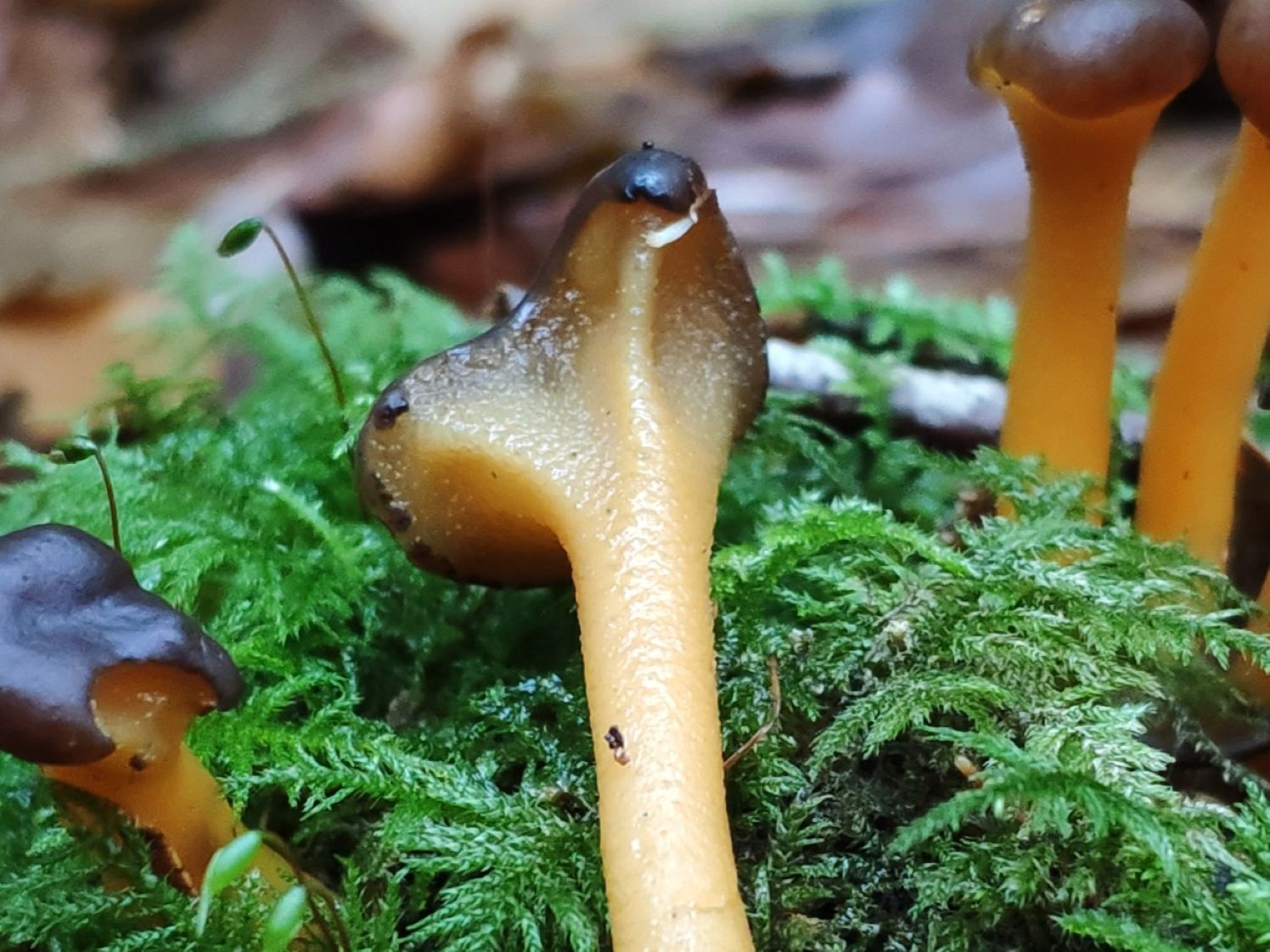
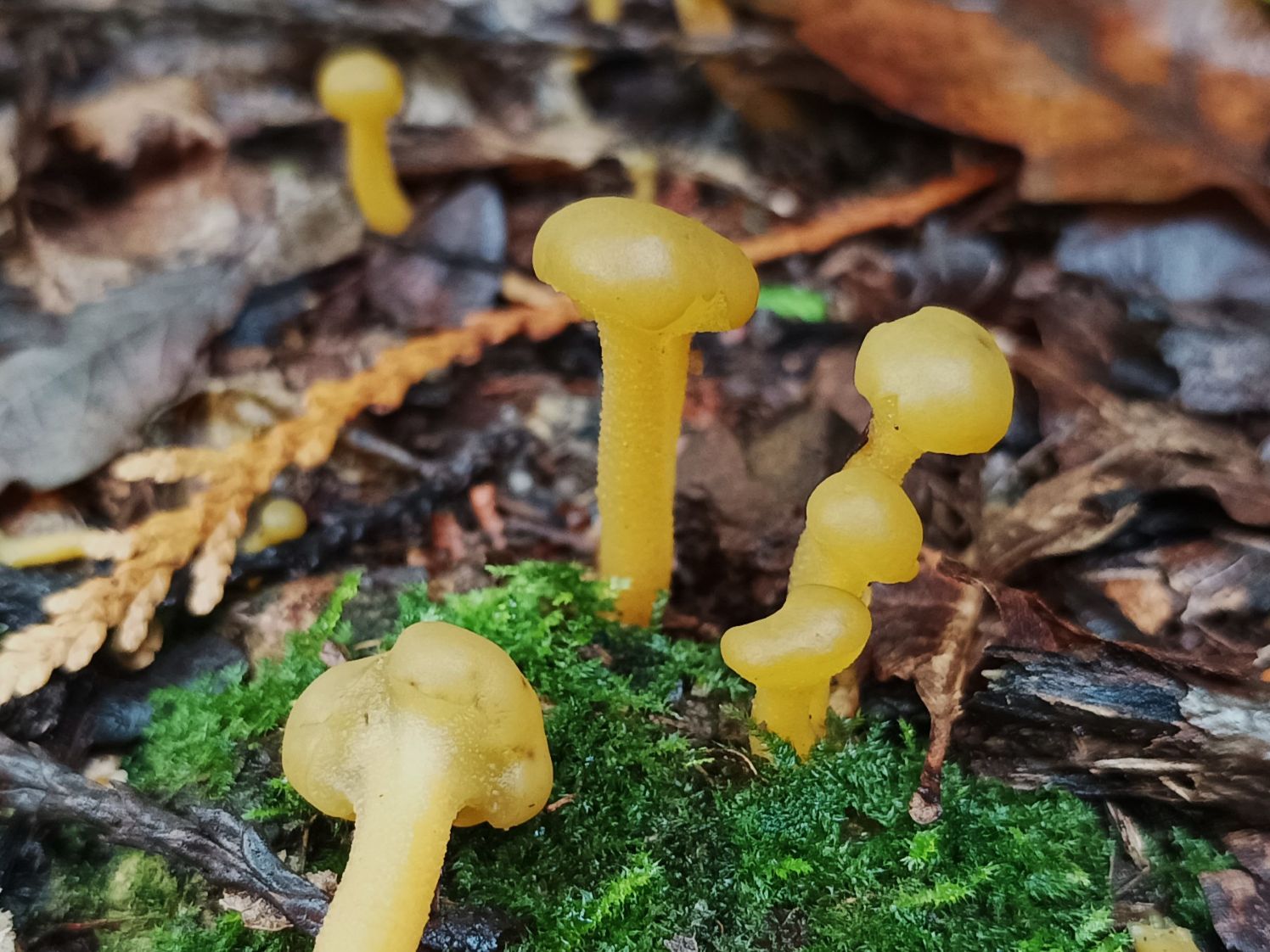
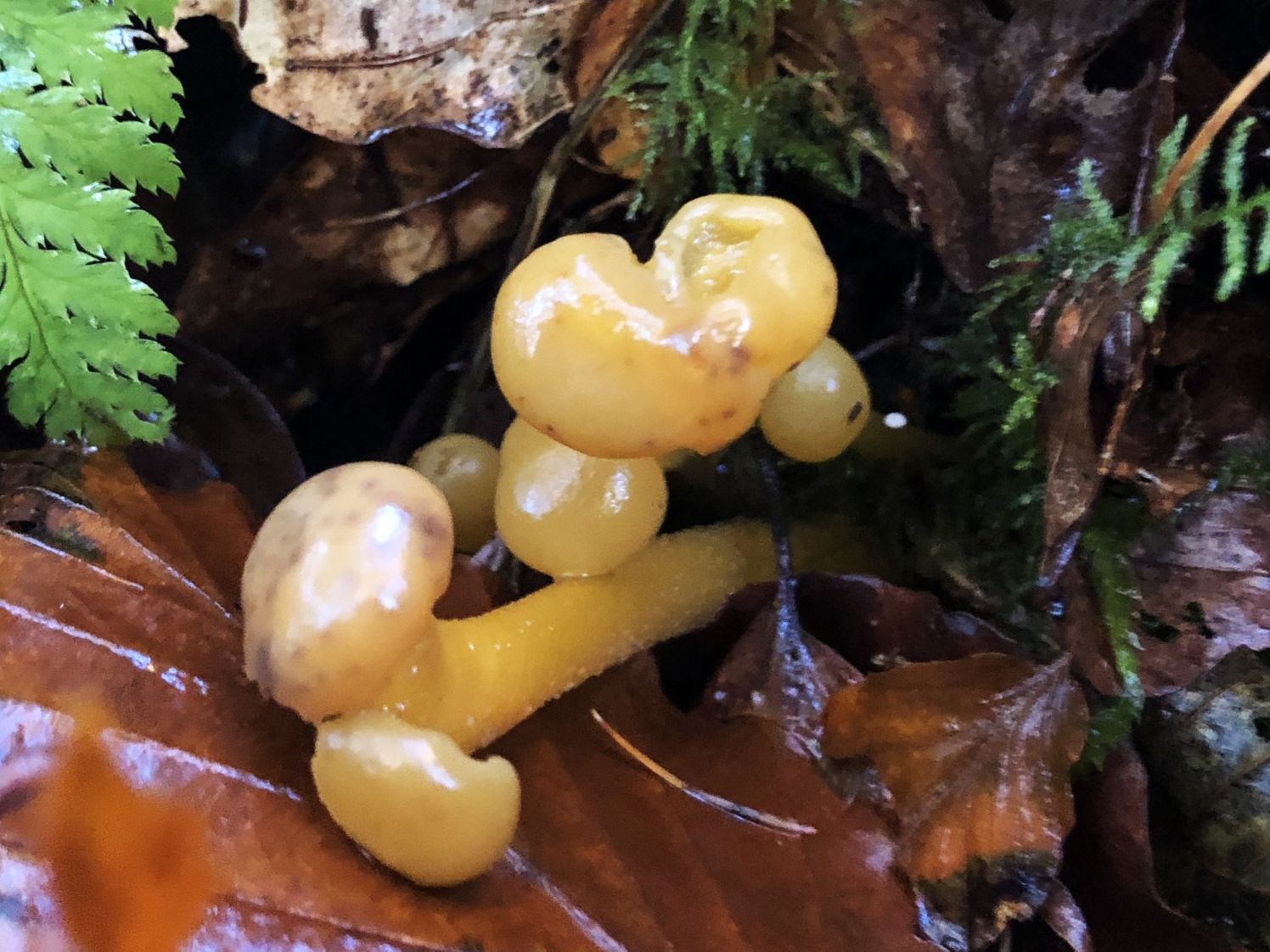
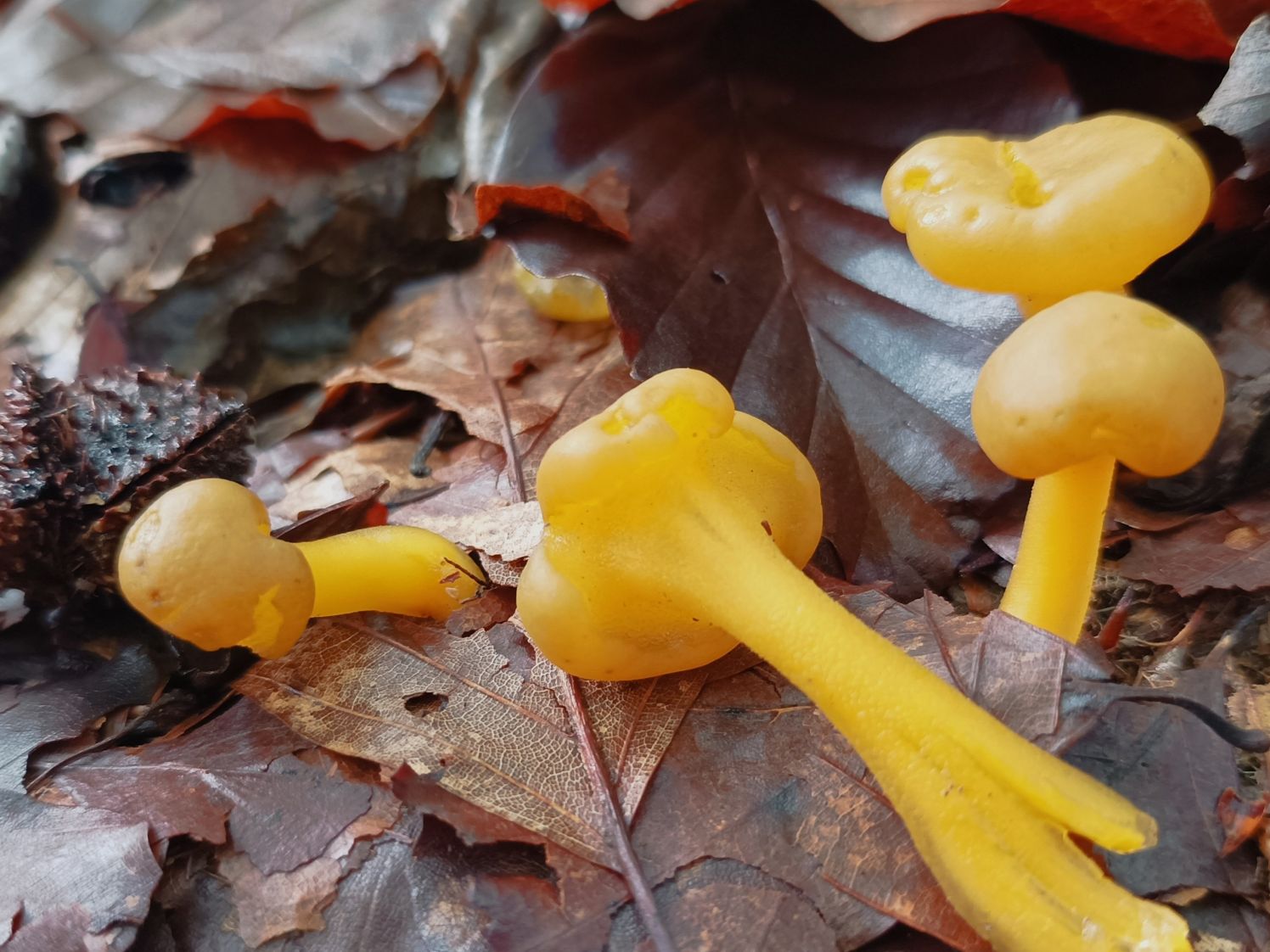
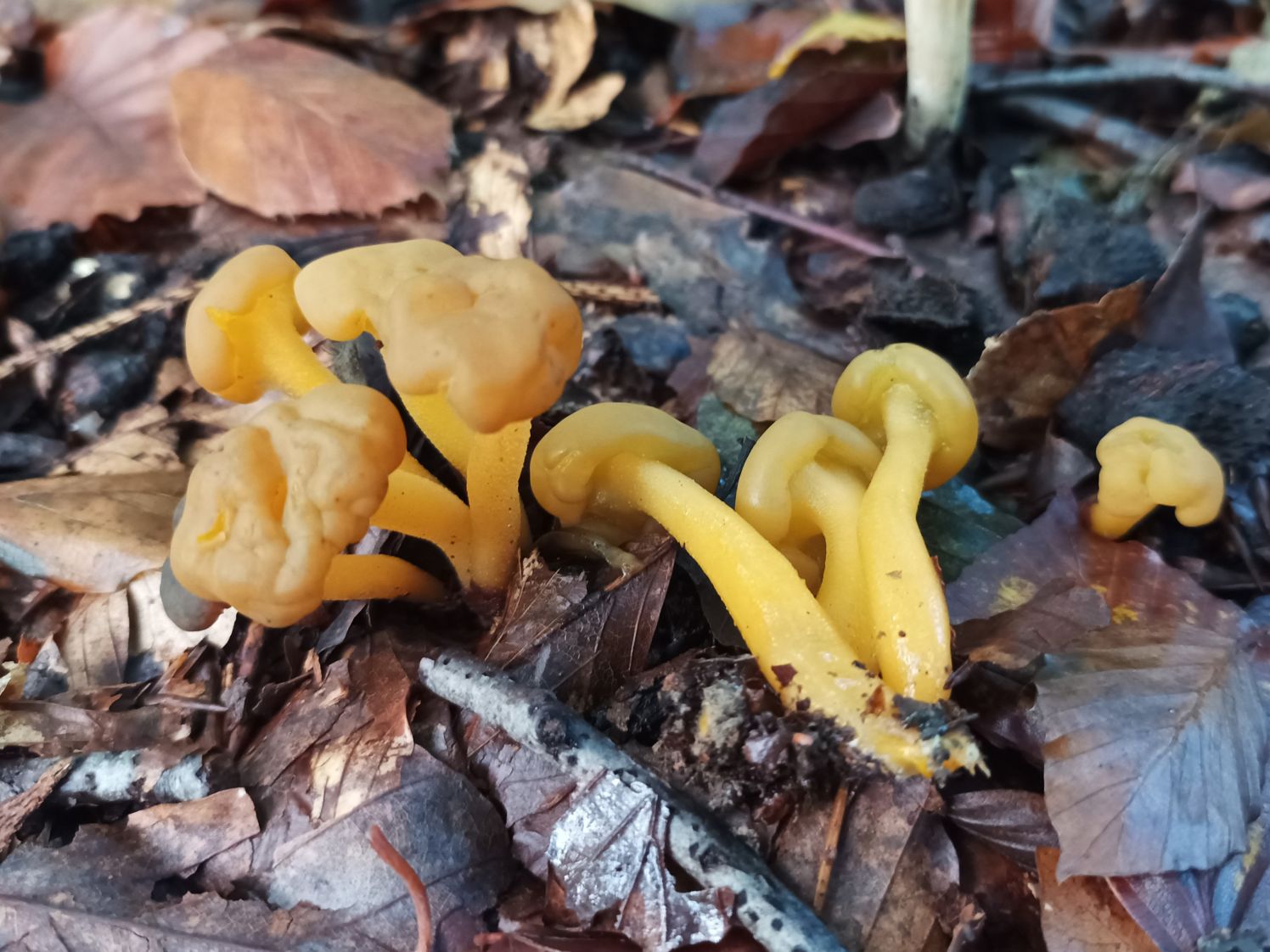
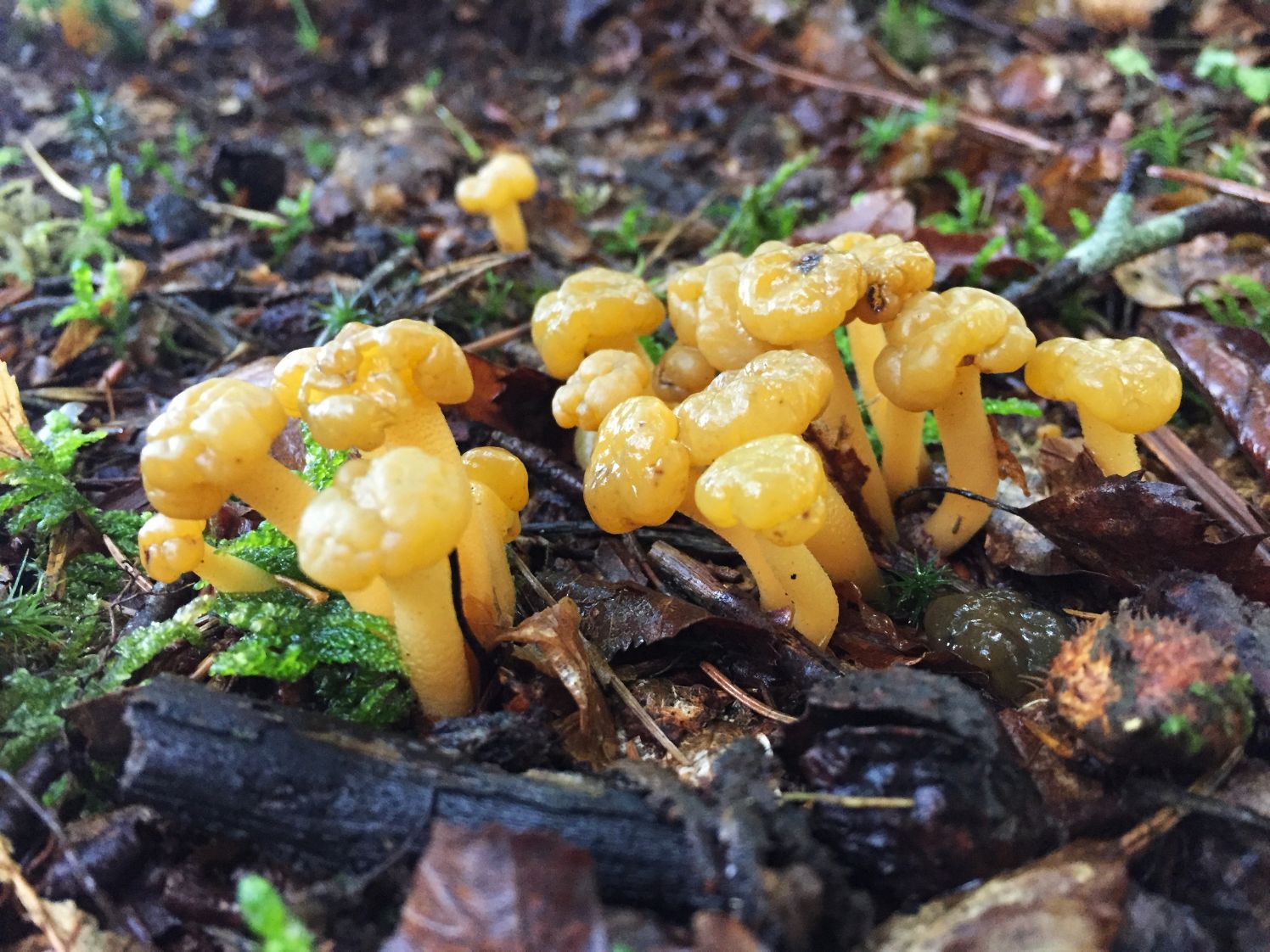
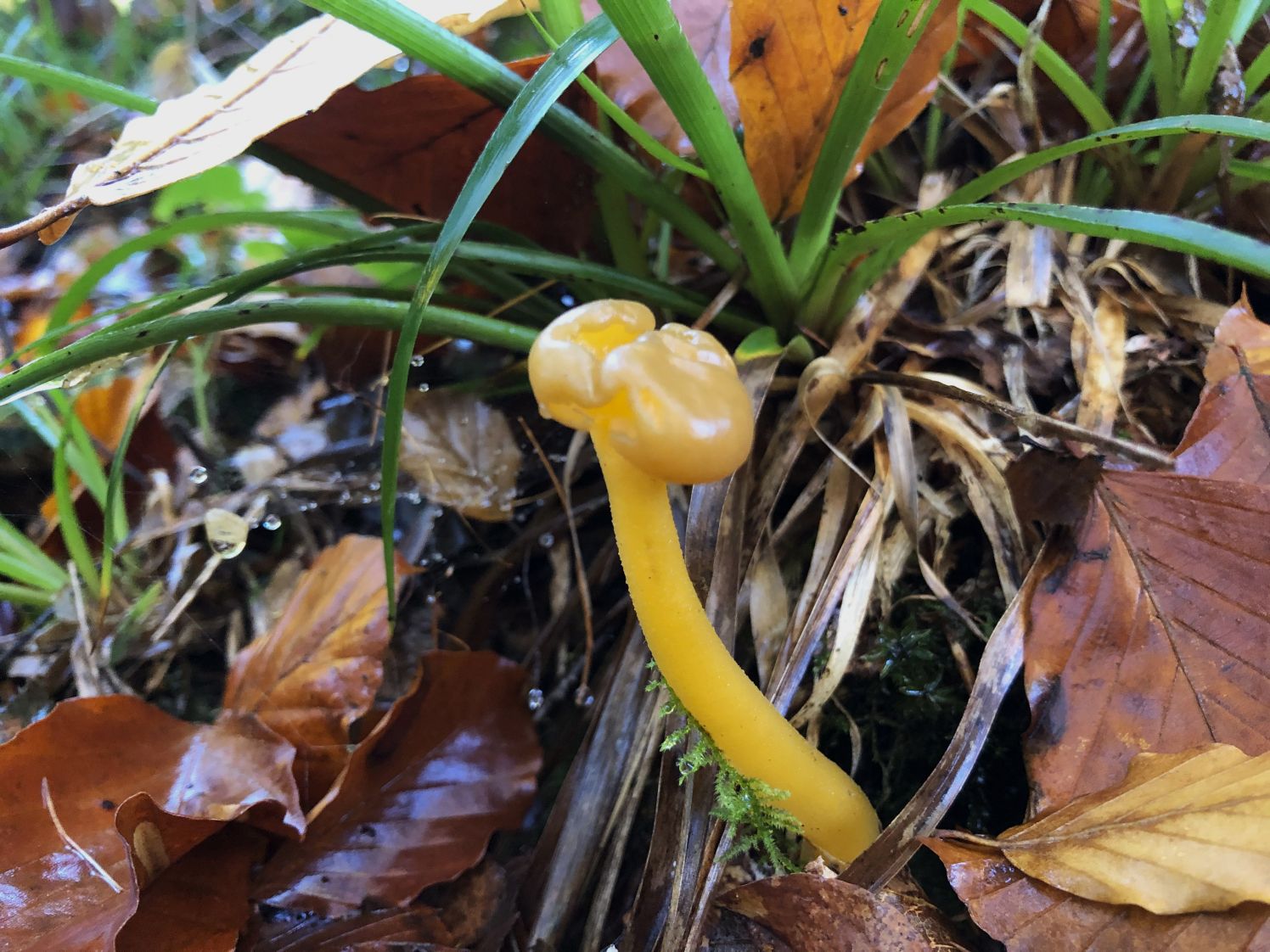
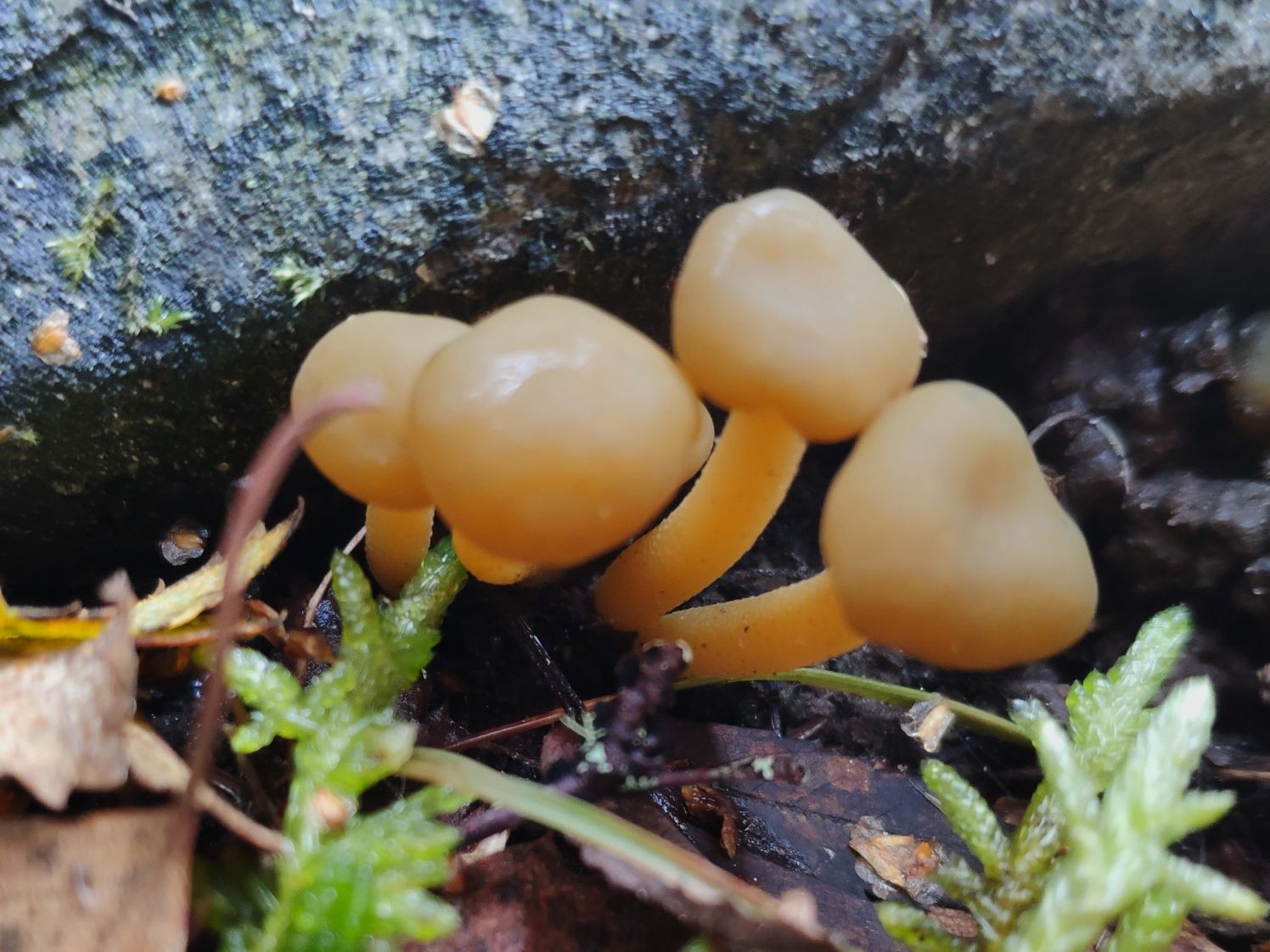
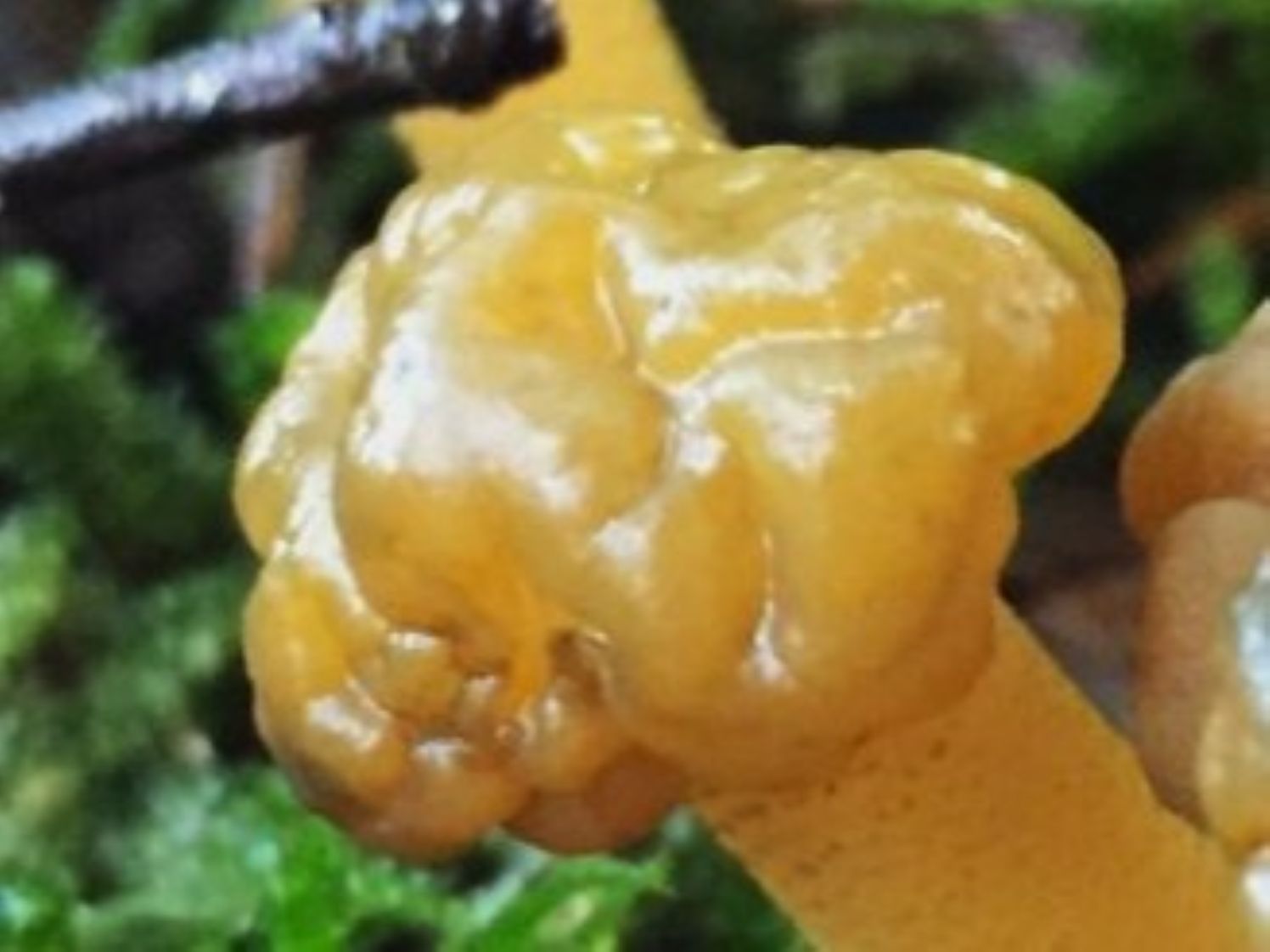
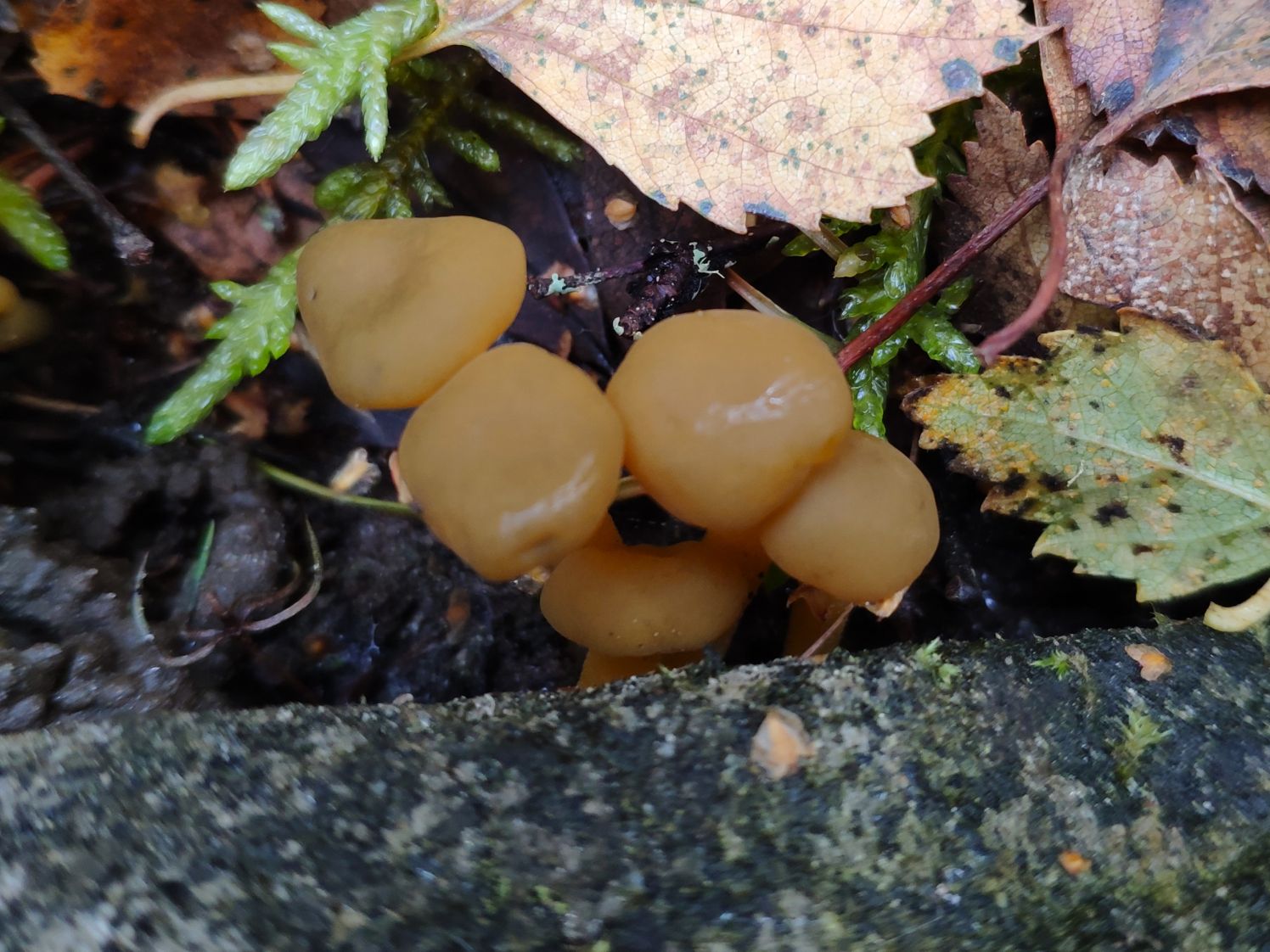
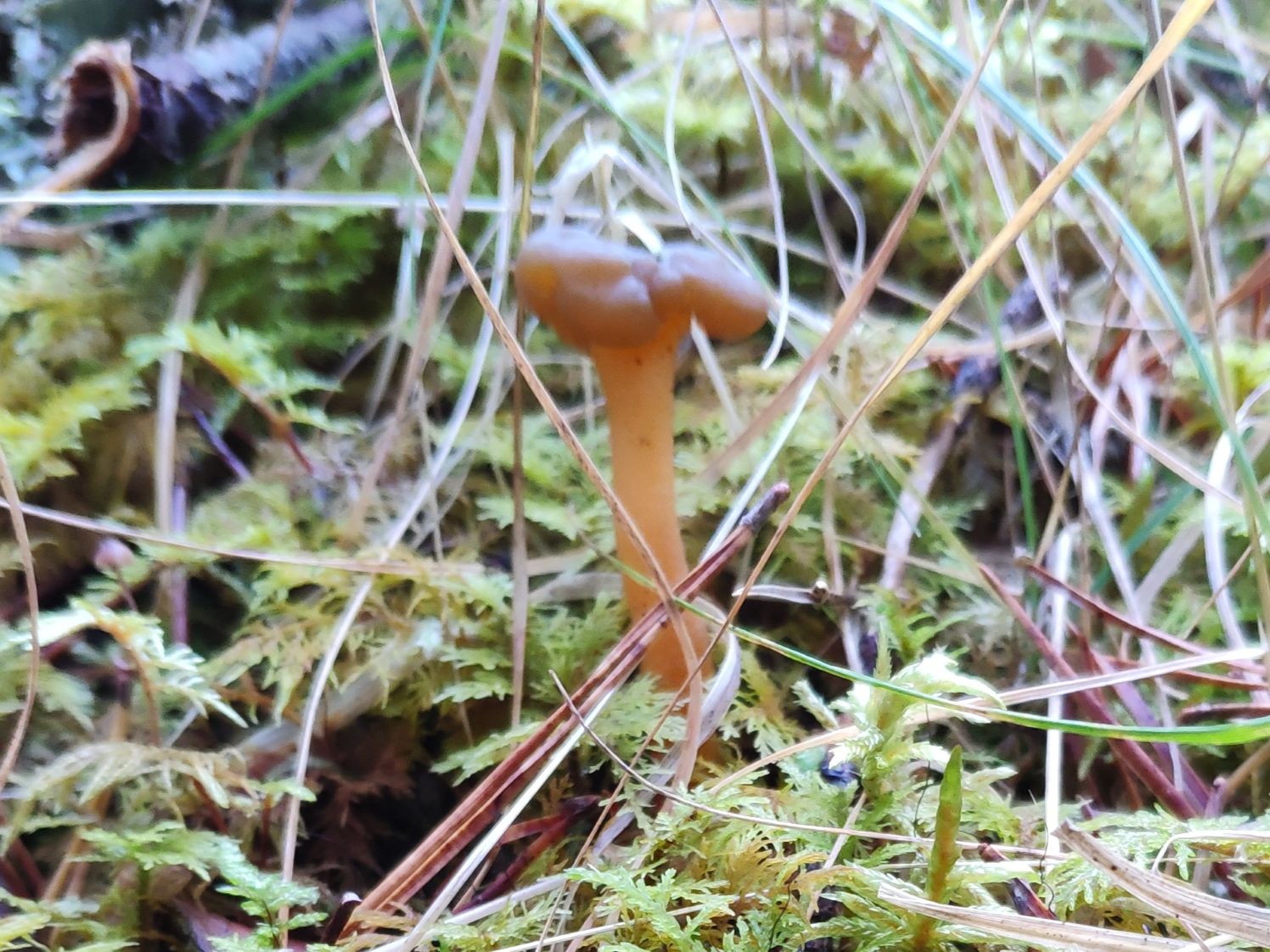
This mushroom is thought to be a saprotroph (digests dead organic matter) that can also have an ectomycorrhizal relationship with trees. Some sources say it is inedible, some edible but almost all reports claim it is not particularly good.
Home / Mushroom Guide /
Jellybaby

Jellybaby


| Mushroom Type | |
| Common Names |
Jellybaby (EN), Pennau Jeli (CY), Patyczka Lepka (PL), Zöld Csuklyásgomba (HU) |
| Scientific Name |
Leotia lubrica |
| Synonyms |
Leotia gelatinosa, Leotia viscosa |
| Season Start |
Aug |
| Season End |
Nov |
| Average Mushroom height (CM) |
3–6 |
| Average Cap width (CM) |
1–1.5 |

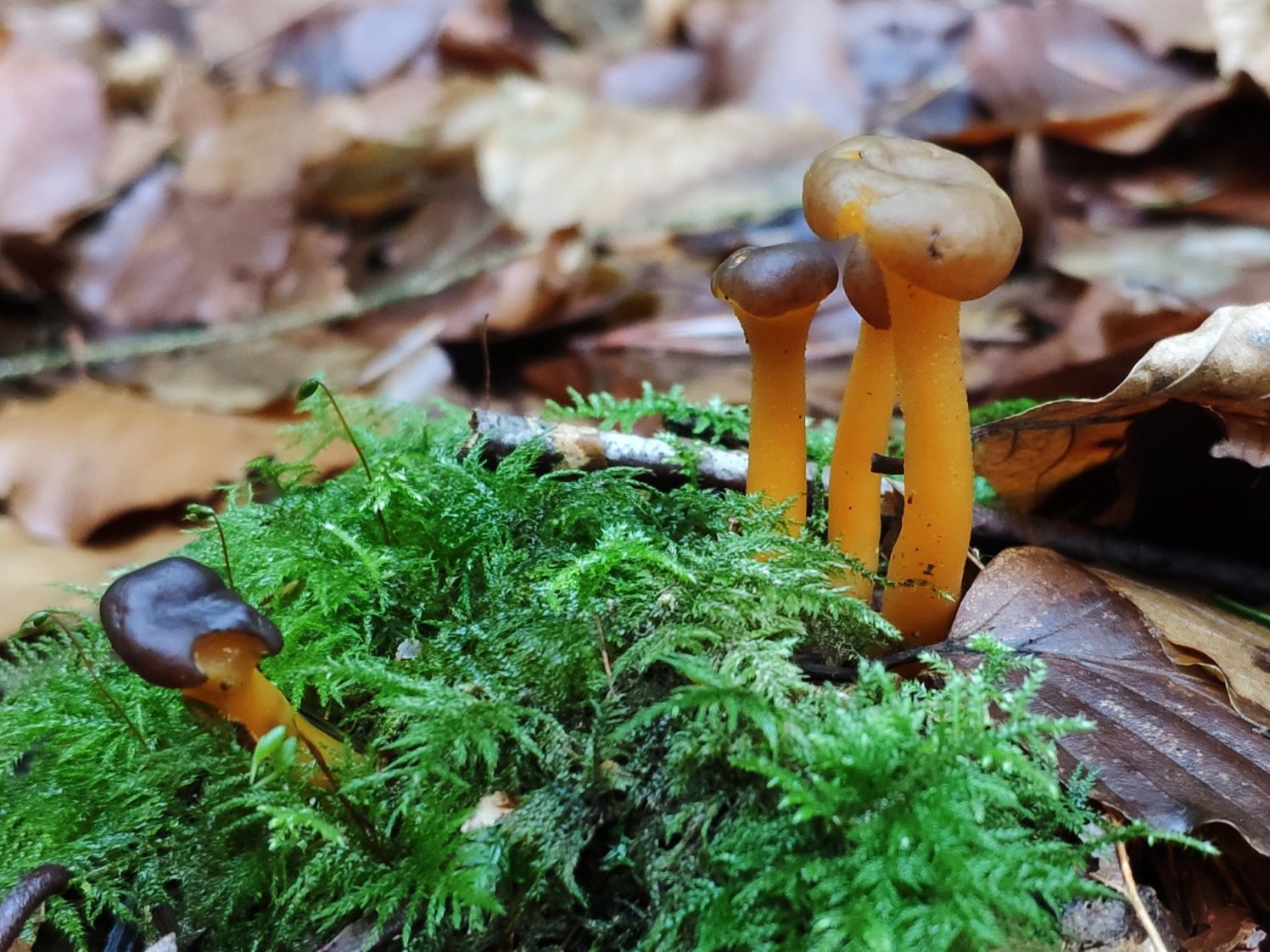
Please note that each and every mushroom you come across may vary in appearance to these photos.
Fruiting Body
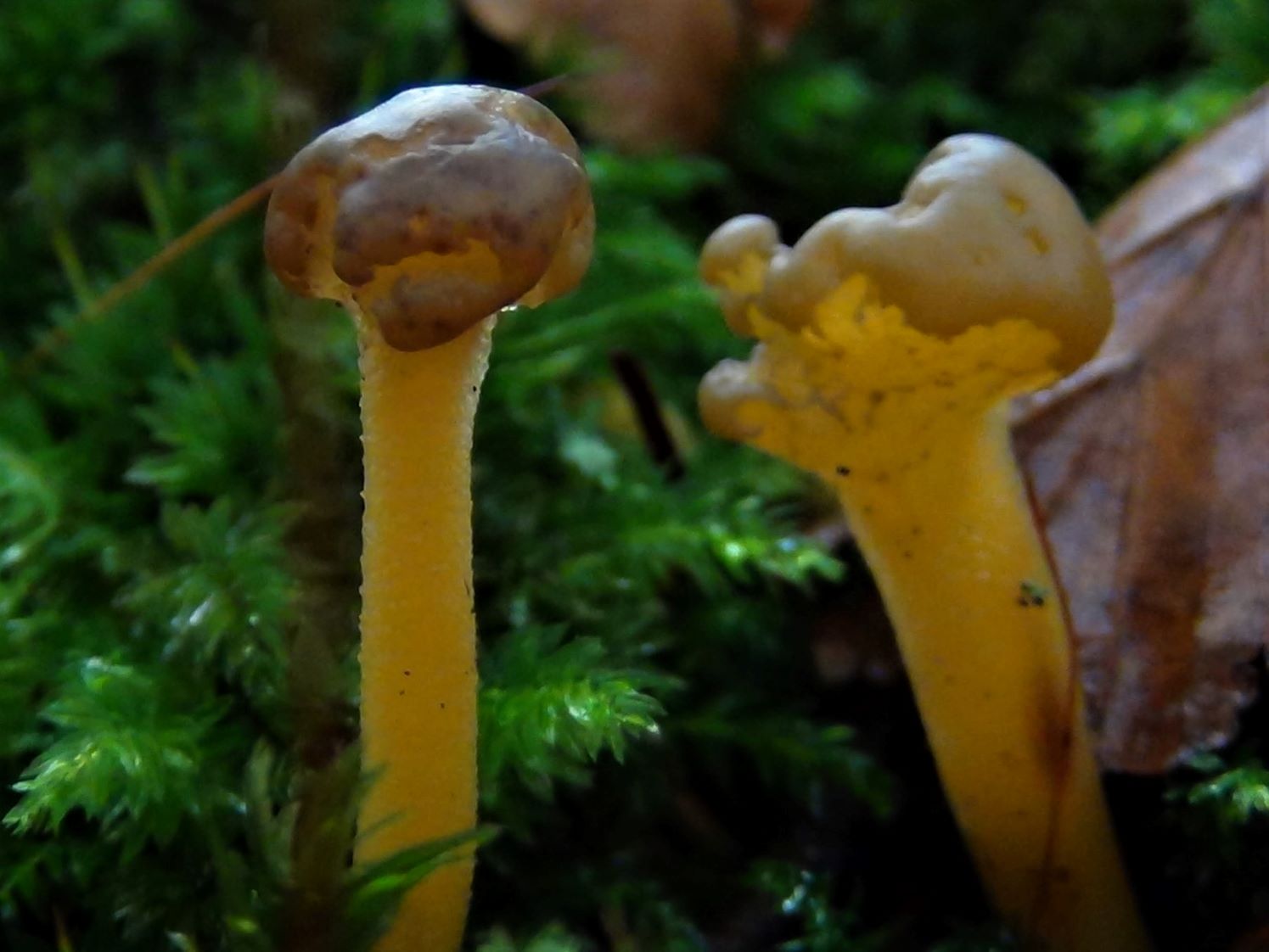
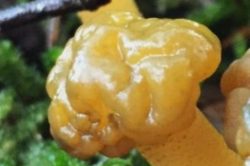
1–1.5 cm. Ochre to yellow/brown, darker on the upper surface and gelatinous. Convex with in-rolled edges which are uneven and lobed. Can open to almost flat but retains the in-rolled edges. The upper surface of the fruit body is the fertile part, this mushroom has no gills.
Stem
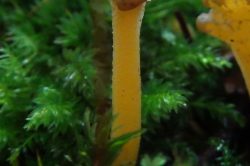
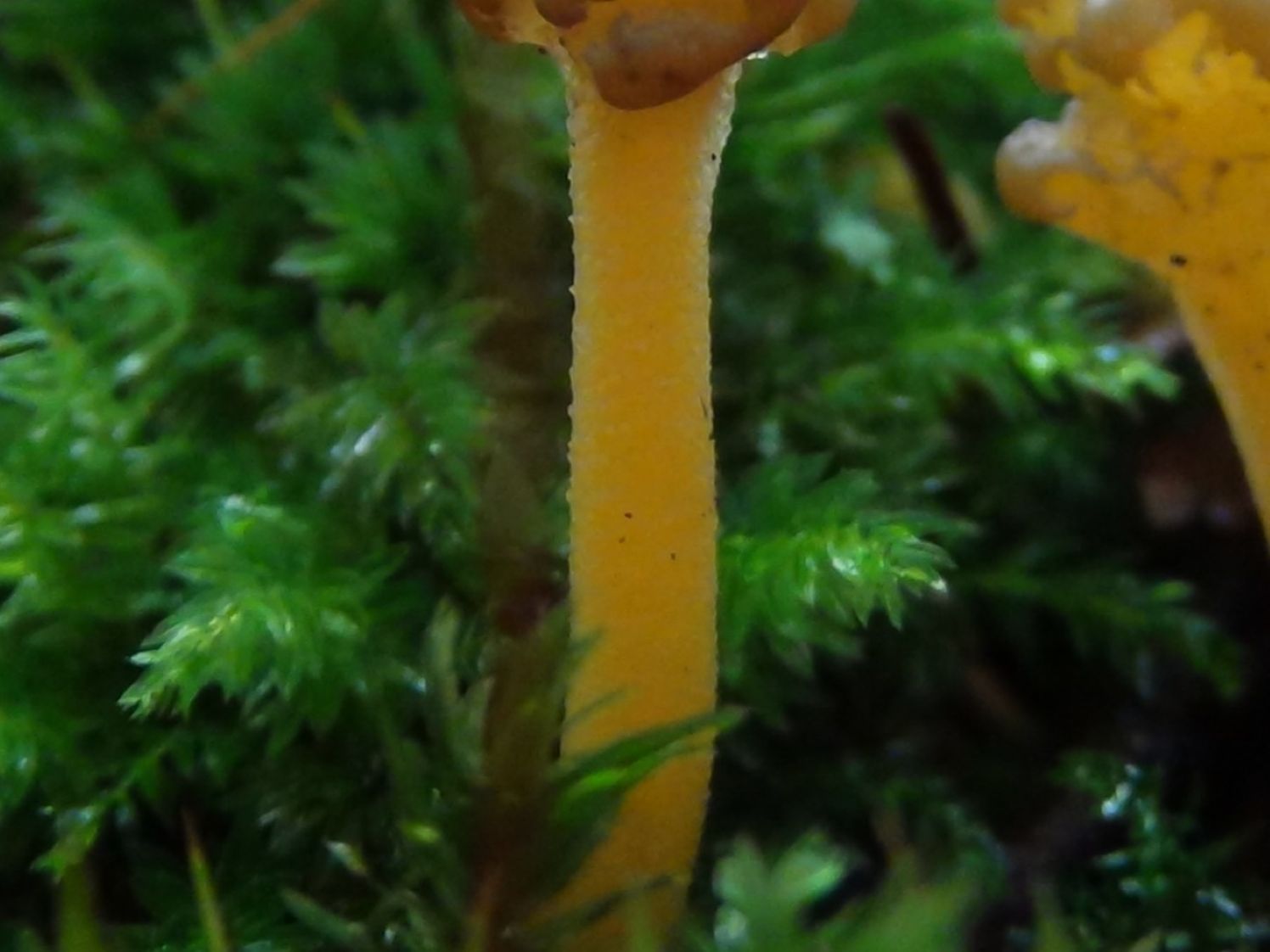
3–6 cm long, 0.3–0.8 cm diameter. Yellow to yellow/brown and covered in tiny granules. The stem can be uneven, flattened or even furrowed in places and sometimes hollow. Tapers towards the base.
Flesh
Gelatinous, like jelly.
Habitat
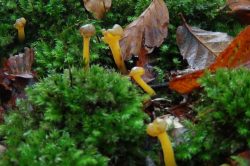
Mainly found growing in soil or moss in damp deciduous woodland, although can be found with conifers.
Possible Confusion
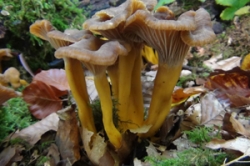
Can look similar to Winter Chanterelles (Craterellus tubaeformis), pictured, but these have true caps with grooves and ridges underneath resembling gills unlike the smooth underside of Jellybabies.
Spore Print
Spore print is white. Spores are fusiform, often curved, tips are non-amyloid (not blueing in Melzer’s reagent).
Frequency
Fairly common and widespread.





Leave a Reply