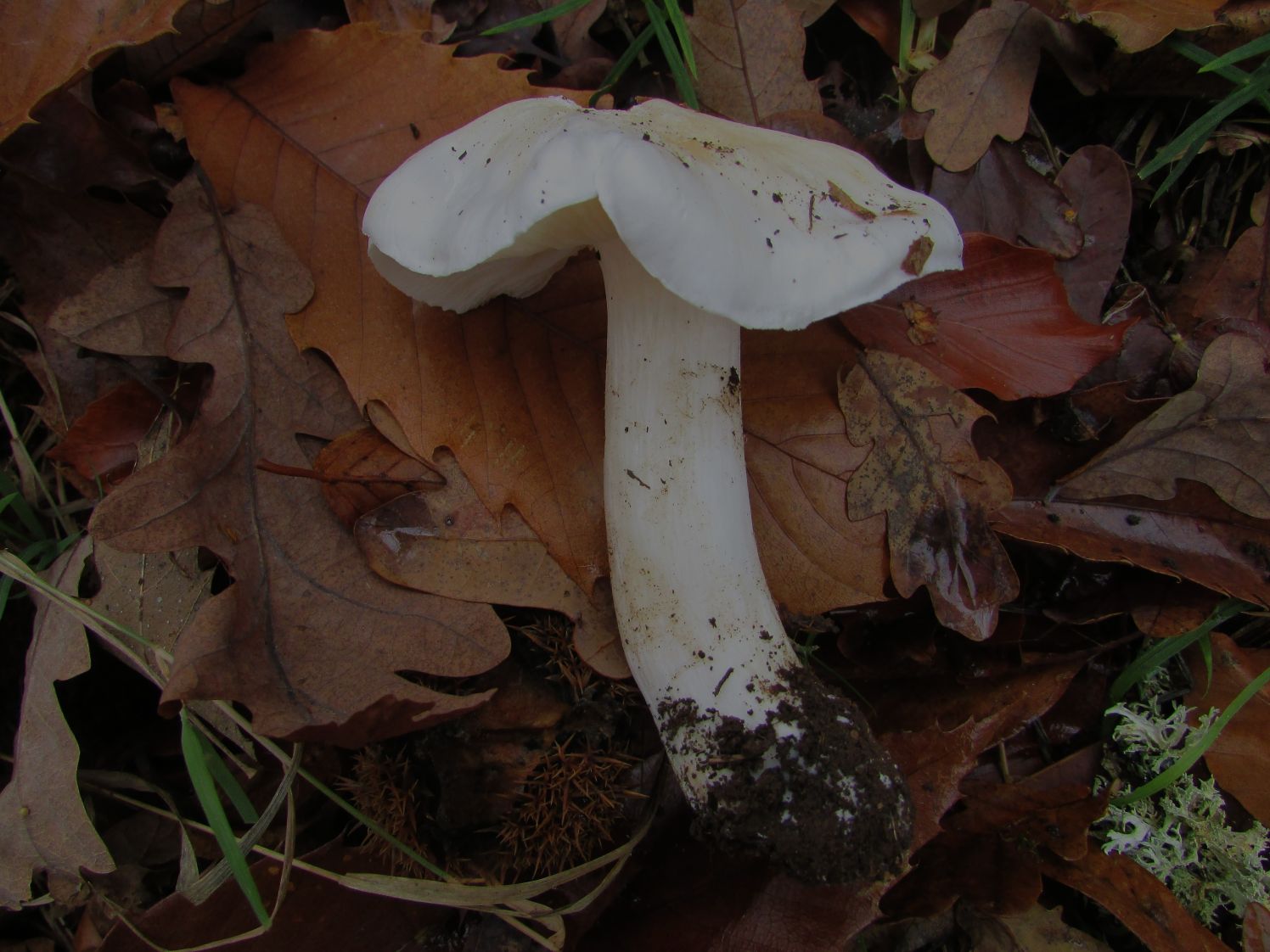
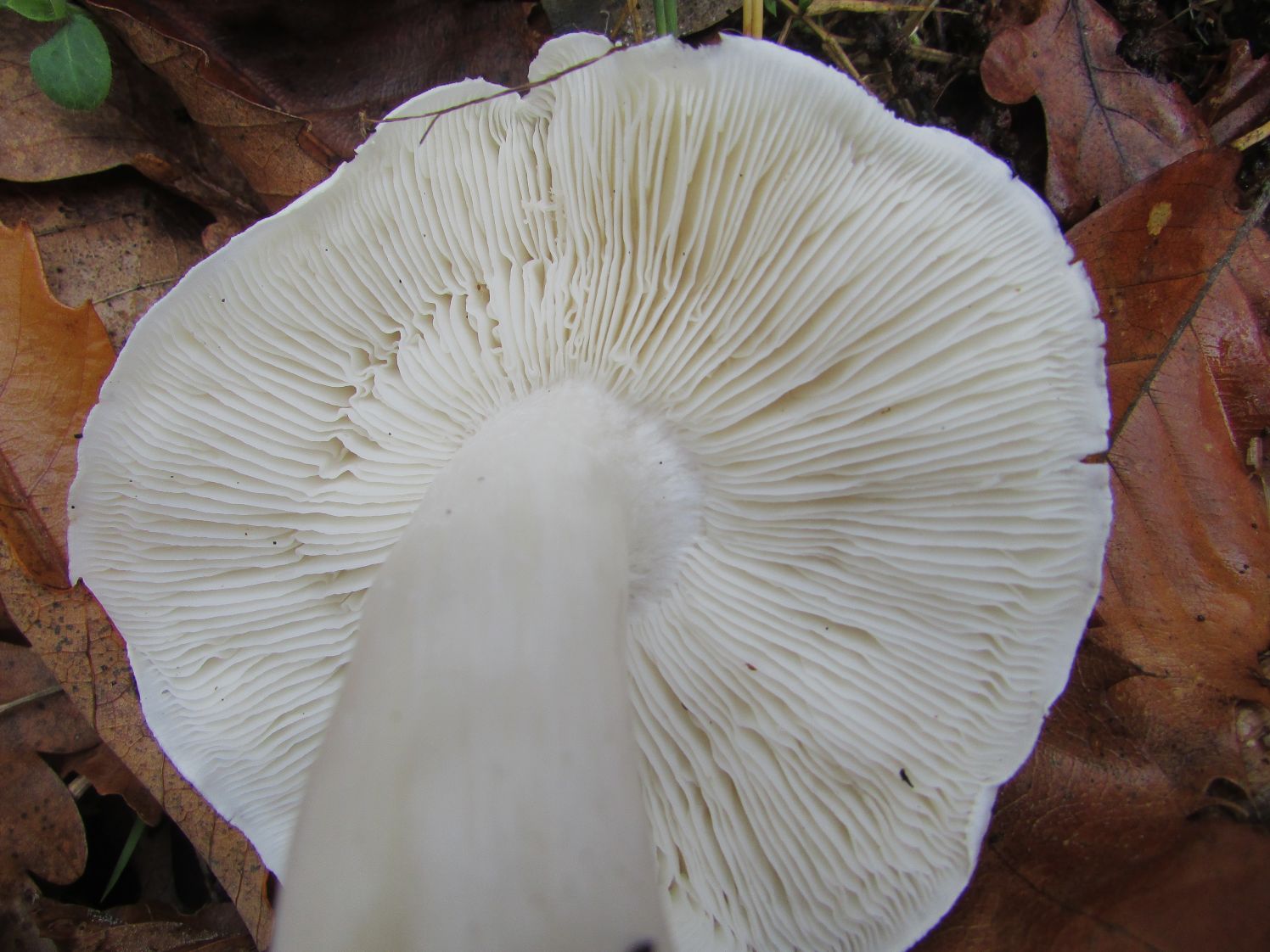
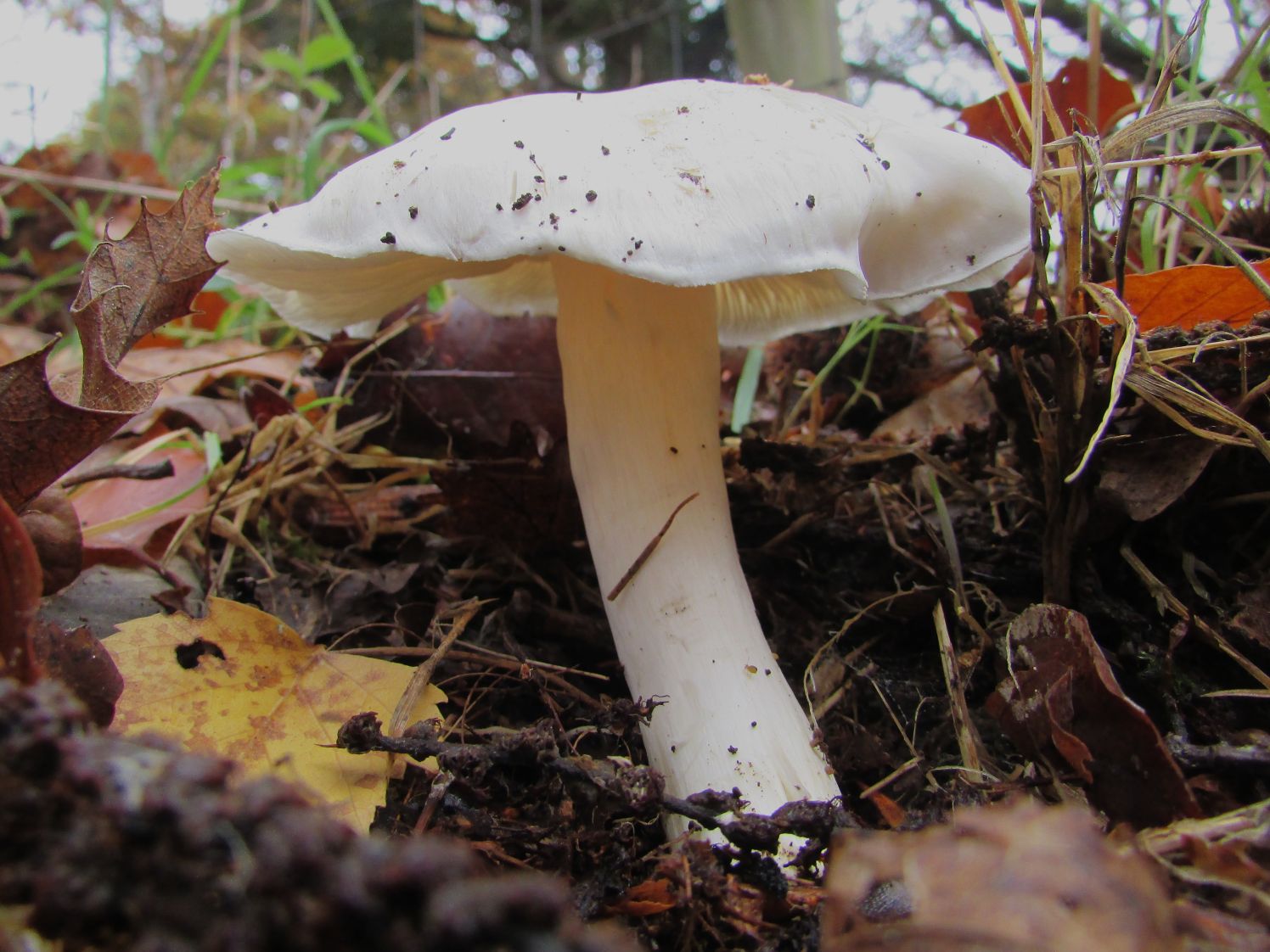
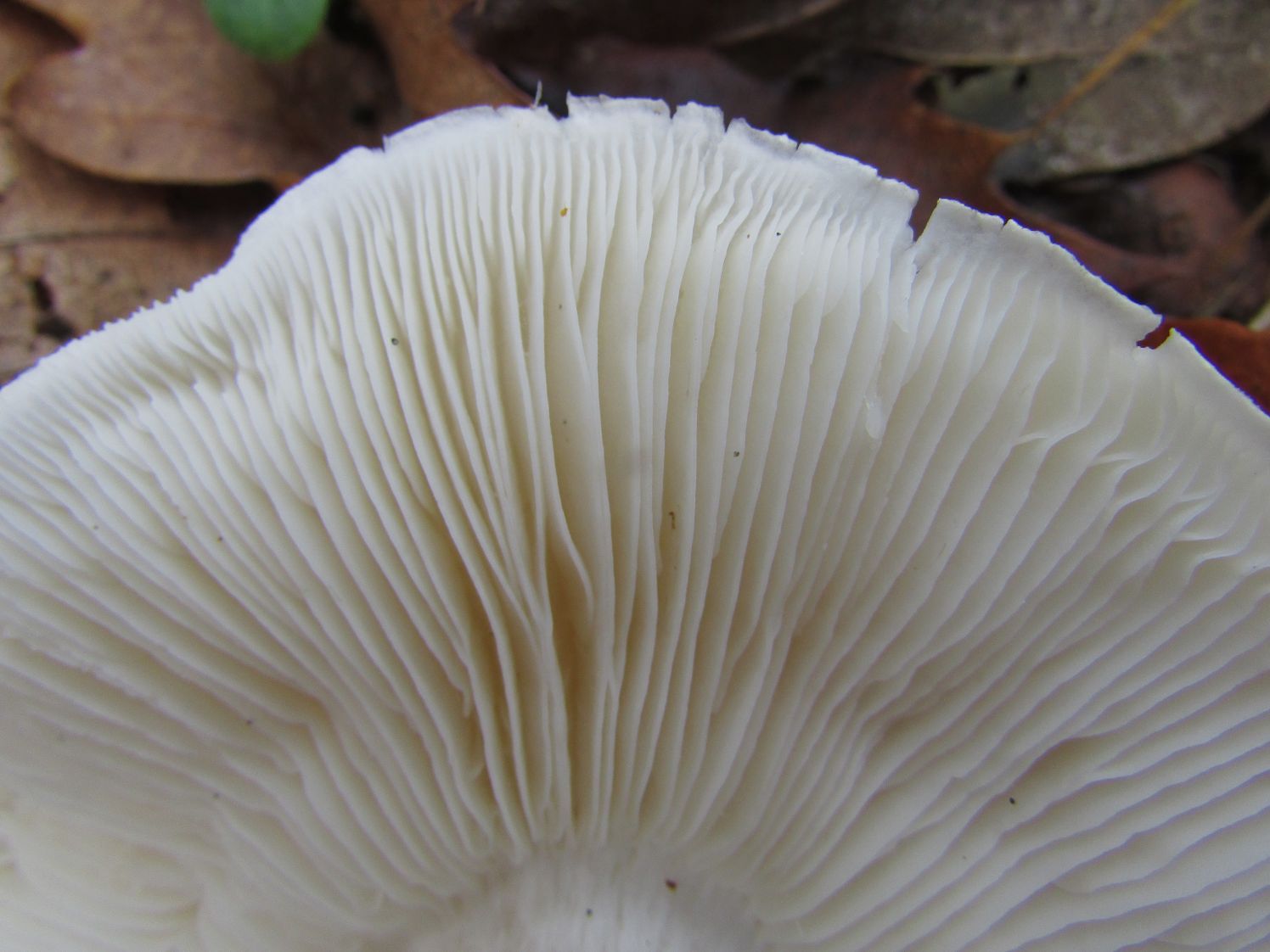
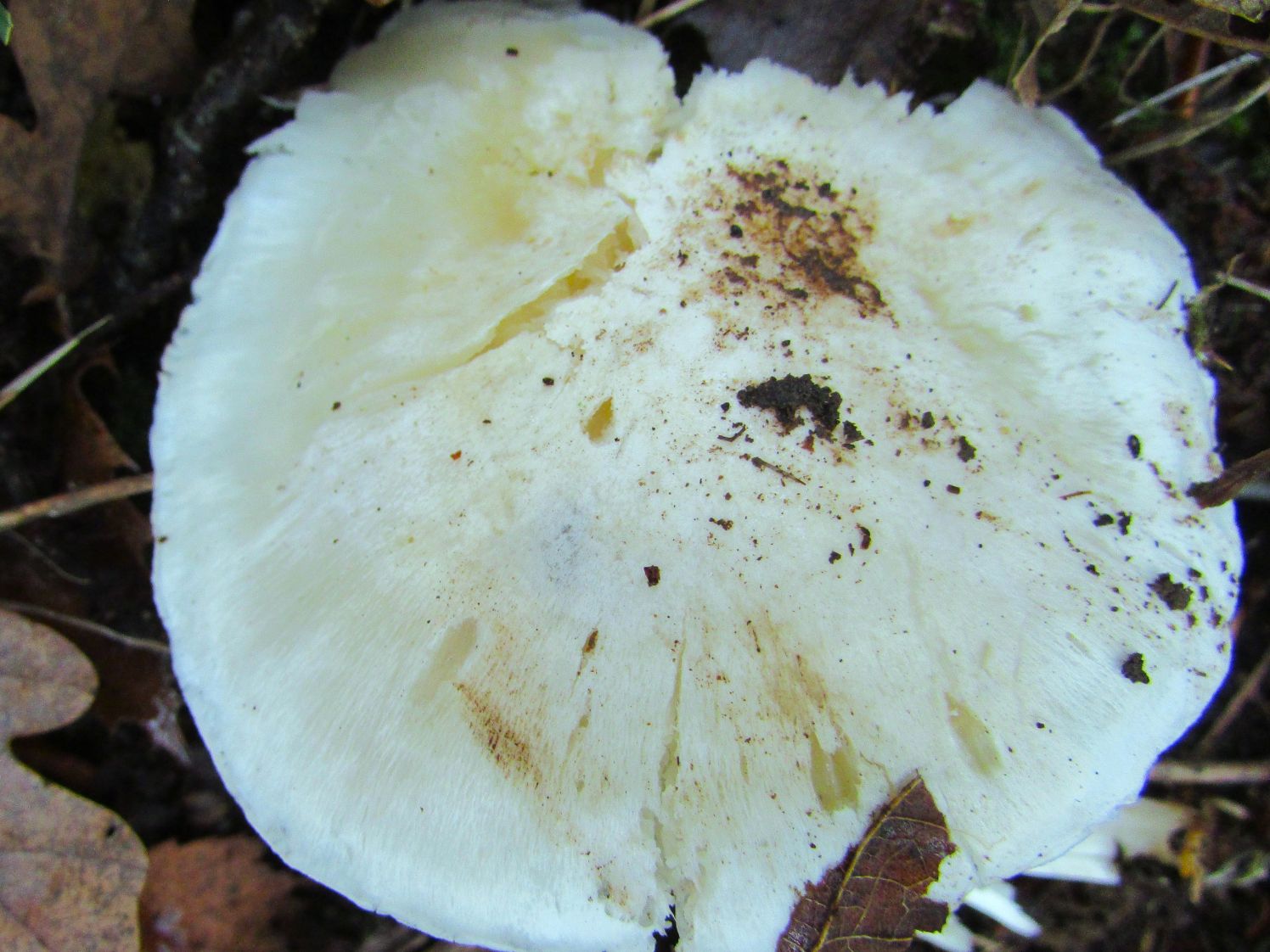
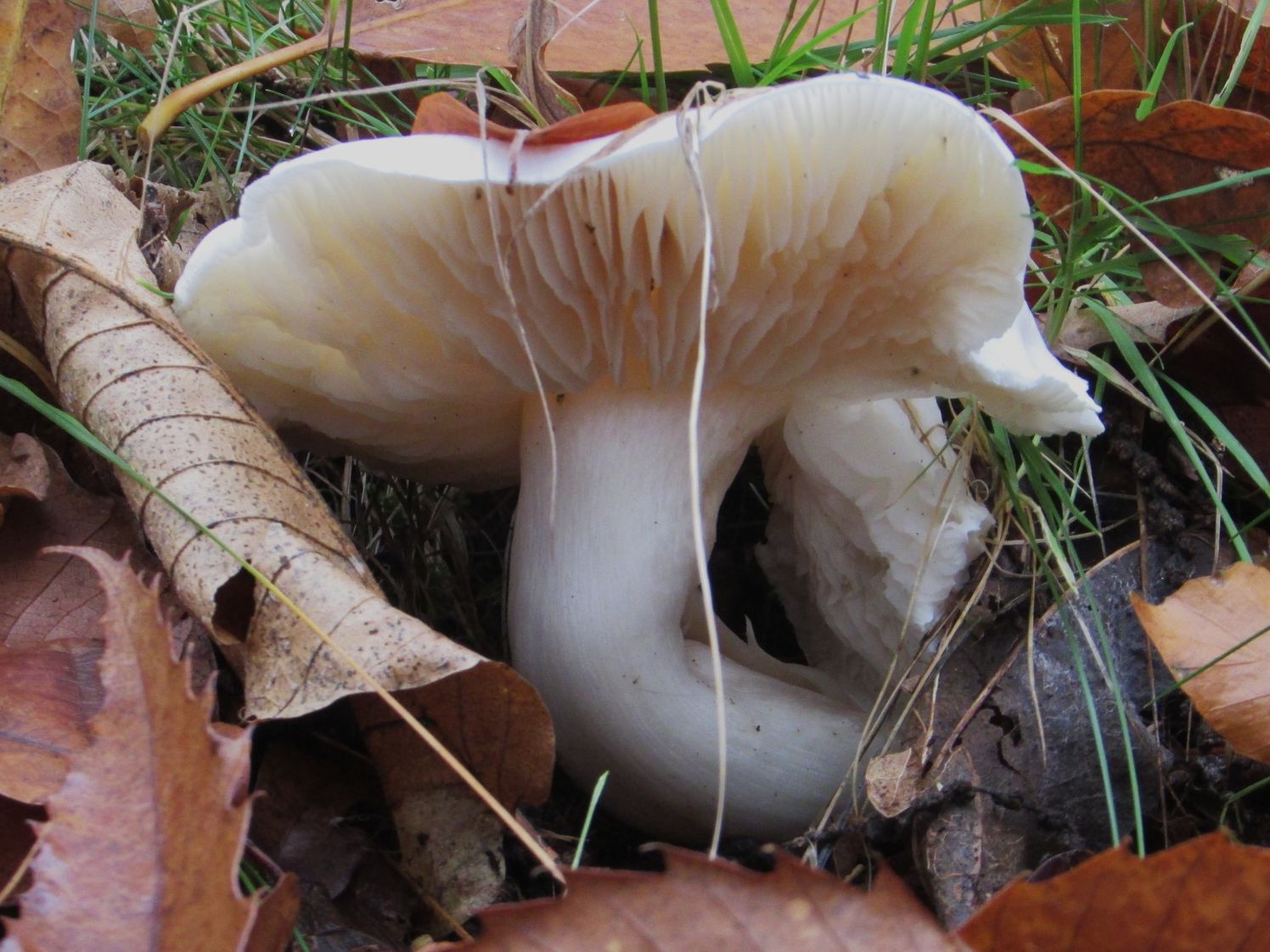
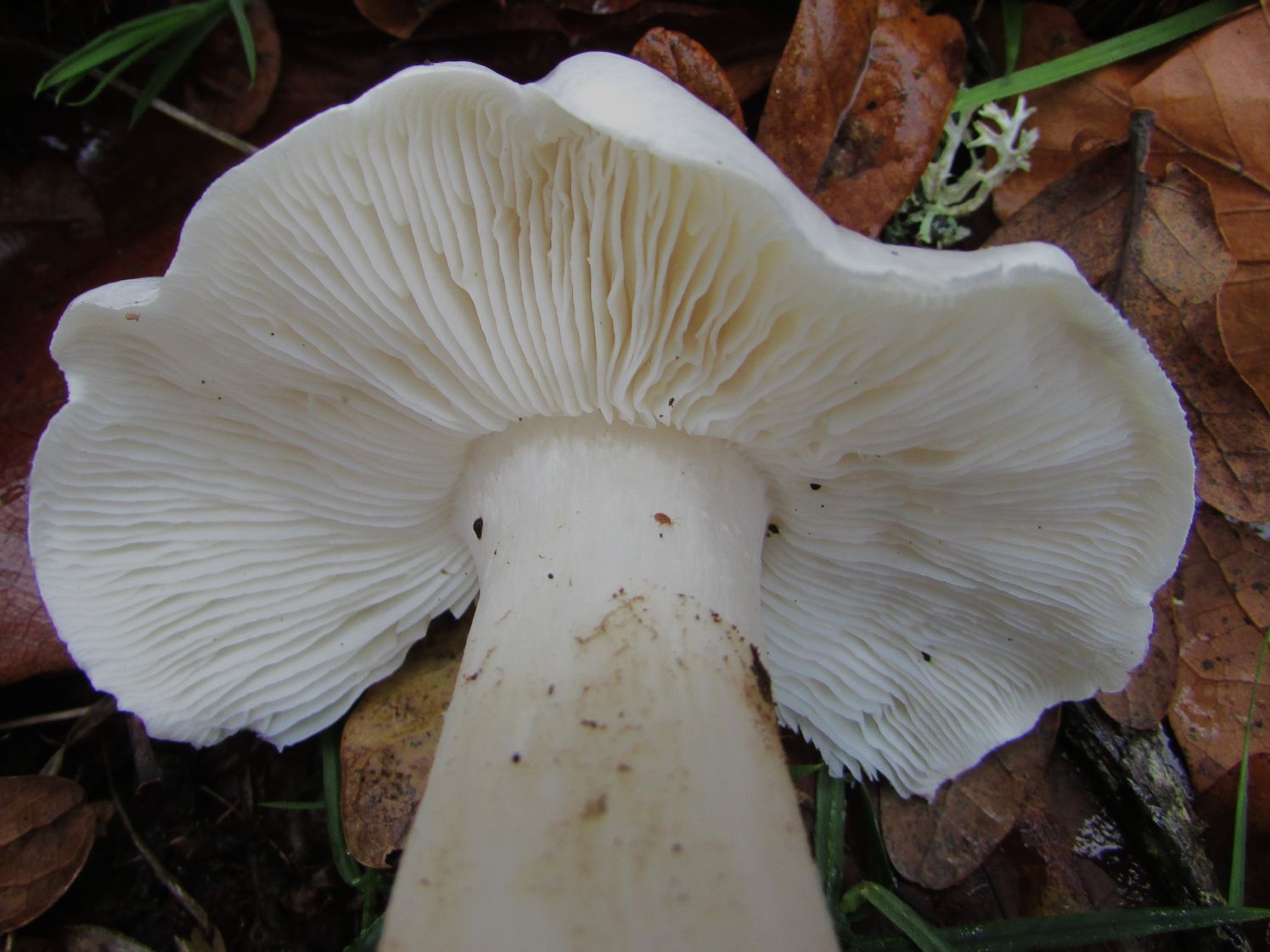
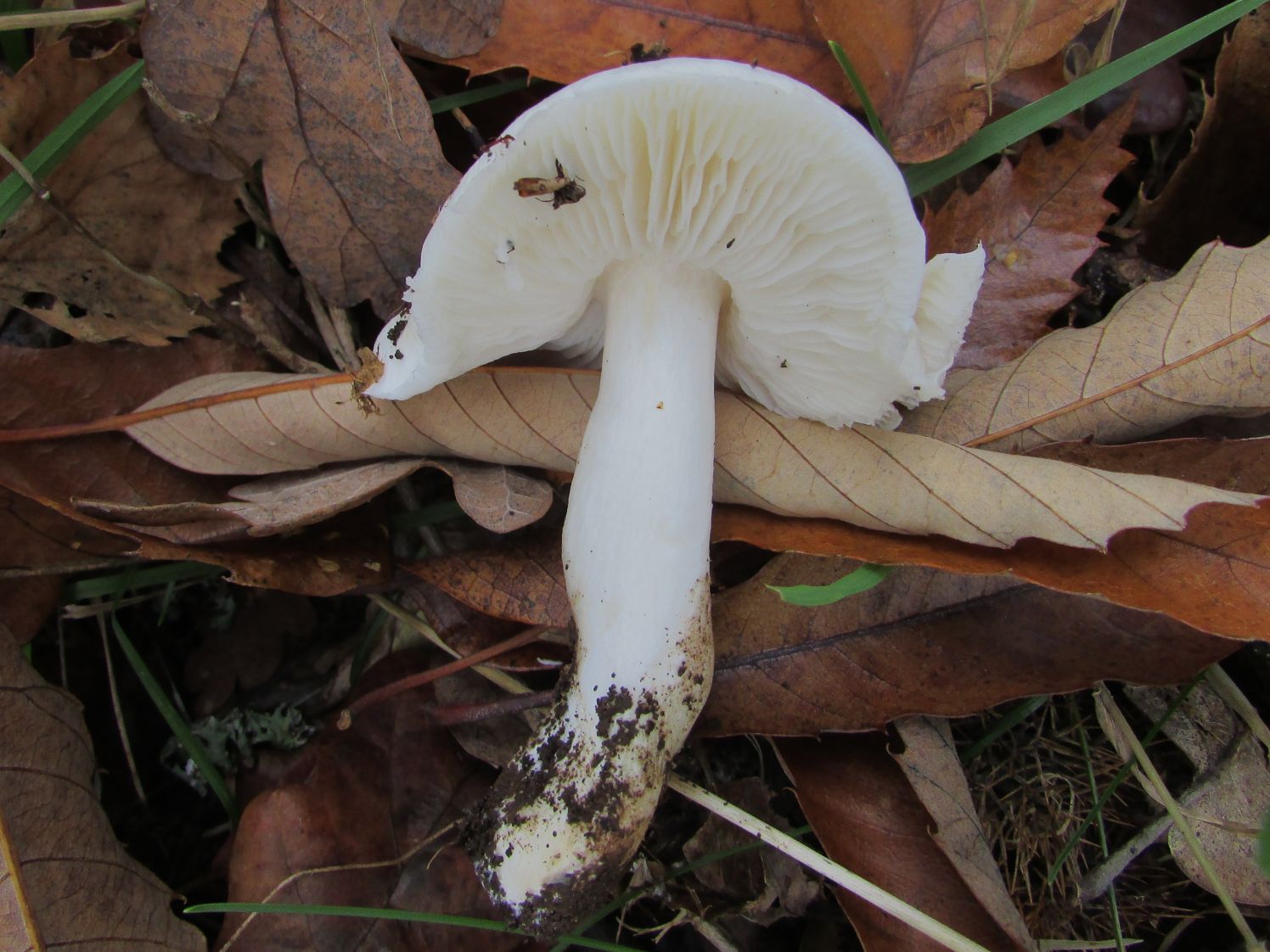
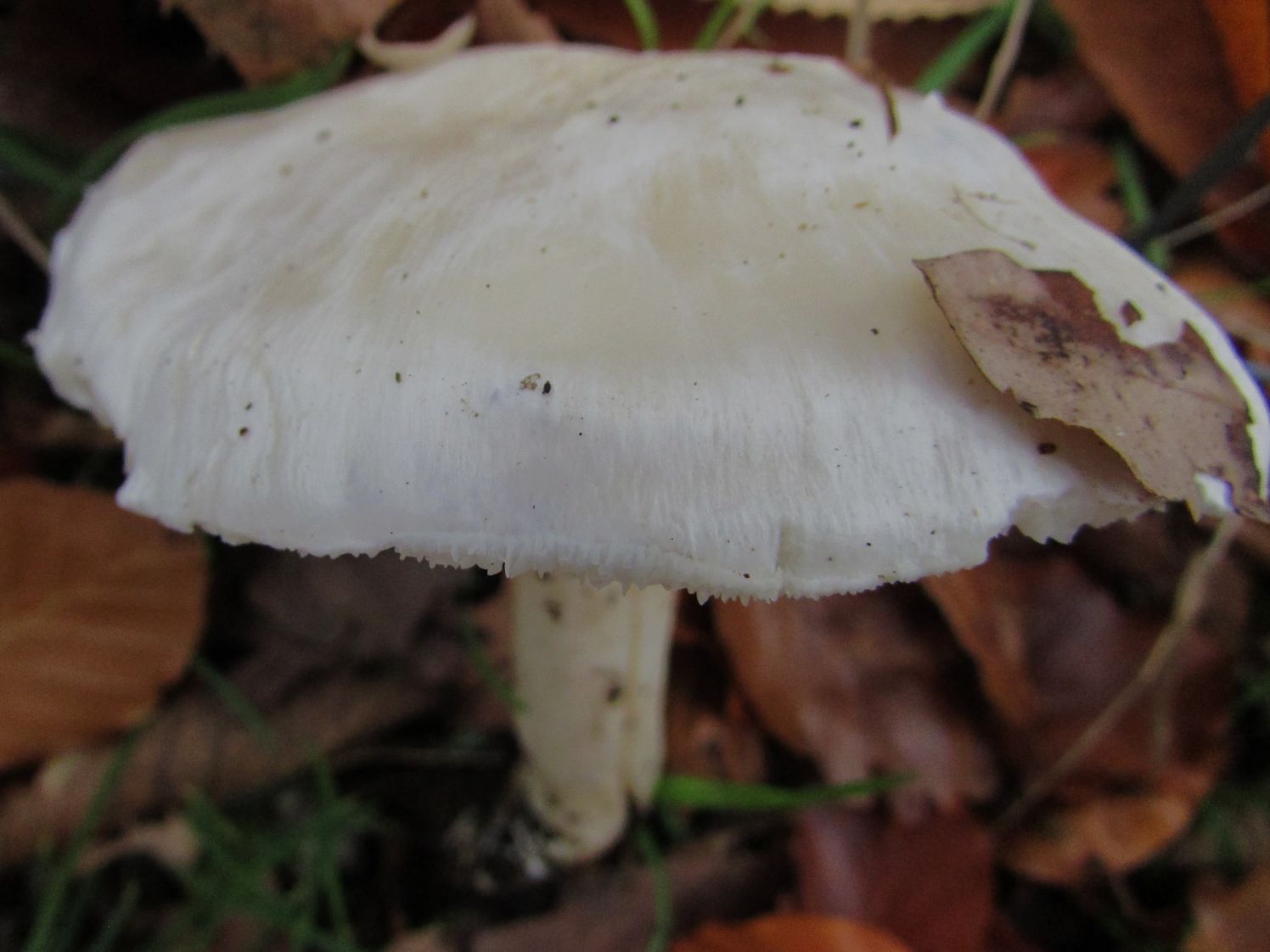
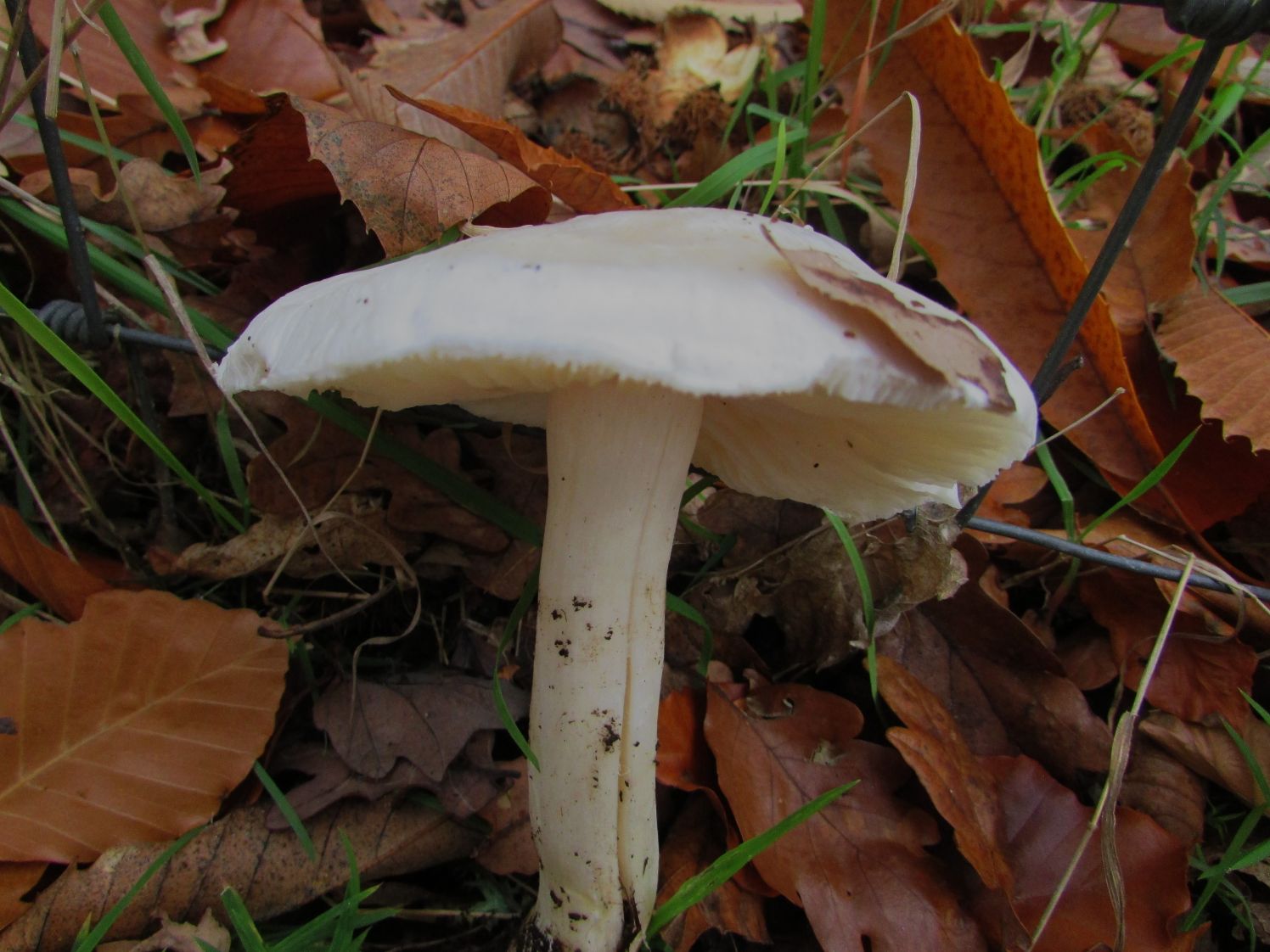
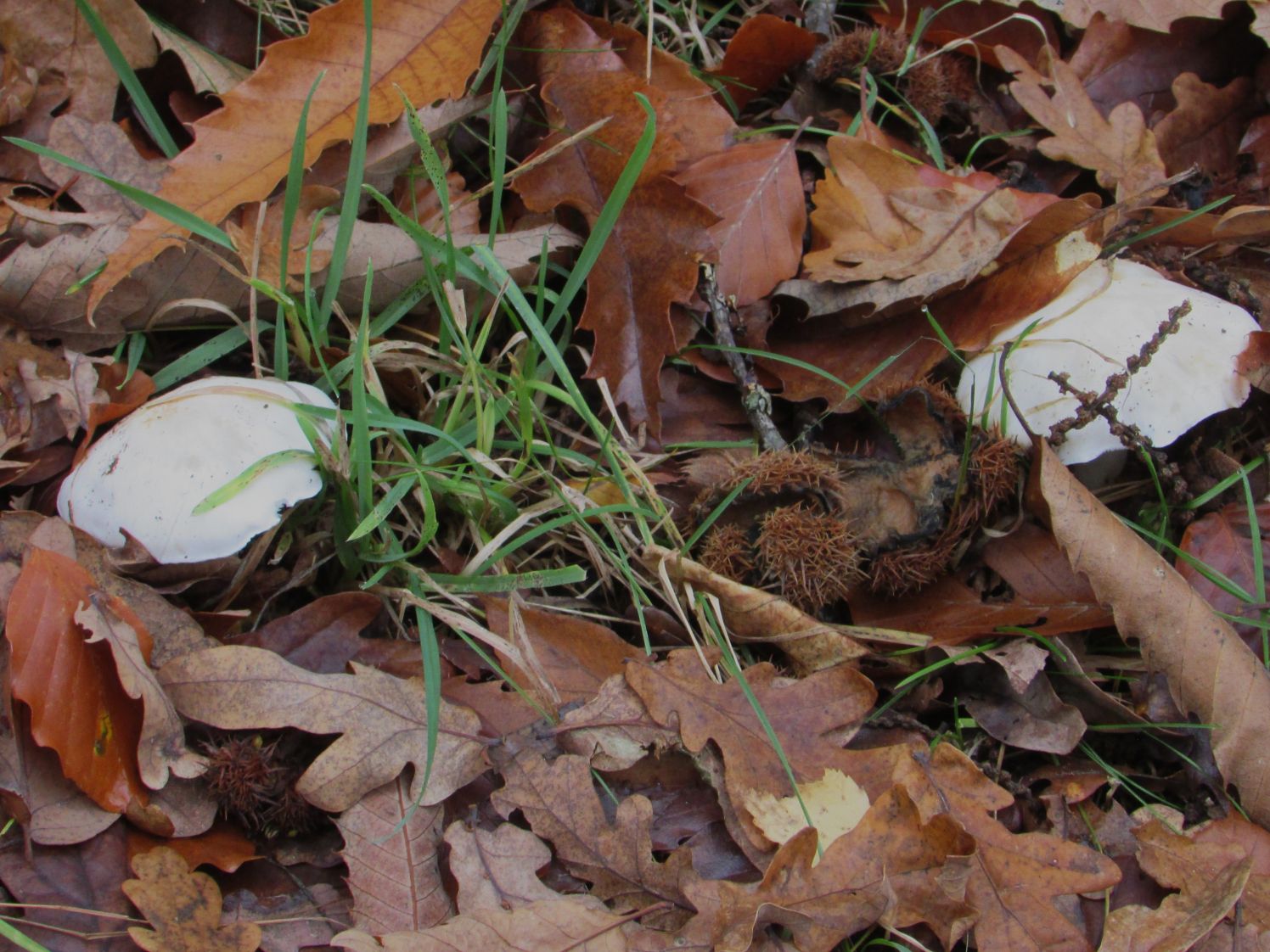
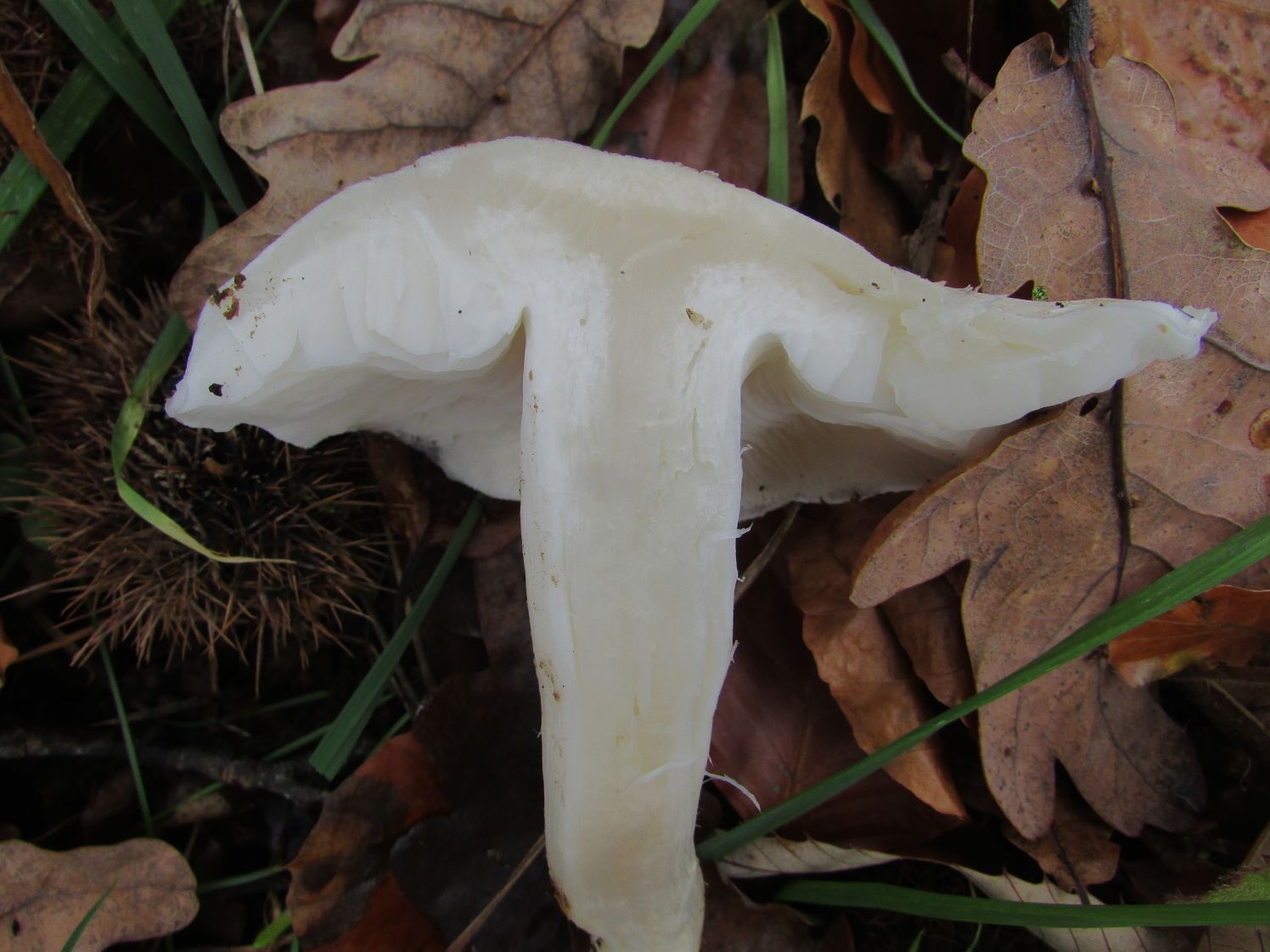
The Tricholoma genus is large, varied in colour and it can be hard to identify some of them to species. The Blue Spot Knight is no exception, being white all over means it has several look-a-likes, some very dangerous. We do not recommend this mushroom for eating as although edible, it looks like a few other mushrooms and is not reported as very good tasting.
Home / Mushroom Guide /
Blue Spot Knight

Blue Spot Knight


| Mushroom Type | |
| Common Names |
Blue Spot Knight, Marchog Colomennaidd (CY), Gąska Gołębia (PL), Galambpereszke (HU) |
| Scientific Name |
Tricholoma columbetta |
| Season Start |
Aug |
| Season End |
Nov |
| Average Mushroom height (CM) |
7-15 |
| Average Cap width (CM) |
4-10 |

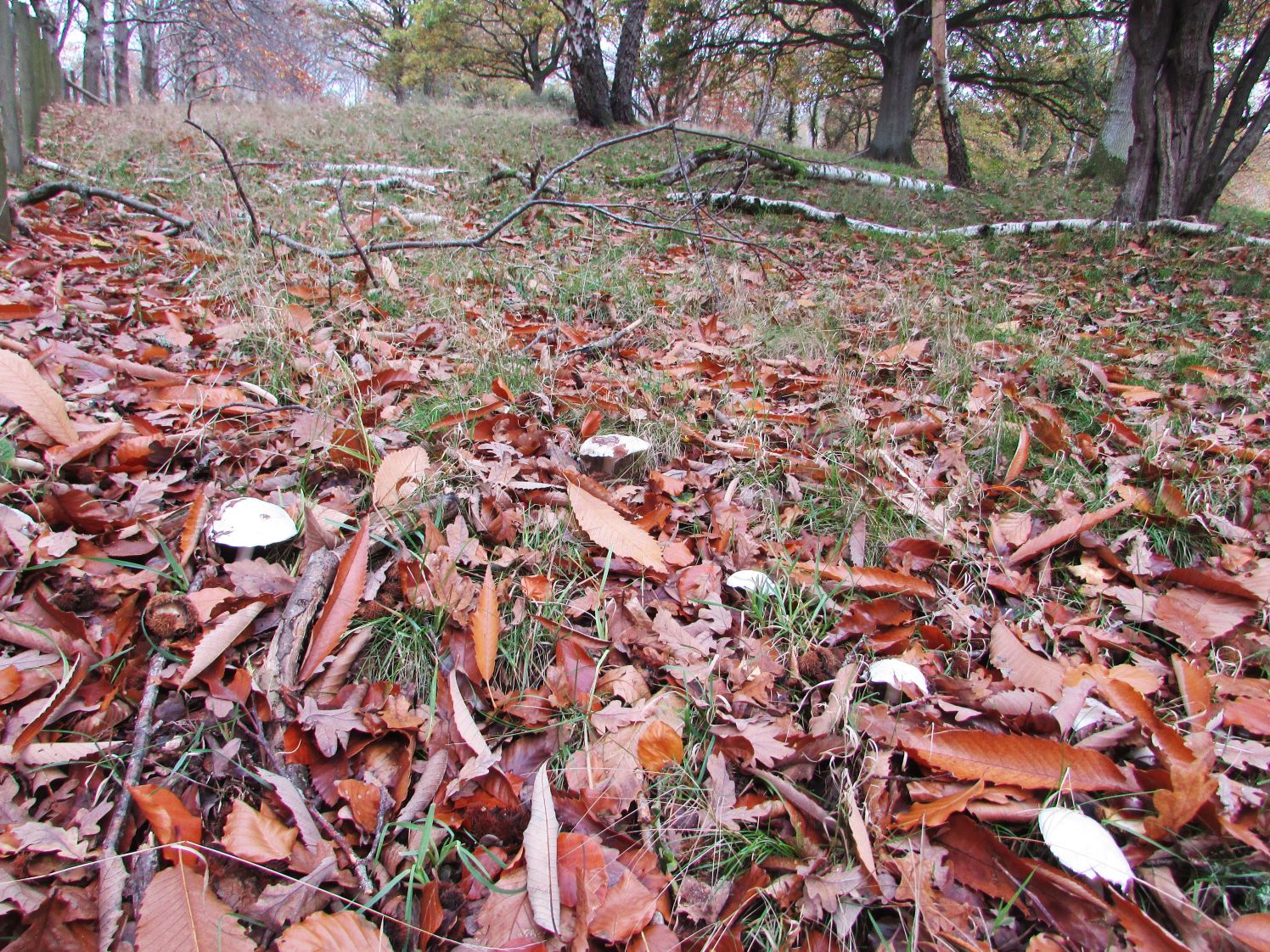
Please note that each and every mushroom you come across may vary in appearance to these photos.
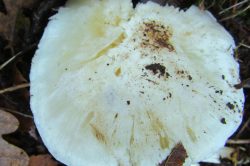
Cap
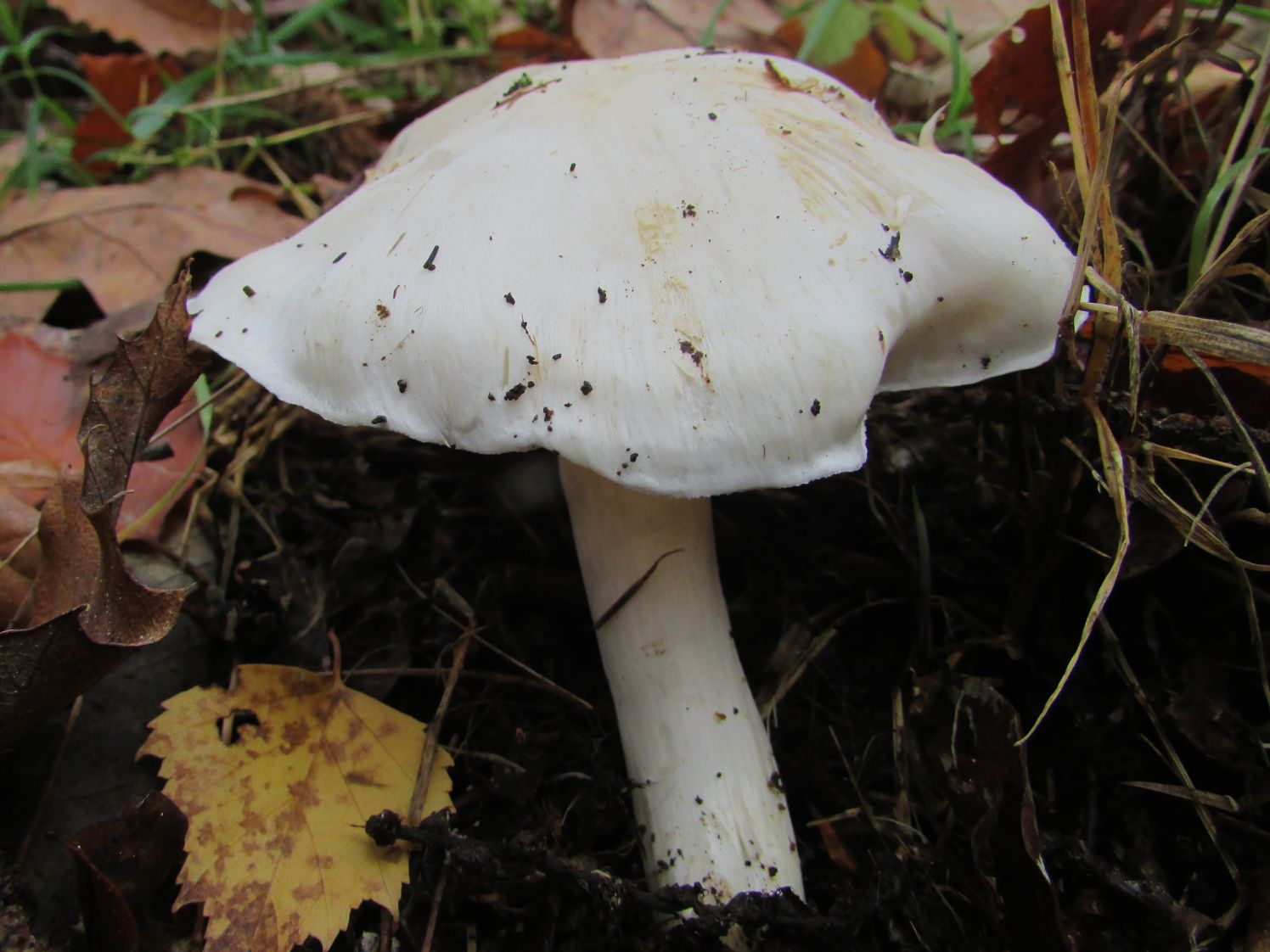
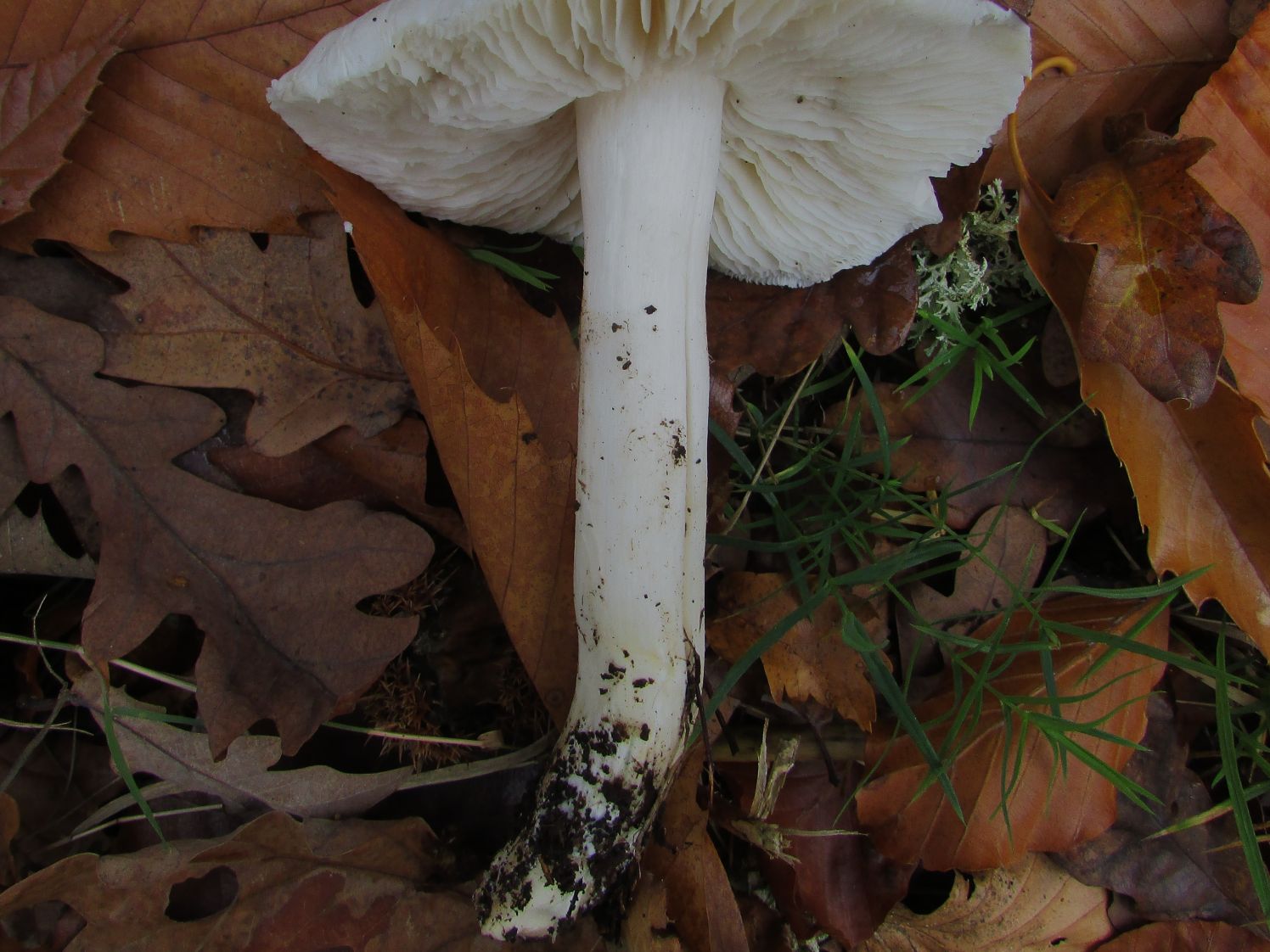
4-10 cm. White to ivory with a silky, fibrillose surface and spots or markings which can be ochre to red to green to blue. Starts convex then opening out flat, often with wavy edges.
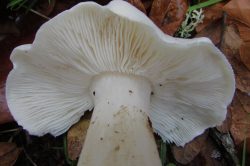
Gills
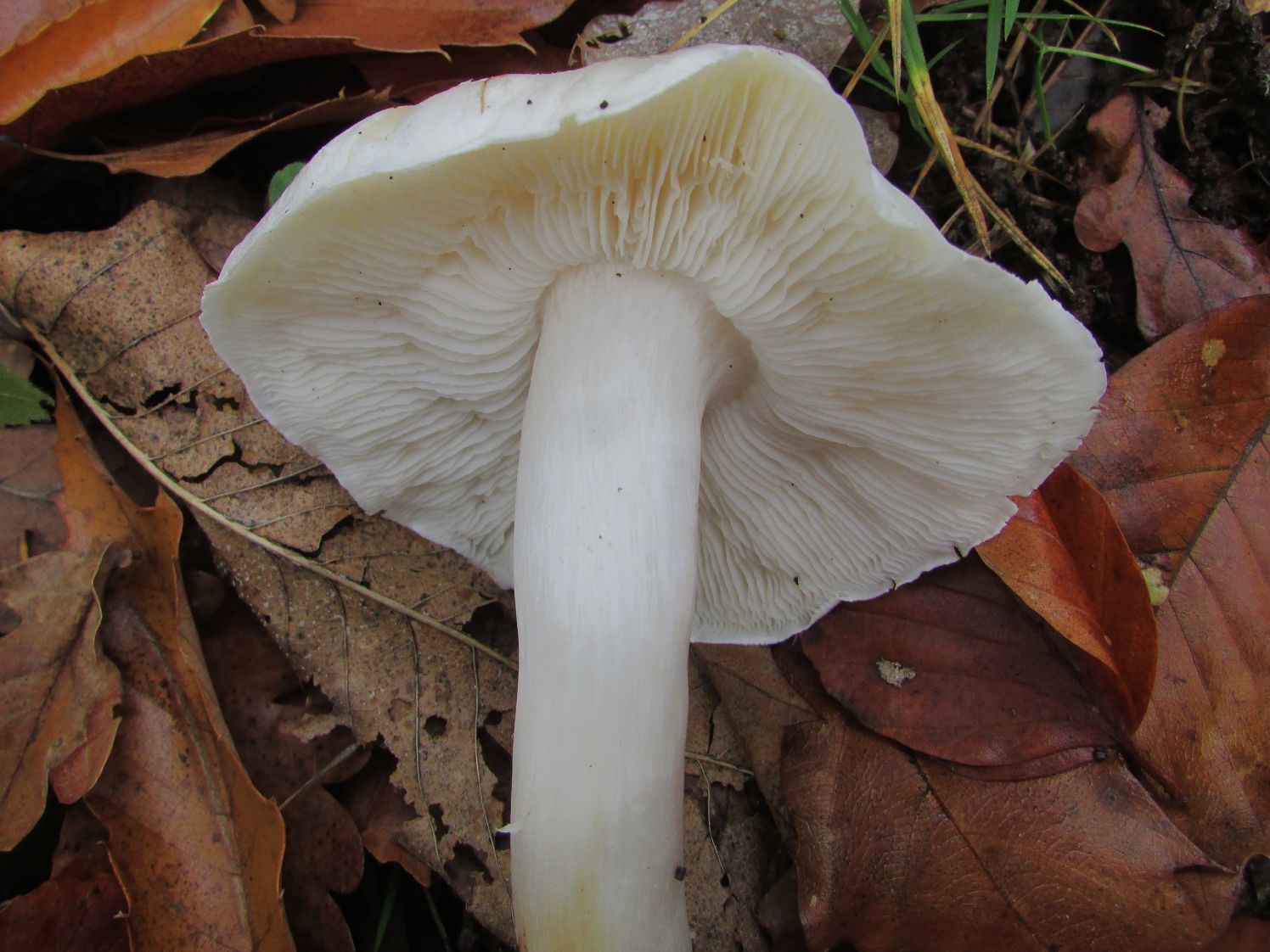
White, sometimes with a pink tinge, crowded and sinuate (joined to the stem but with a notch and then running slightly down the stem).
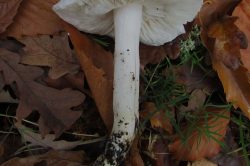
Stem
7-14 cm long, 1-2 cm wide. White to off white, slightly rooting and can have similar spots to the cap with blue green markings towards the base.
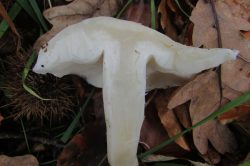
Possible Confusion
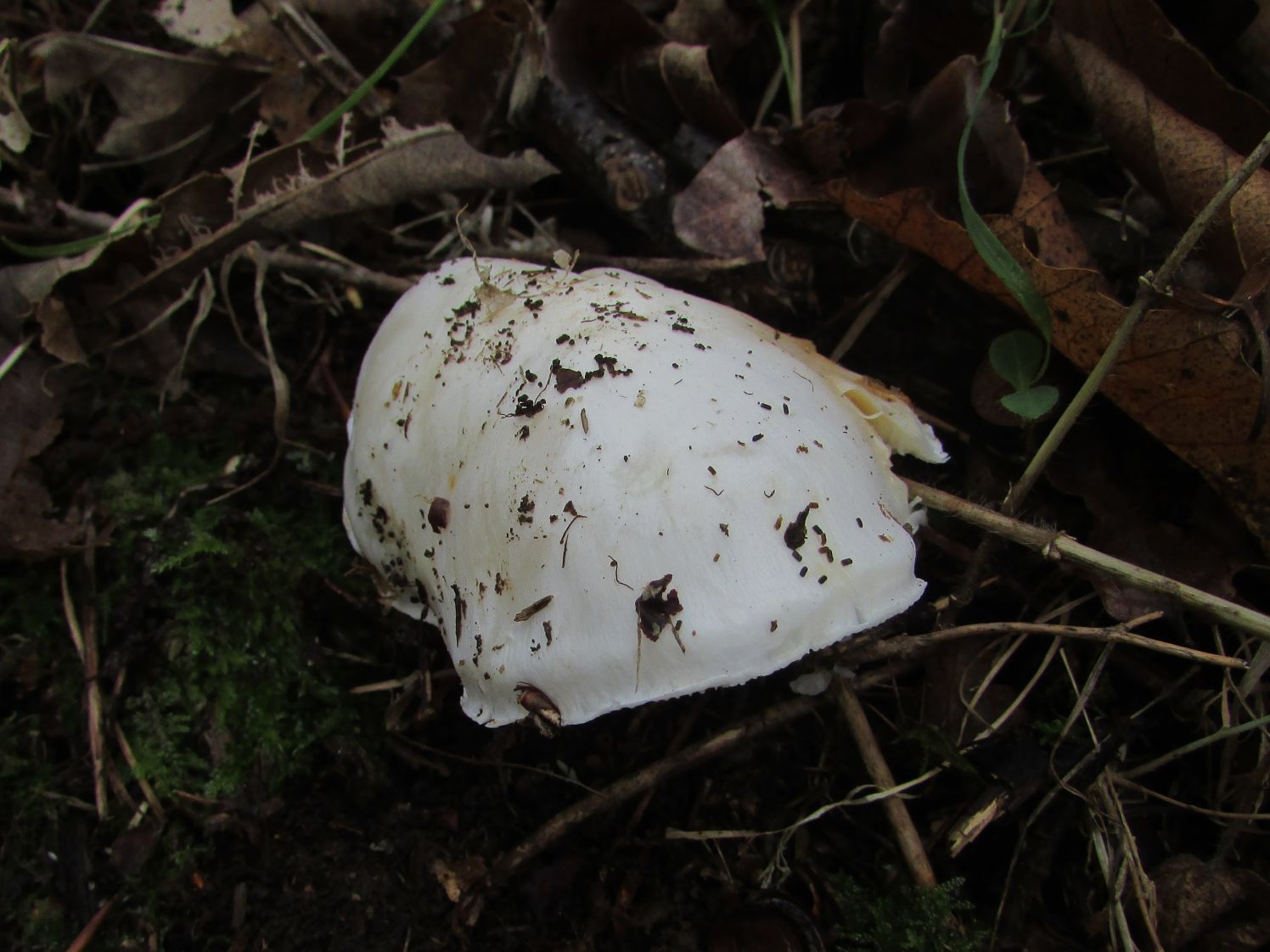
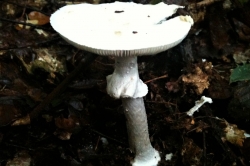
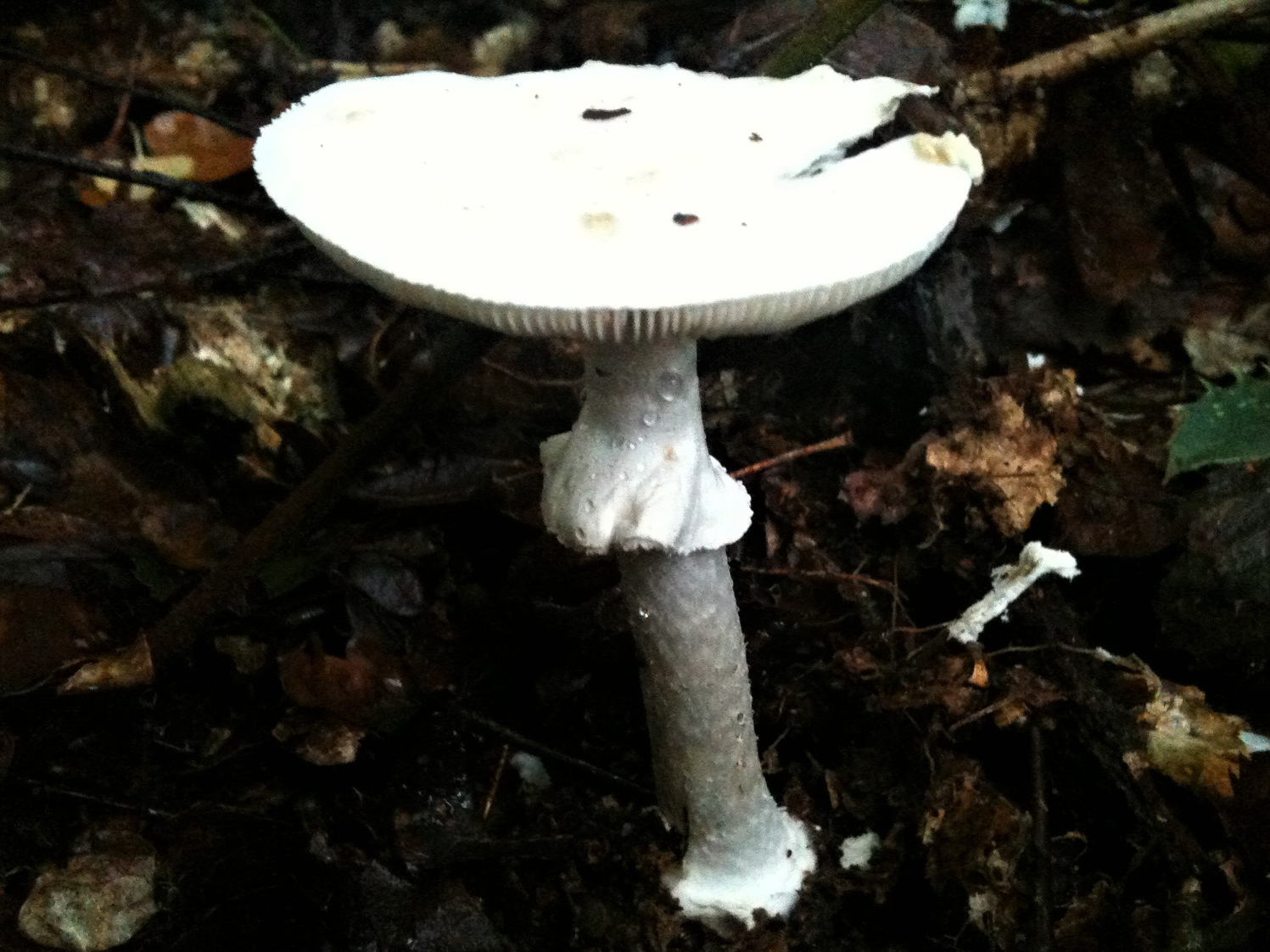
Due to being white all over, there is the possibility of confusion with the deadly poisonous Destroying Angel, Amanita virosa, pictured. While the Destroying Angel has a skirt and a volva, the skirt could easily have fallen away or been eaten making identification rather dangerous.
White Knight, Tricholoma album, is very similar but has notched gills.
St. George’s Mushroom, Calocybe gambosa, is similar but usually more squat, grows in Spring and early Summer and has a distinctive mealy/sawdust smell.
Spotted Toughshank, Rhodocollybia maculata, is similar but the gills are very crowded and free from the stem.
Frequency
Common.
Spores
White. Ellipsoid, smooth.






Leave a Reply