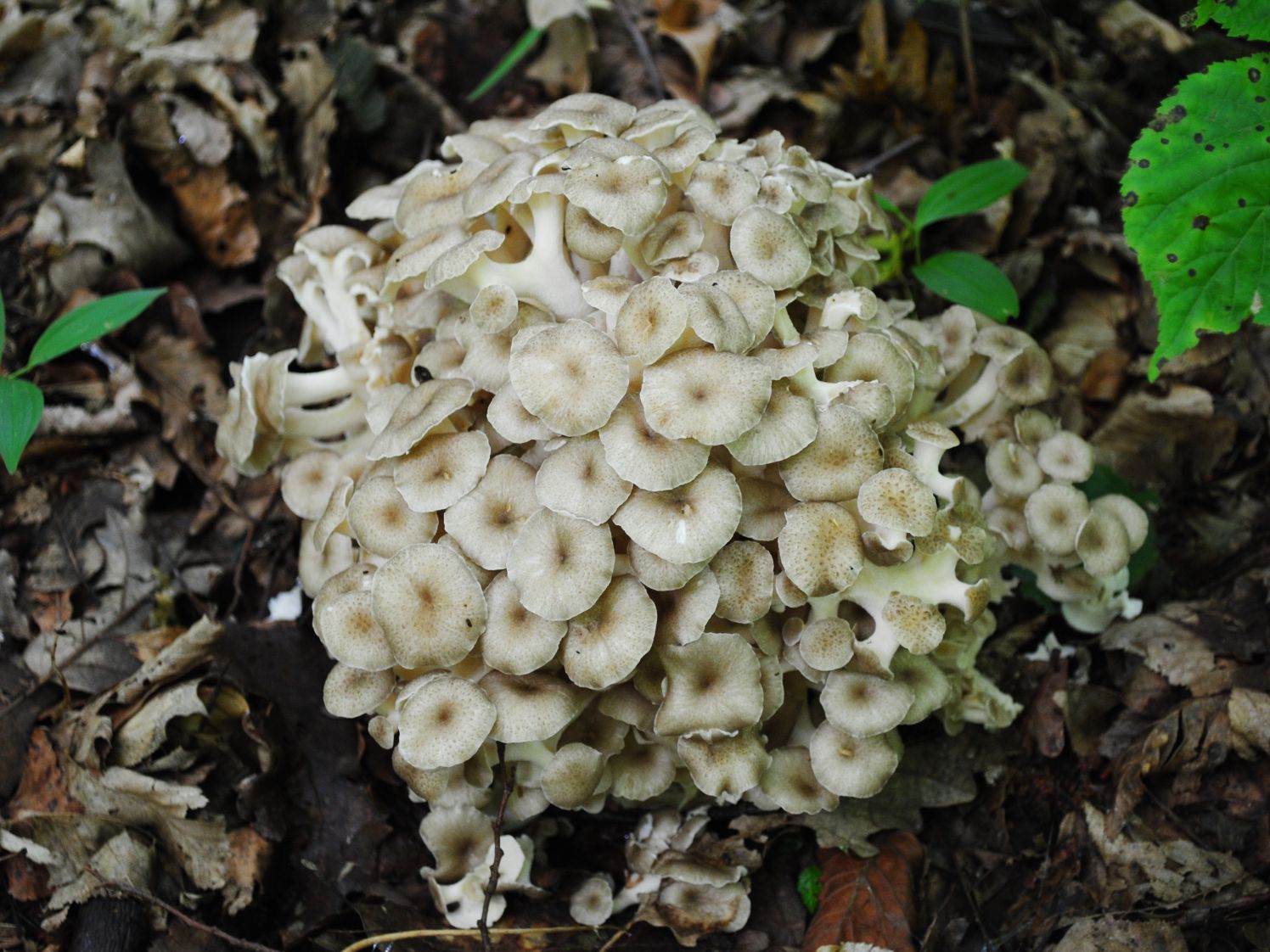
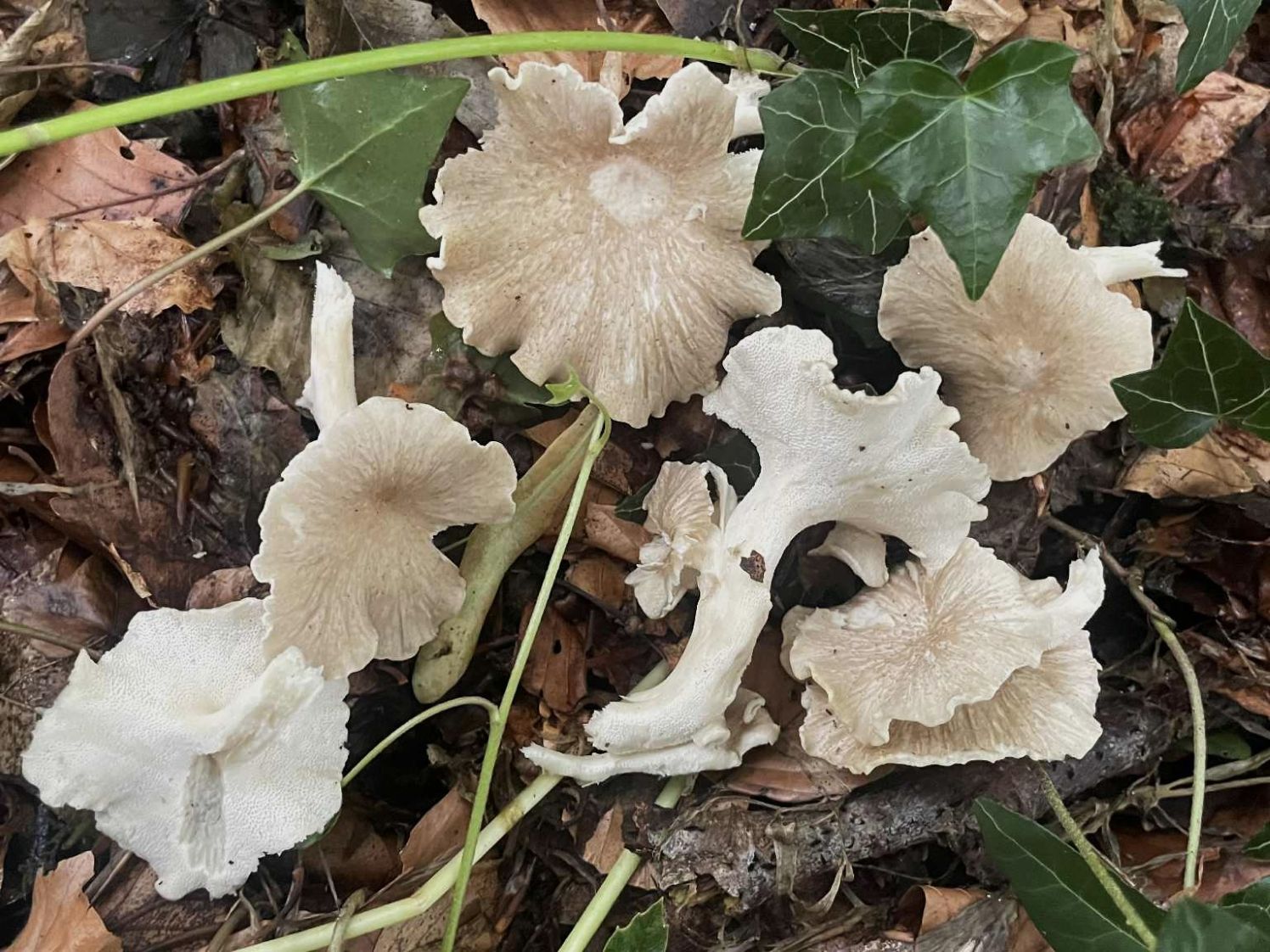
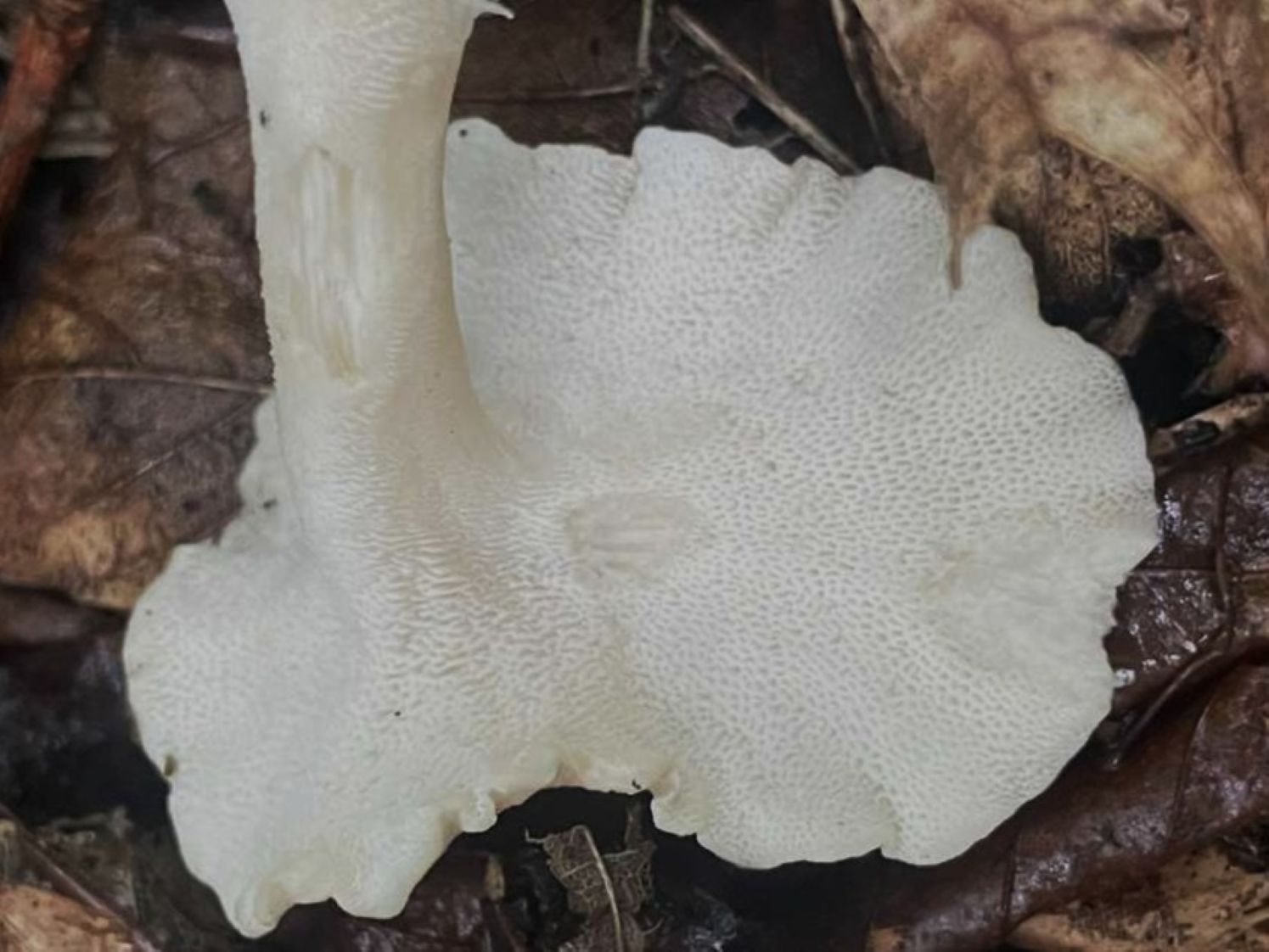
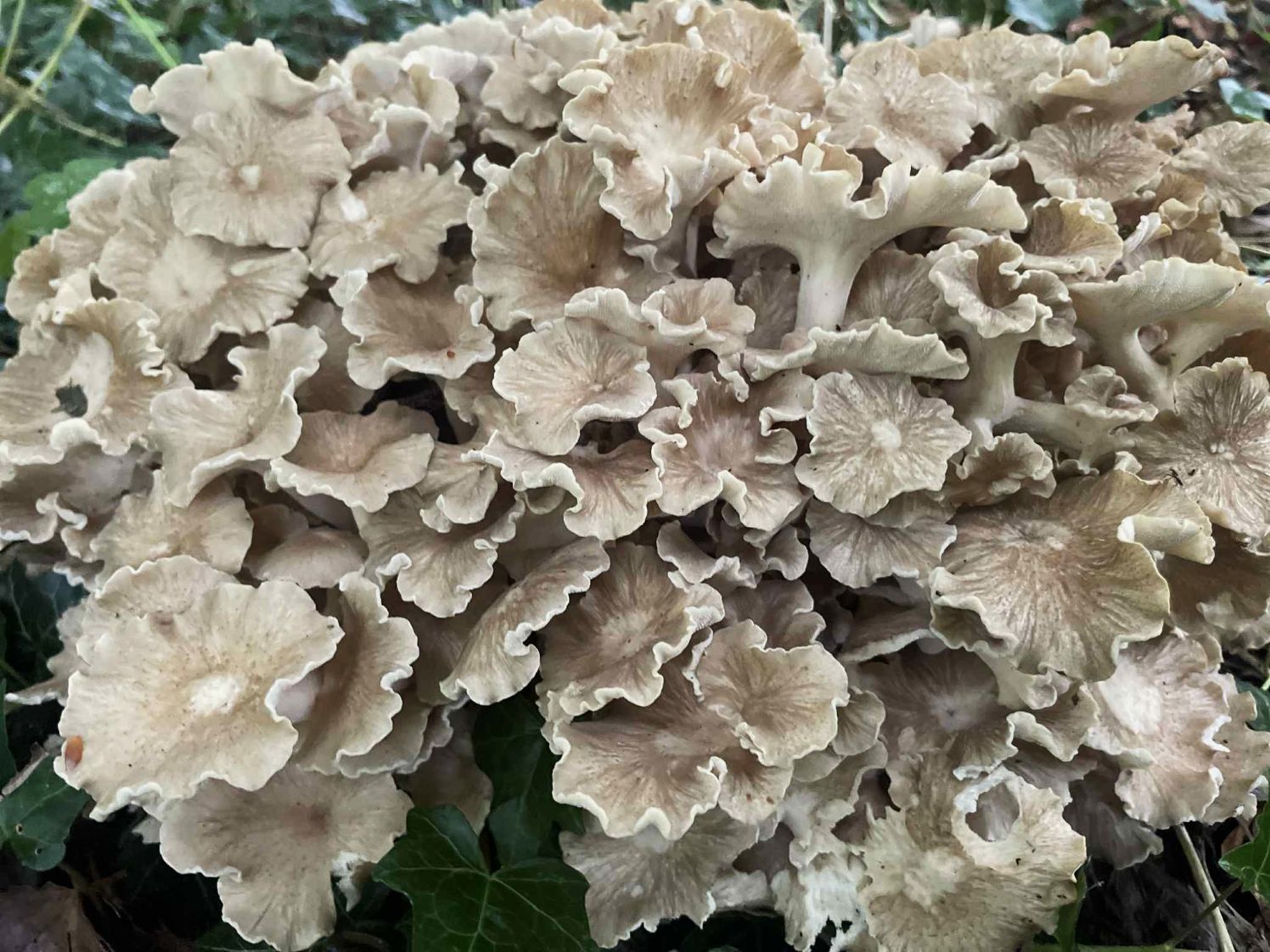
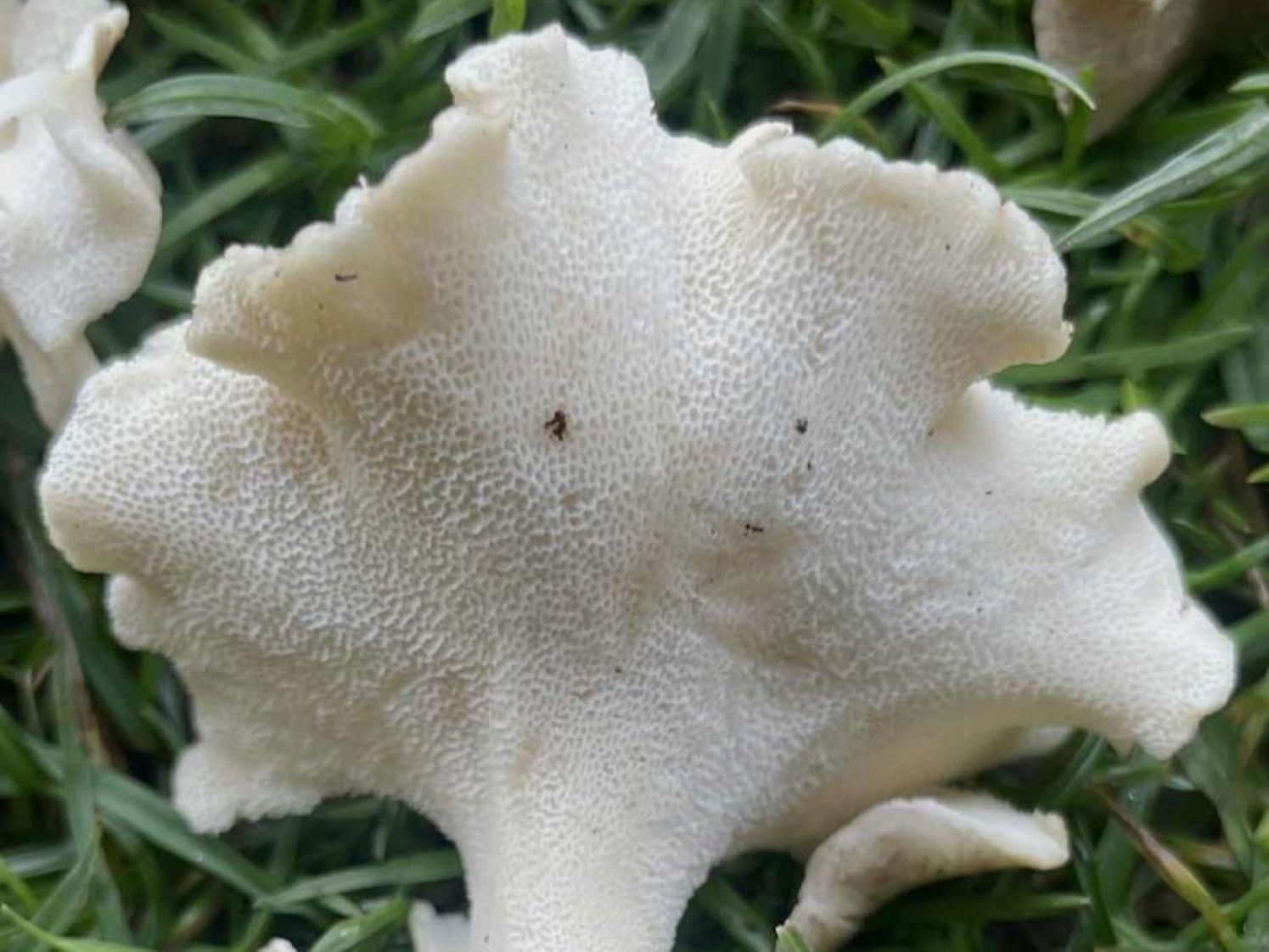
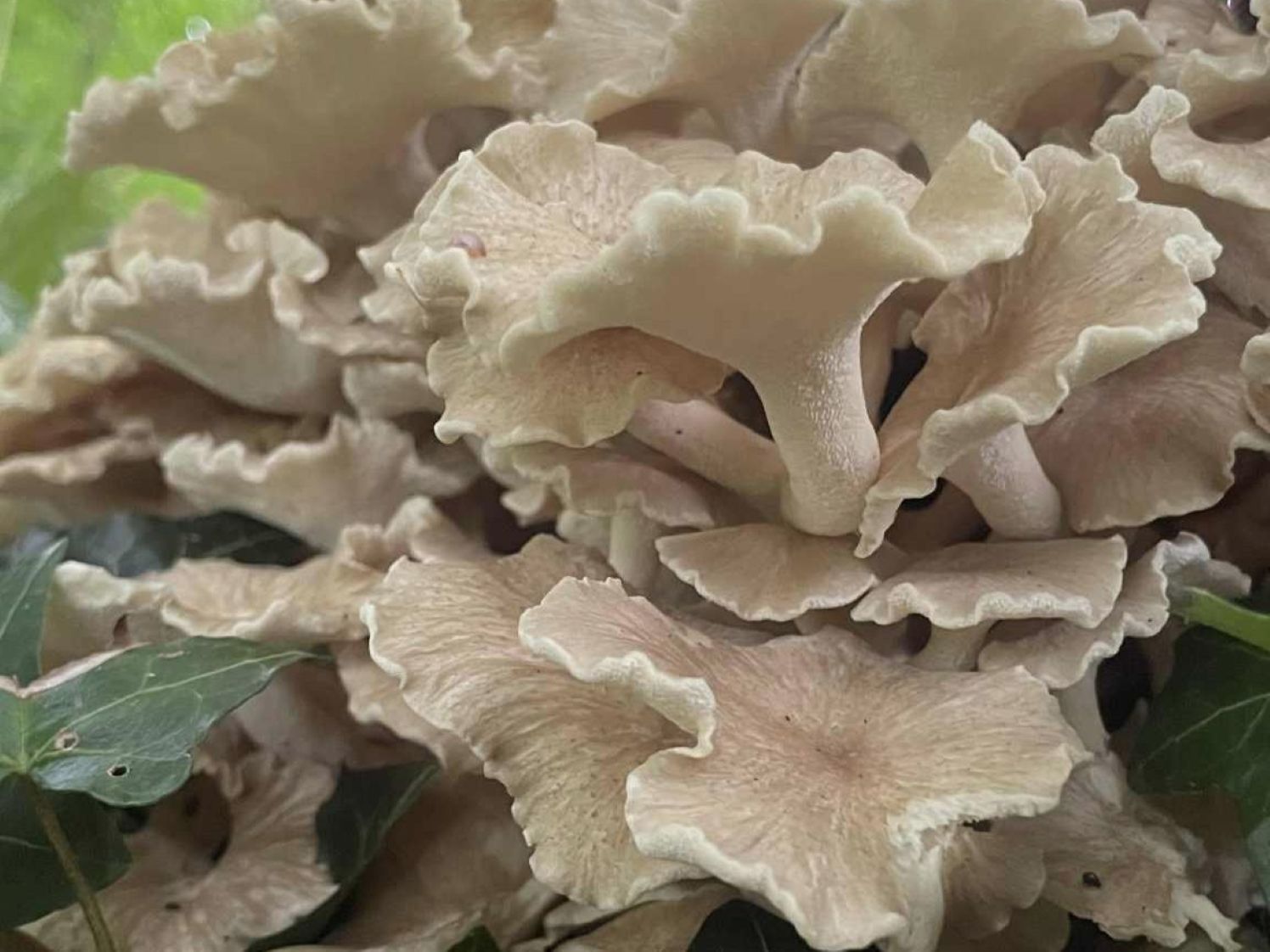
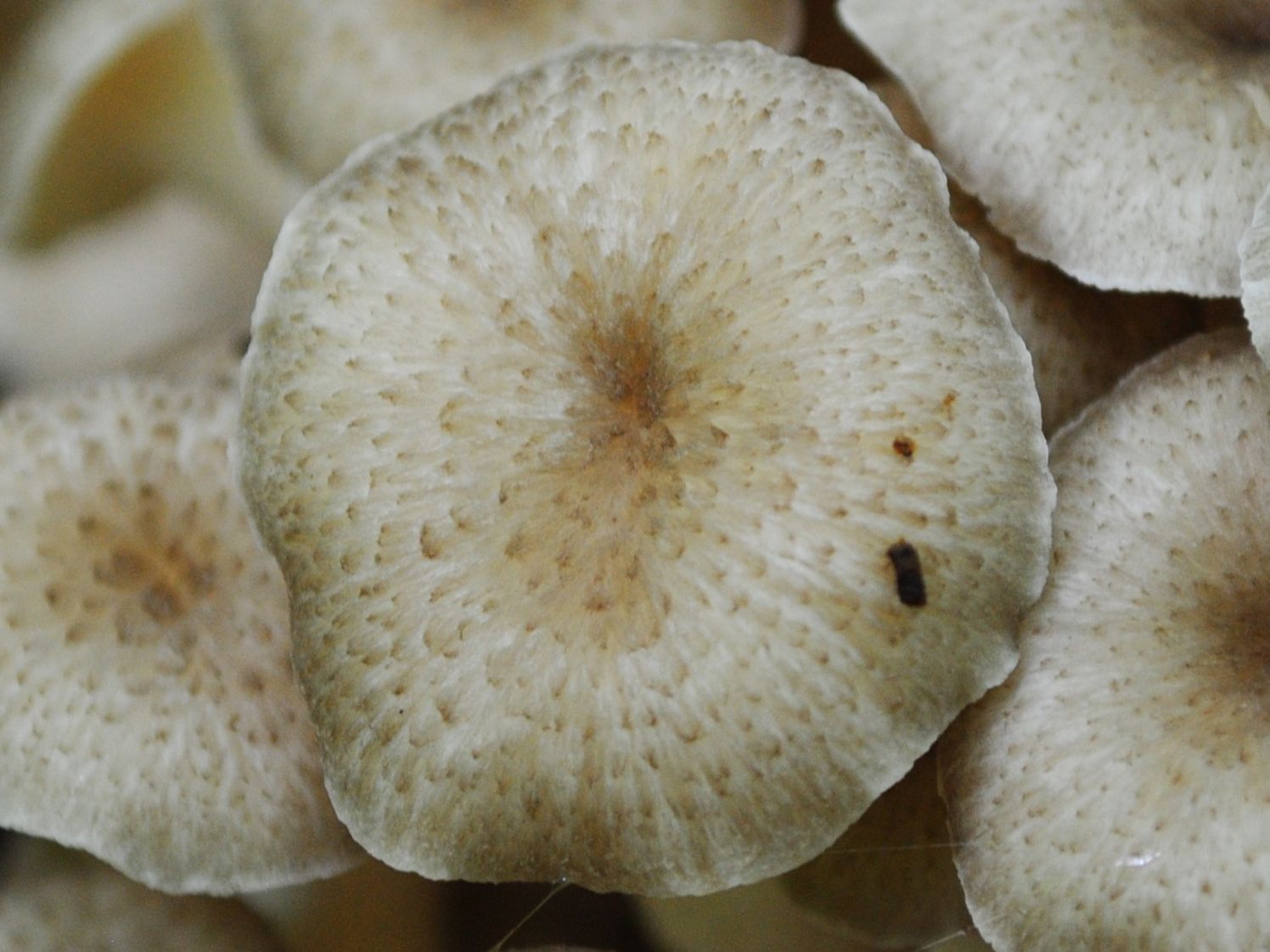
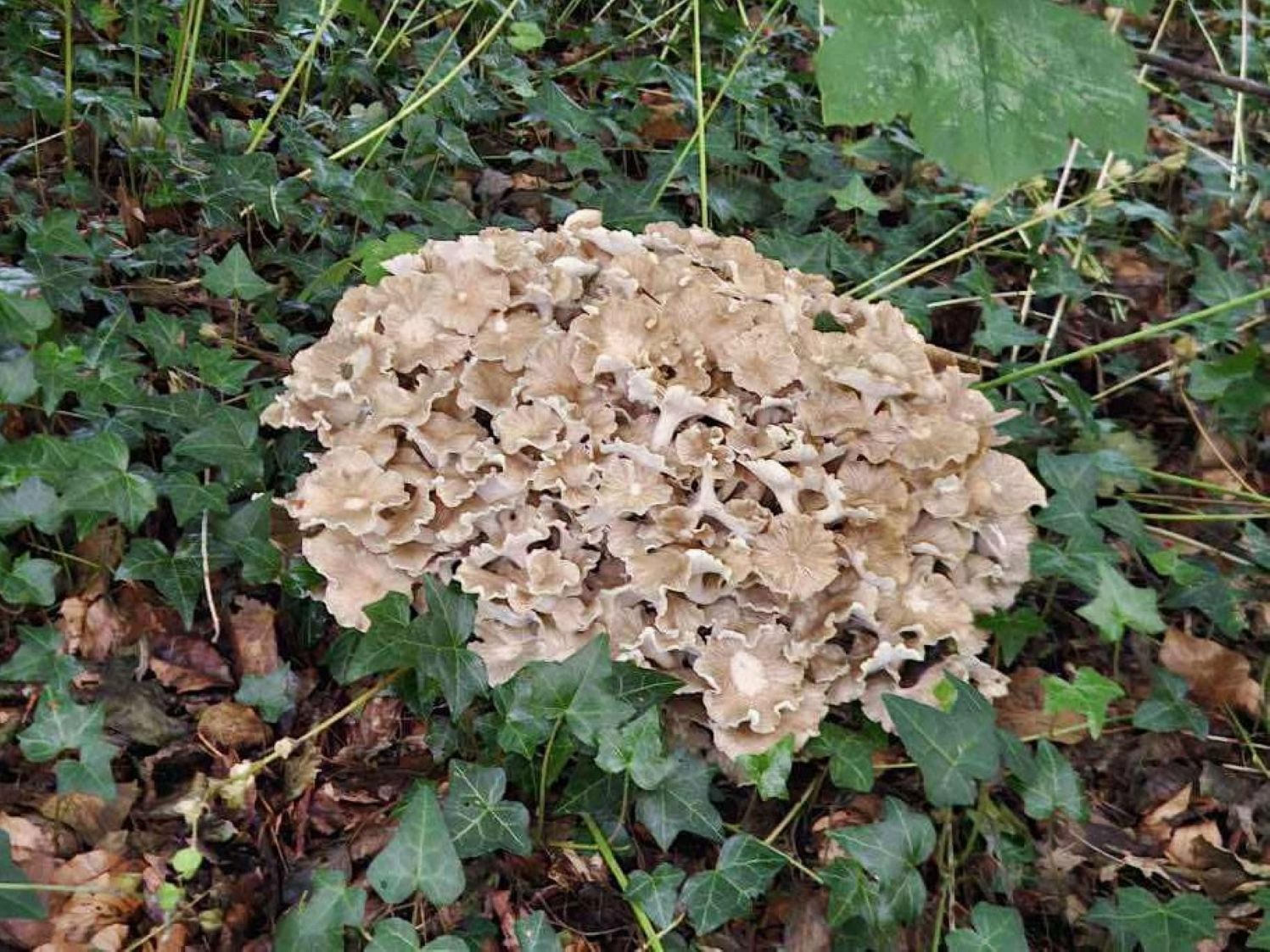
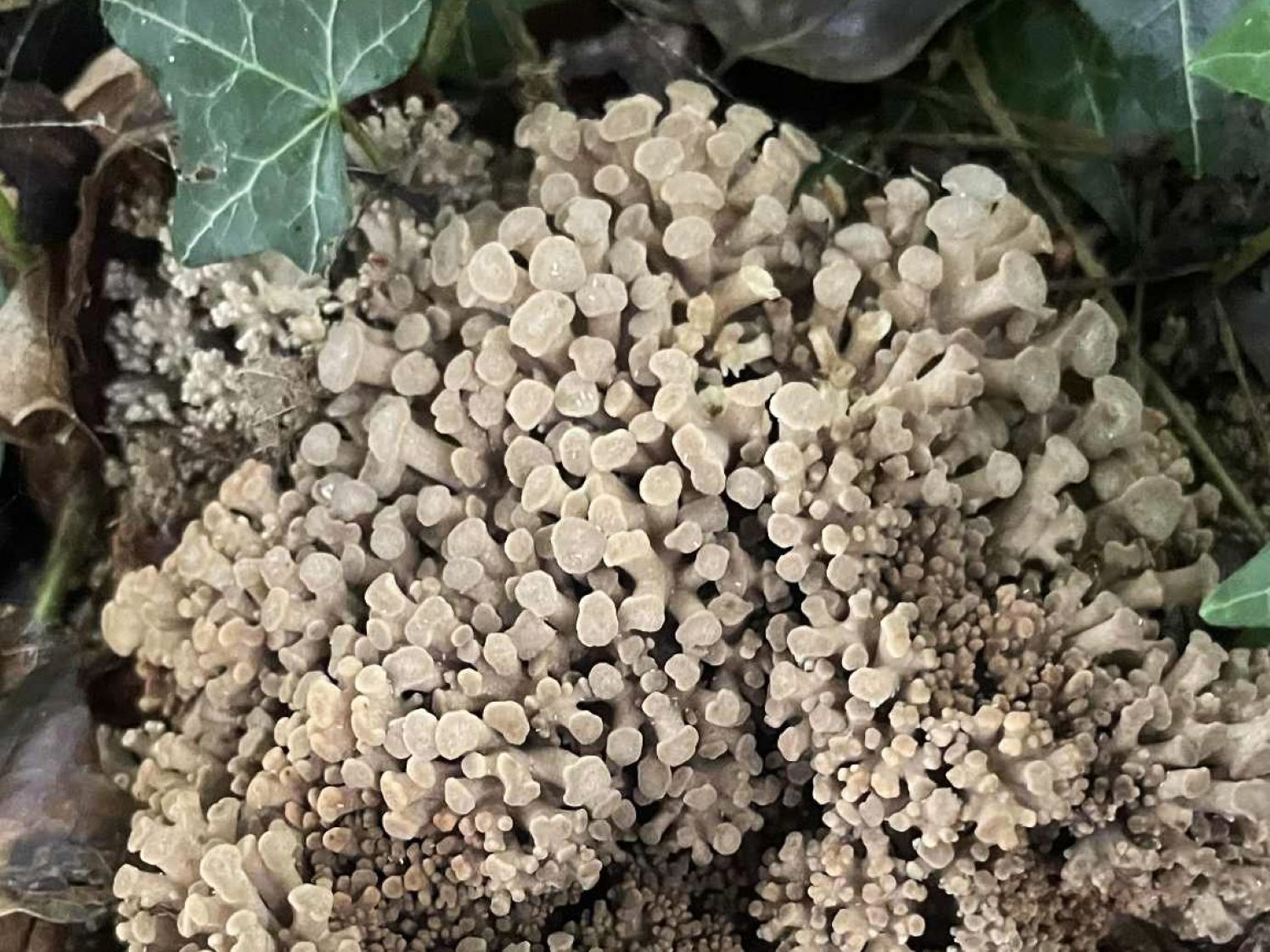
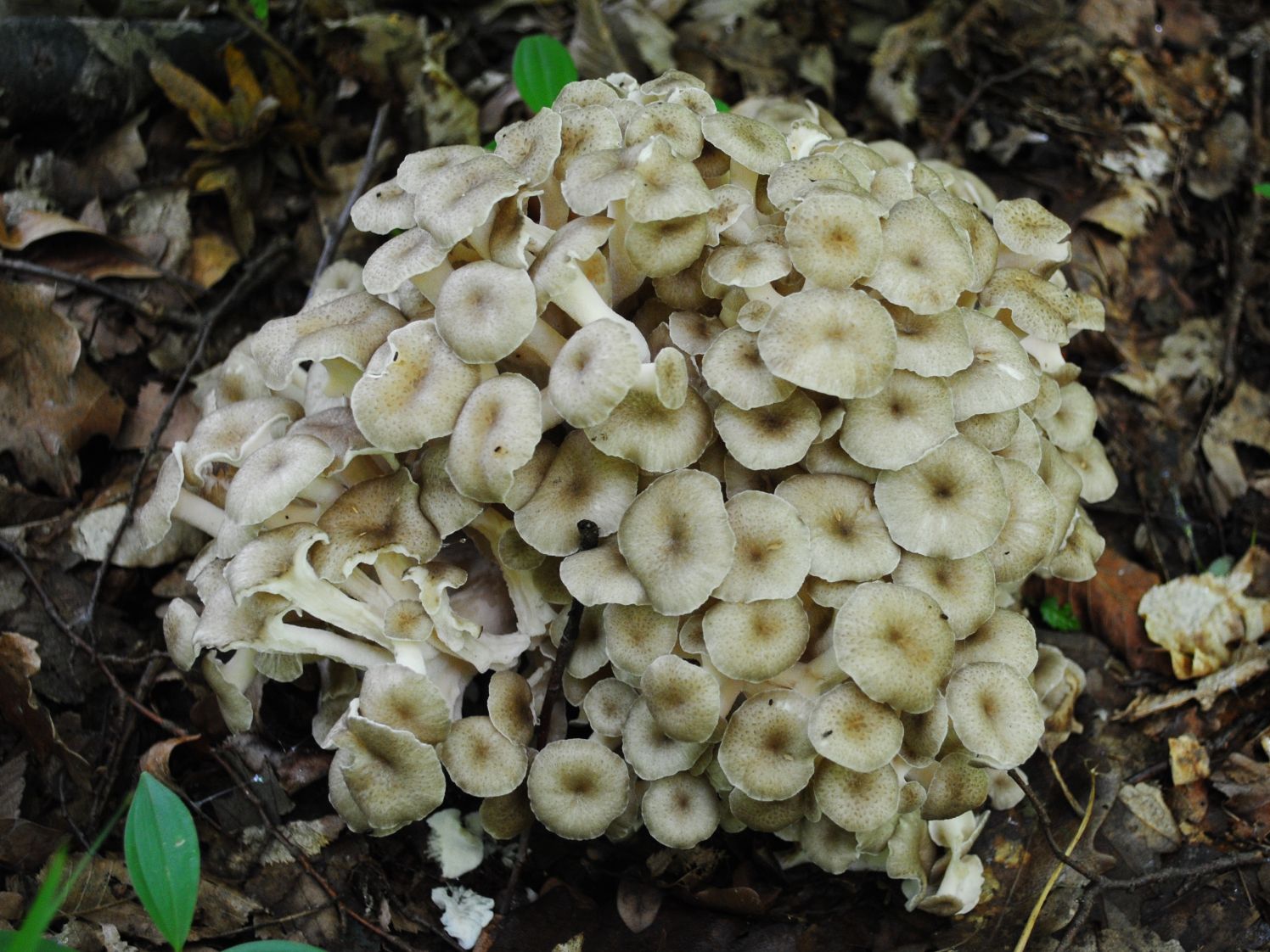
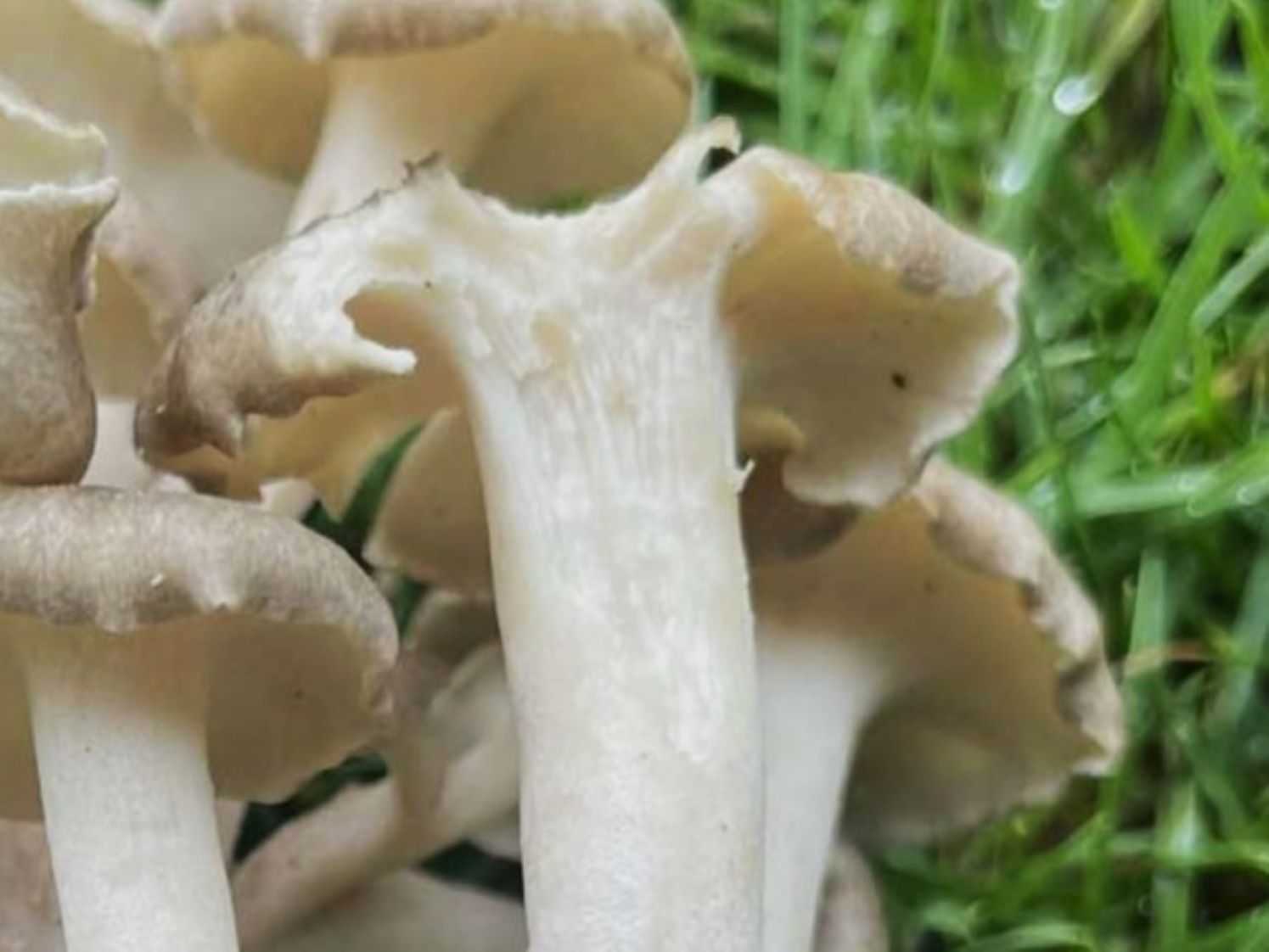
A really strange looking annual polypore with the resemblance of a bunch of tiny umbrellas. Although they are edible, we recommend you leave them undisturbed due to their rarity on the British Isles.
Home / Mushroom Guide /
Umbrella Polypore

Umbrella Polypore


| Mushroom Type | |
| Common Names |
Umbrella Polypore (EN), Cyfrwy Wmbelog (CY), Żagwiak Wielogłowa (PL), Tüskegomba (HU) |
| Scientific Name |
Polyporus umbellatus |
| Synonyms |
Grifola umbellata, Cladomeris umbellata, Dendropolyporus umbellatus |
| Season Start |
Jul |
| Season End |
Nov |
| Average Mushroom height (CM) |
10–30 |
| Average Cap width (CM) |
1–4(6) |
Please note that each and every mushroom you come across may vary in appearance to these photos.
Fruiting Body
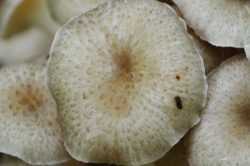
10–50 cm across and 10–30 tall compact cluster of numerous round (circular) caps, growing out of strongly branched central, thick stem, which originates from a black sclerotium under the soil surface.
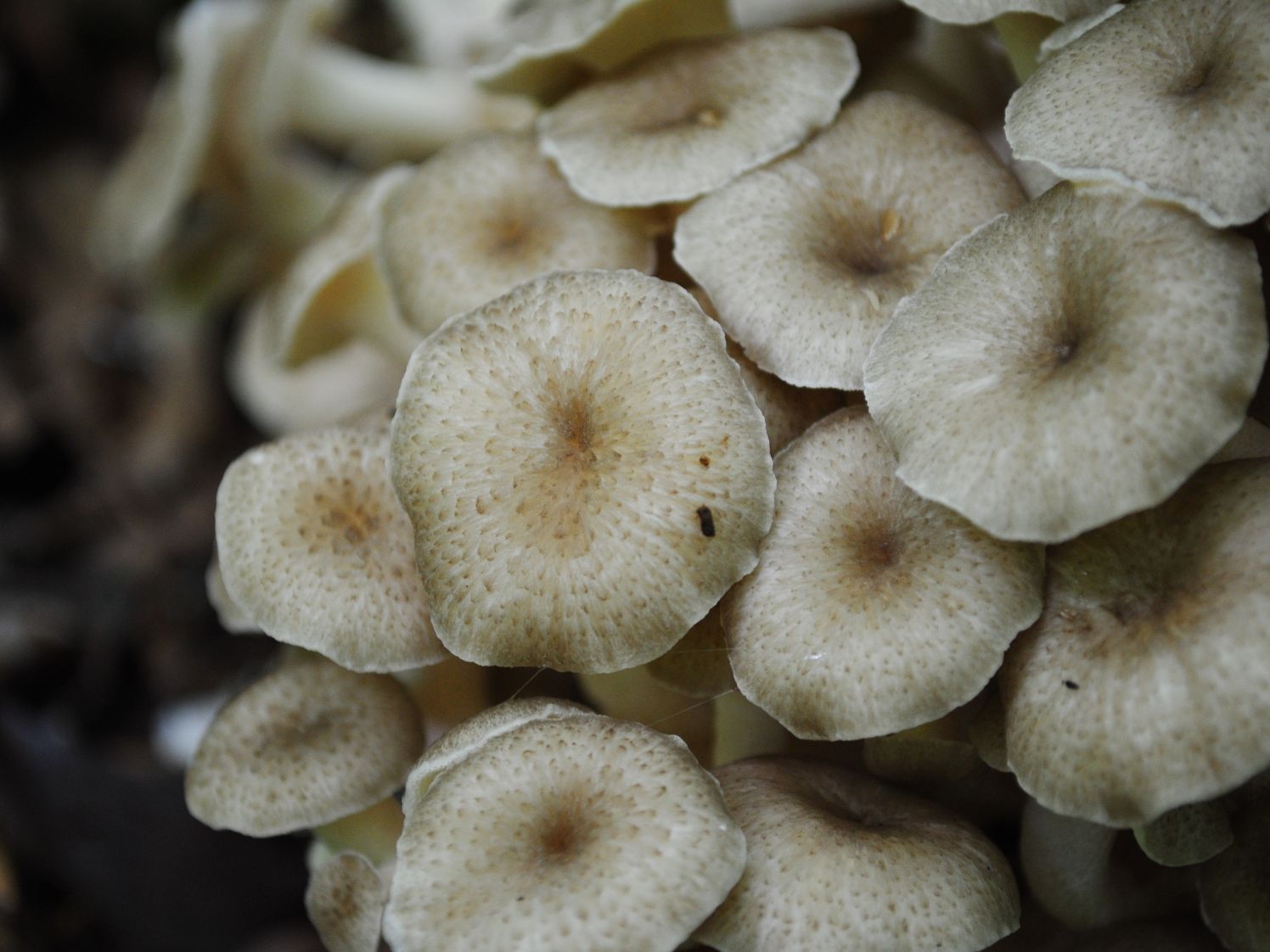
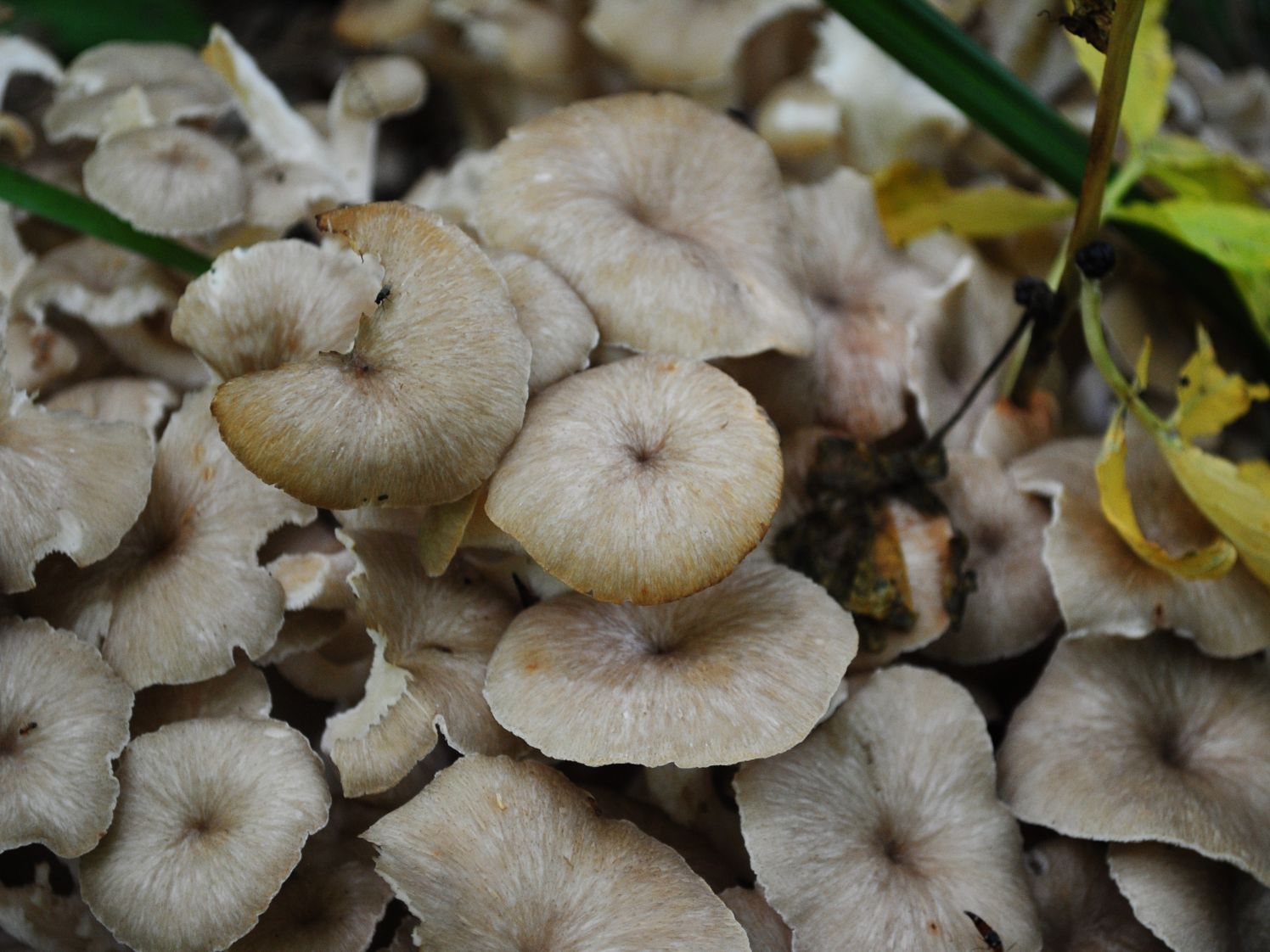
Individual caps are 1–4(6) across, 2–4 mm thin; circular, slightly depressed at their centre, and in more or less central position to the individual branches. Skin is yellowish brown to greyish brown, smooth or covered with small scales (squamules) or fibrils. Margin thin, entire, reflexed when dry.
Pores
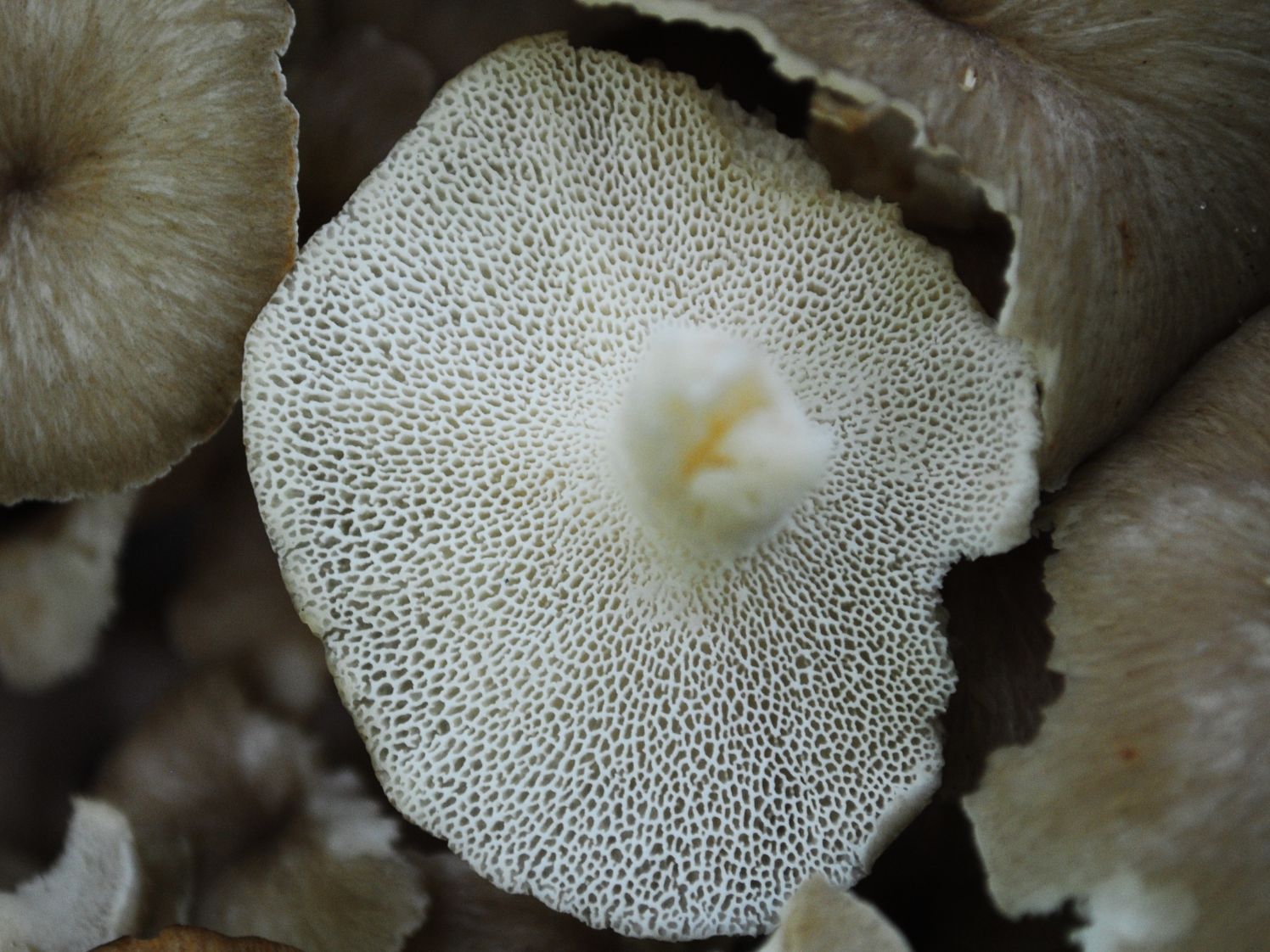
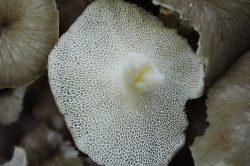
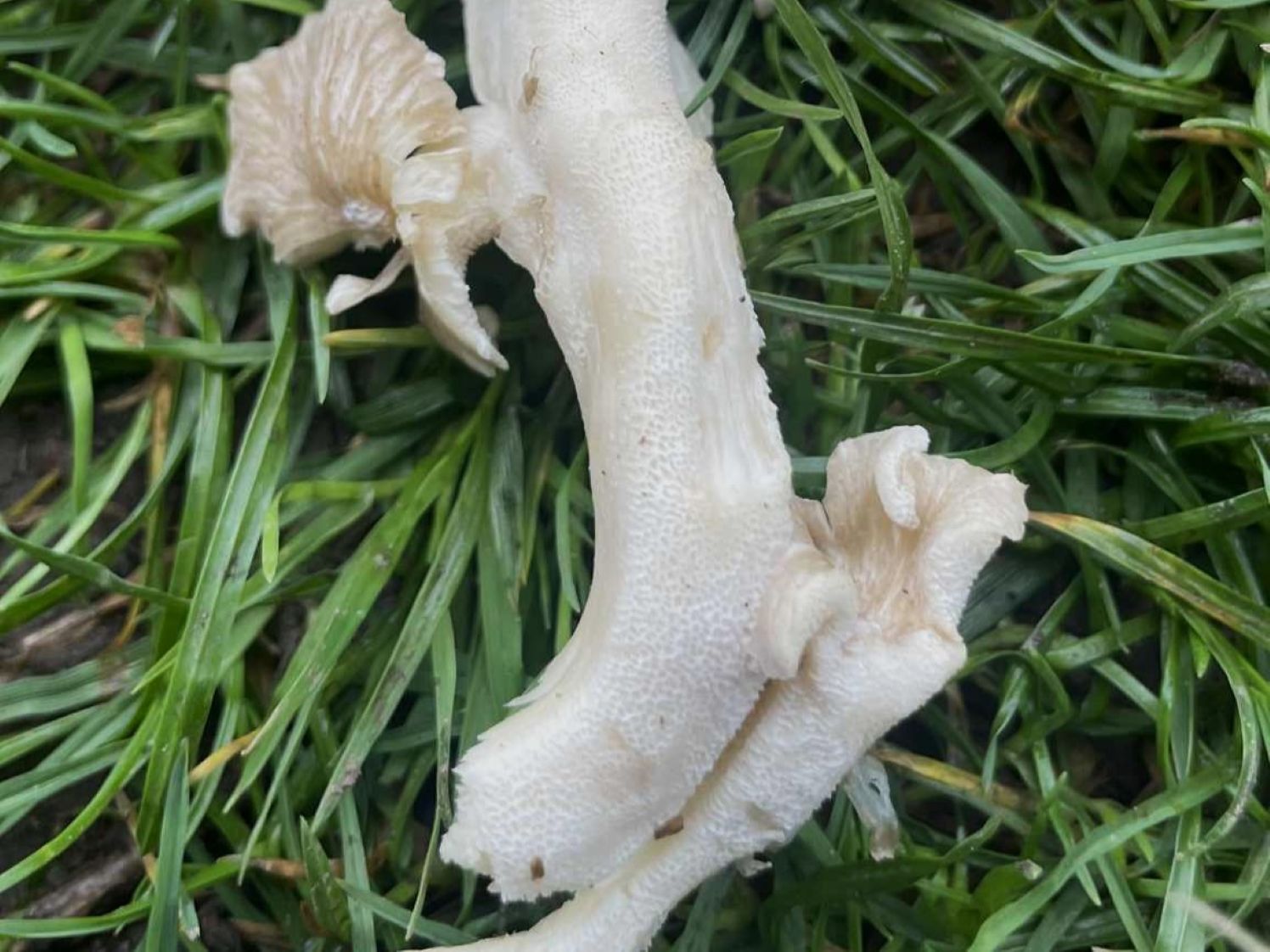
Tubes up to 1 mm long, white. Pores 1–3 per mm, circular to angular, becoming more or less elongated near to the stem(s); white.
Stem
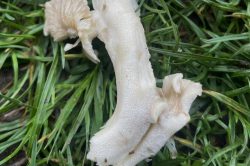
Strongly branched, cylindrical to irregular, widening towards the thick base, which could be about 2–3 cm wide.
Flesh
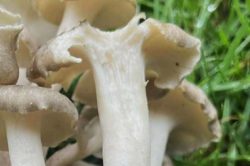
White when young, more ochre with age; thin in cap, only 2–4 mm, but thicker in the strongly branching stems, up to 3 cm.
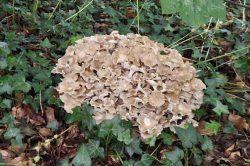
Habitat
Growing out of a perennial black sclerotium (which grows under the soil surface) around the base of old hardwoods, preferably, but not exclusively Oak and Beech. It is a well-known plant pathogen, causing white-rot, however whether it is a saprotrophic or a parasitic species is not clear yet.
Possible Confusion
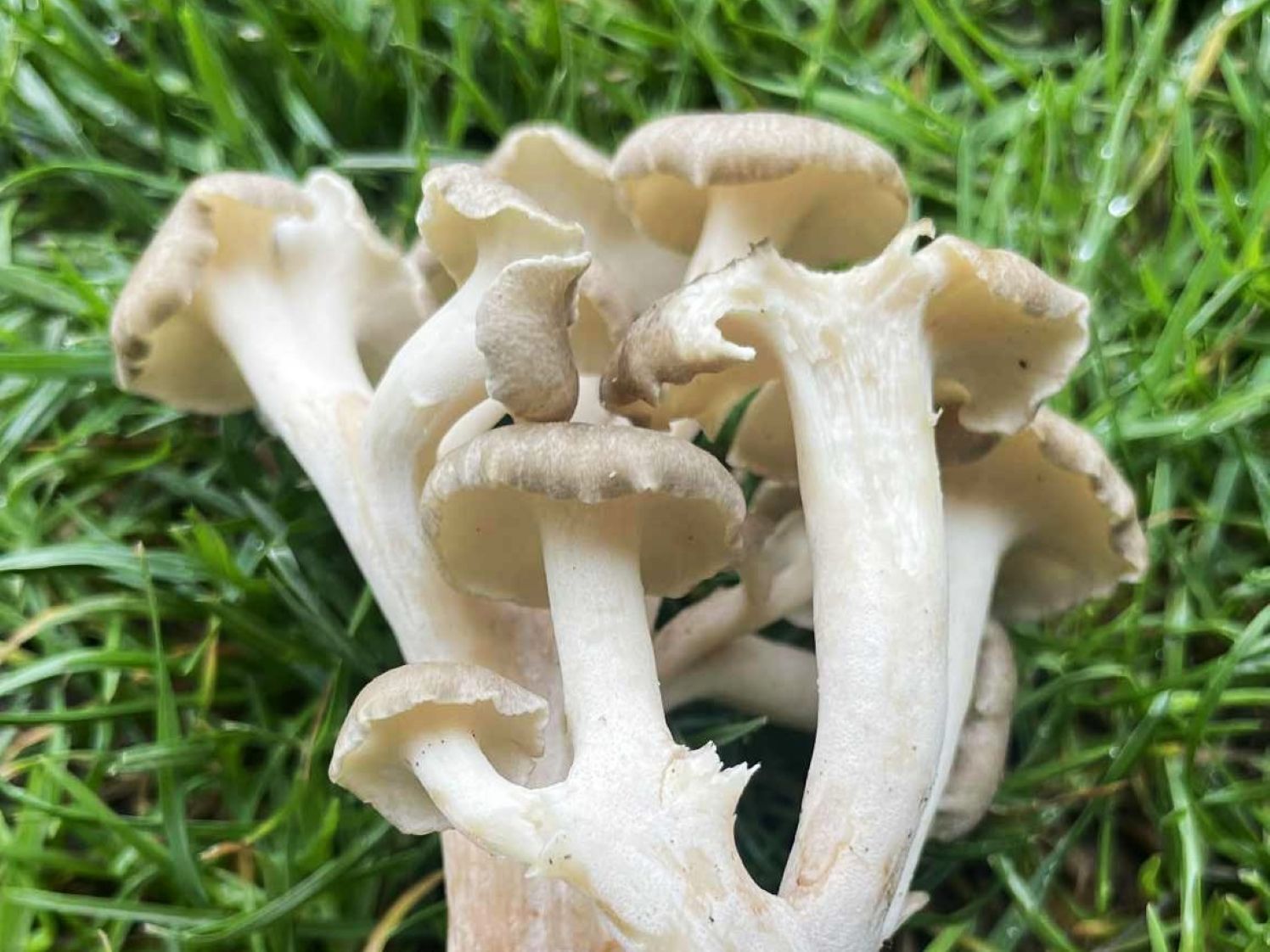
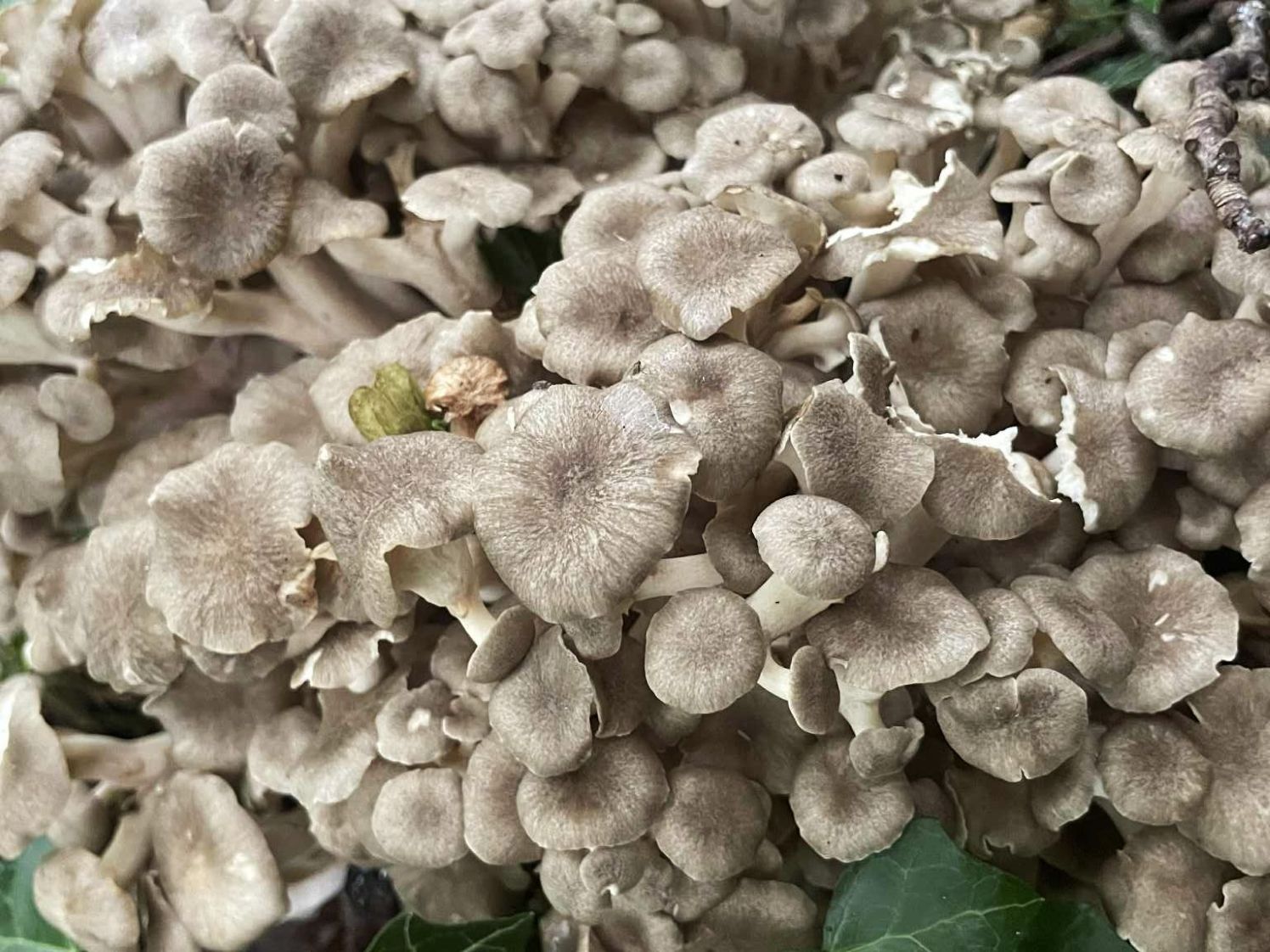
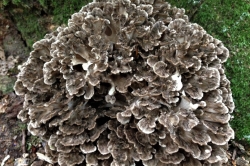
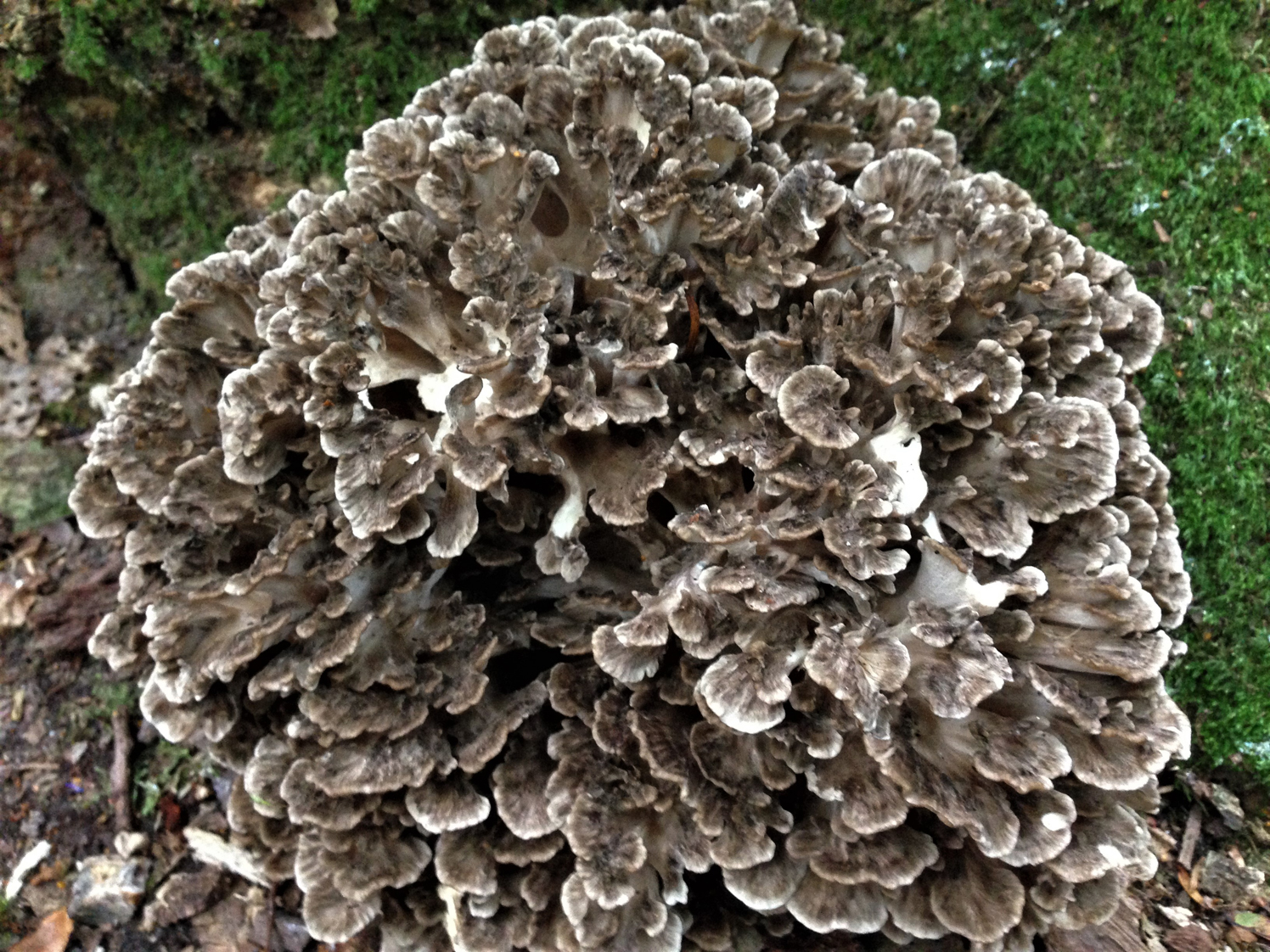
Hen of the Woods (Grifola frondosa), pictured, has bigger and a bit darker grey fronds, thicker white flesh and even narrower pores.
Giant Polypore (Meripilus giganteus) aka Blackening Polypore has bigger and light to dark brown fronds, much thicker, pale, but blackening flesh and even narrower pores.
Taste / Smell
Edible and well appreciated in most countries, especially in Southeast Asia. Taste and smell descriptions are vary by different authors. Some says taste acrid and pungent, I would say it is mild and sweet when young, but rapidly becoming acrid. Smell pleasant and sweet when young, but becoming unpleasant with age. This species is too rare to pull up or eat in the UK.
Frequency
Rare in the UK, most of the local records are from Middle to Southern England. It is uncommon but widespread in Mainland Europe with Central to Southern European preference.
Spores
Spore print is white. Spores are colourless (hyalin), cylindrical, thin-walled and smooth.
Other Facts
Its sclerotium is one of the most important medicinal mushrooms in Southeast Asia, known as Zhu Ling in Chinese, or Chorei in Japanese and widely used in Traditional Chinese Medicine (TCM) and Japanese Kampo medicine as diuretic. The first medical-pharmacological description (of the sclerotium) can be found in Shennong’s Materia Medica or Shennong Bencaojing.
It is a less-known fact that the sclerotium of Umbrella Polypore only starts developing when the mycelium is formed and its not fully understood symbiotic(?) relationship with the mycelium of honey fungus (Armillaria mellea).





Leave a Reply