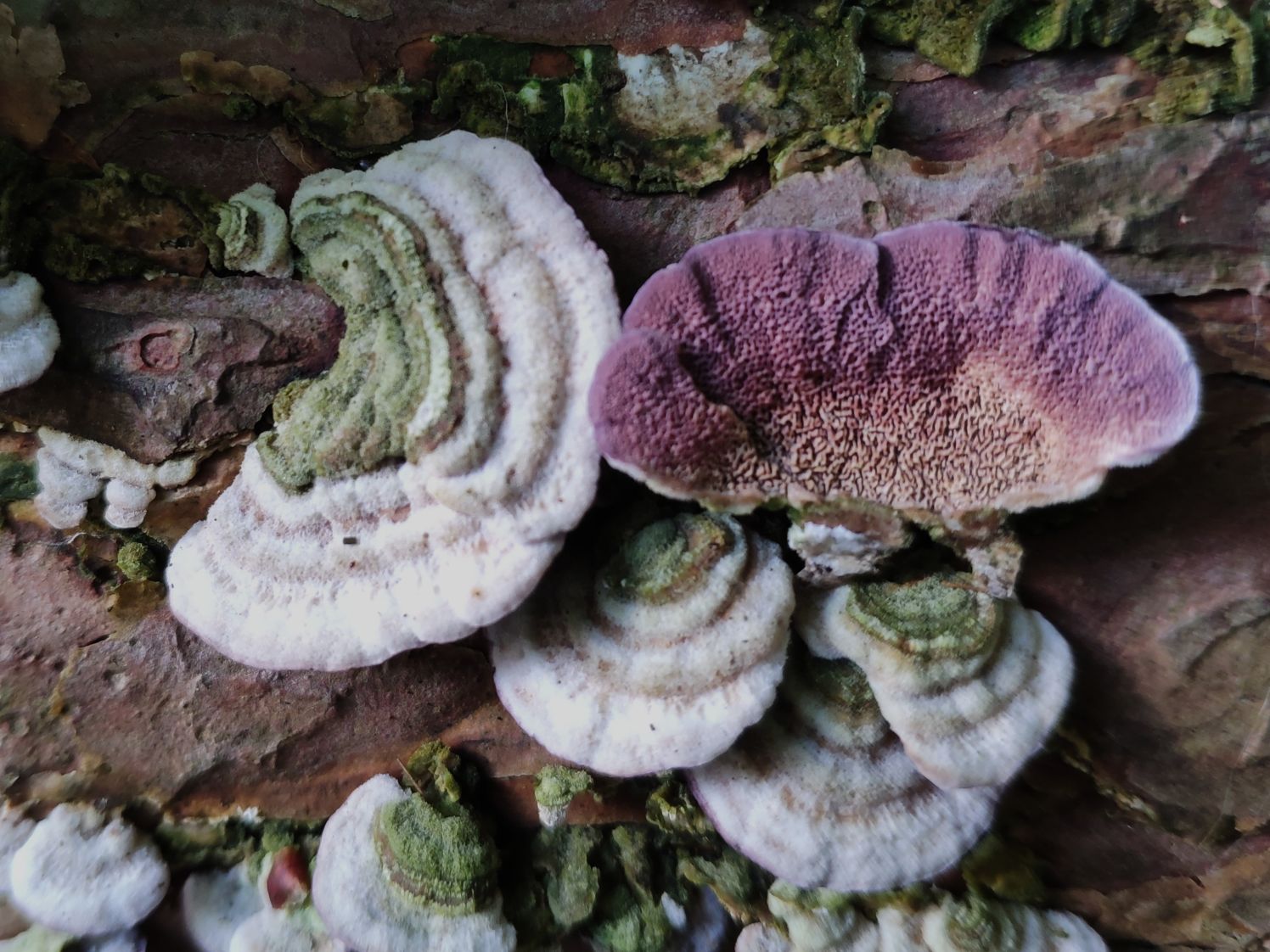
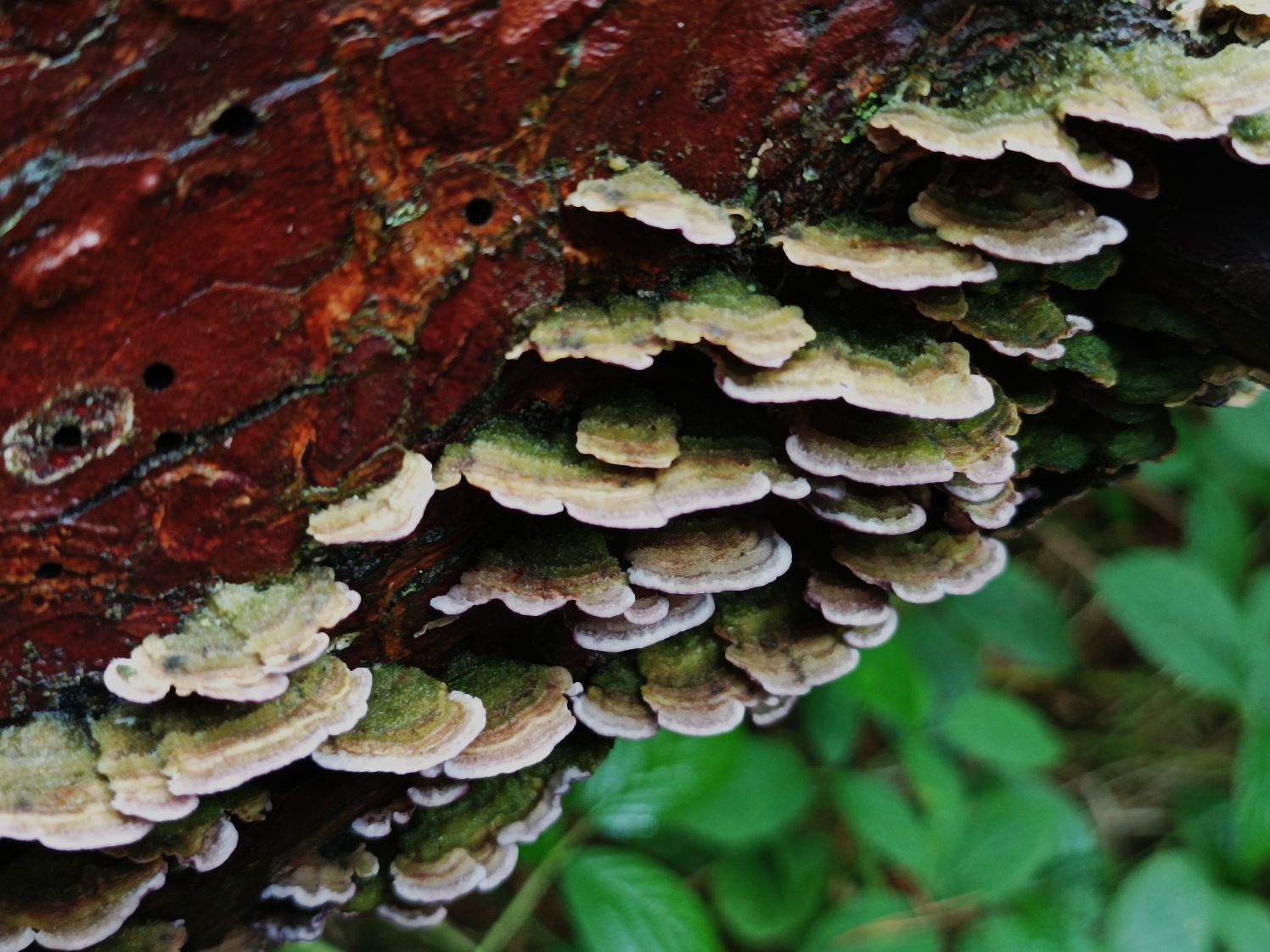
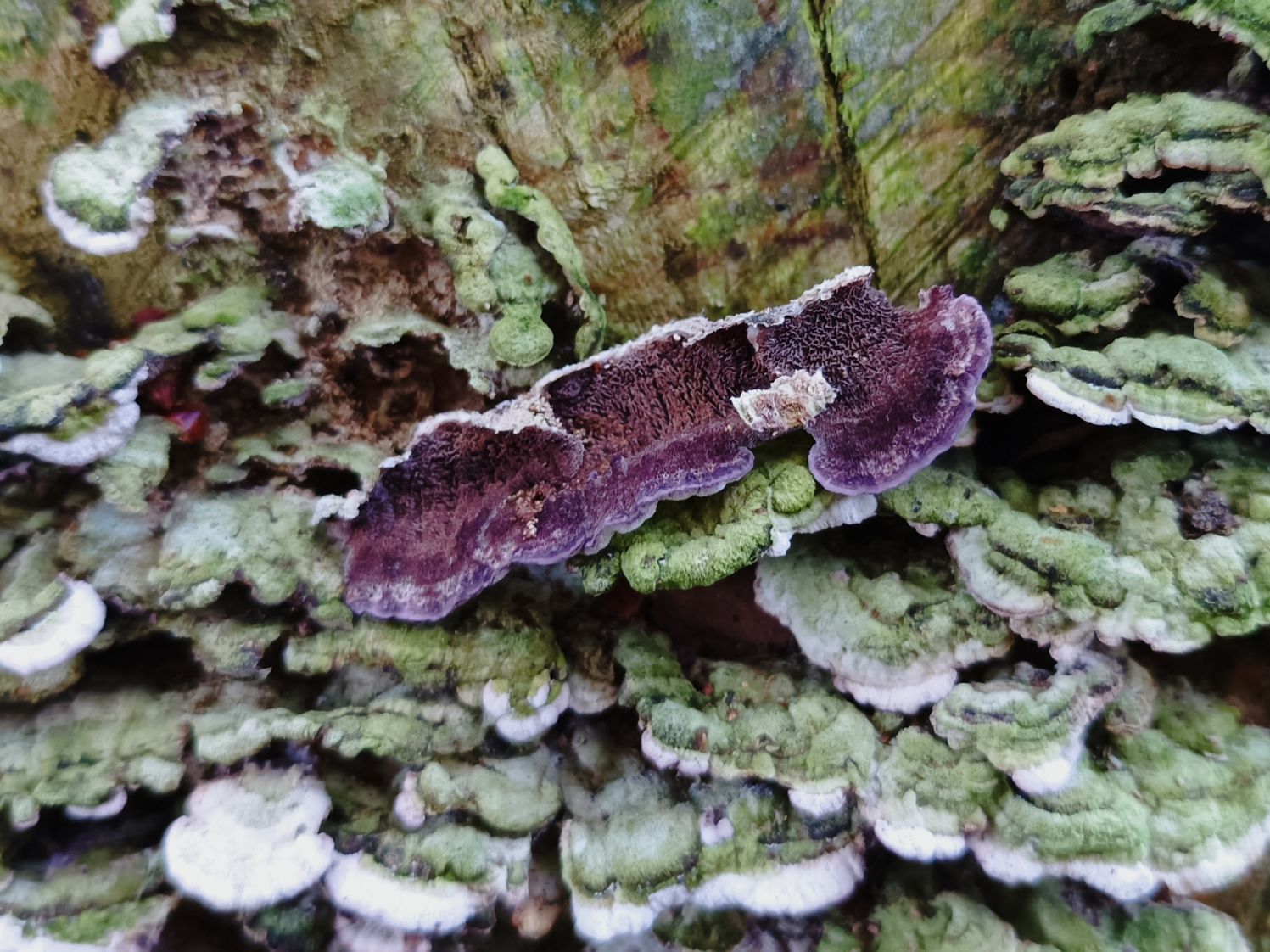
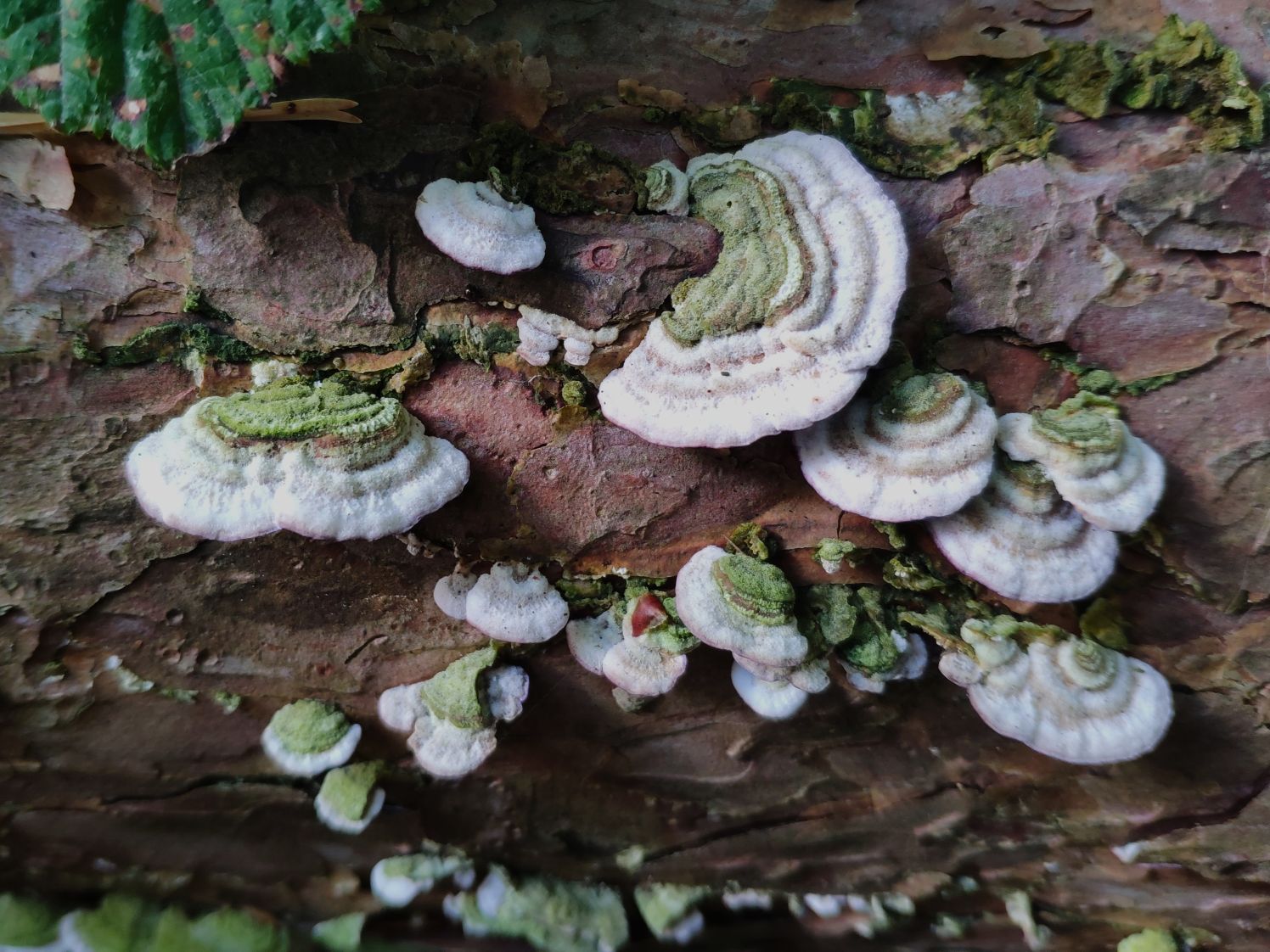
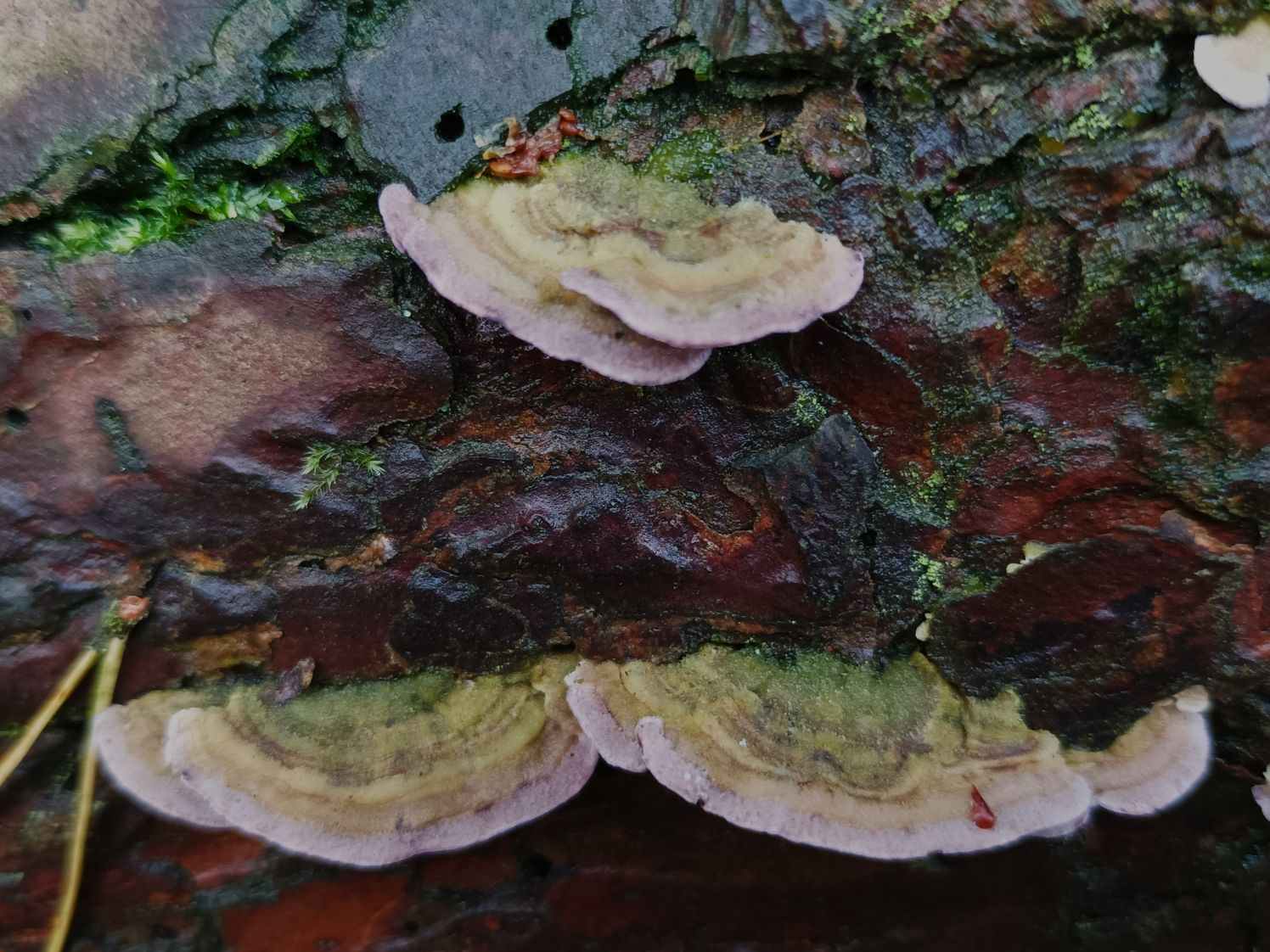
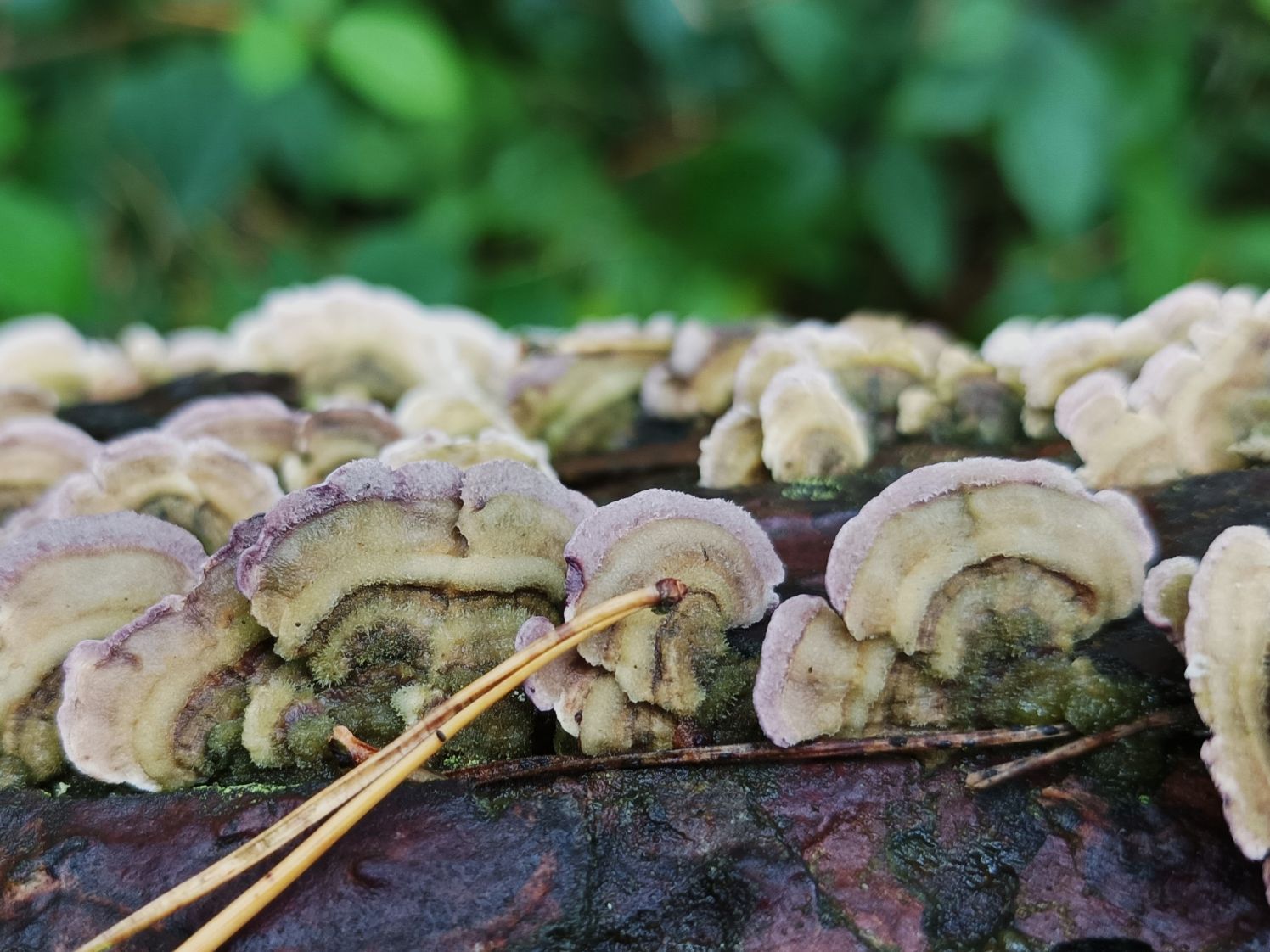
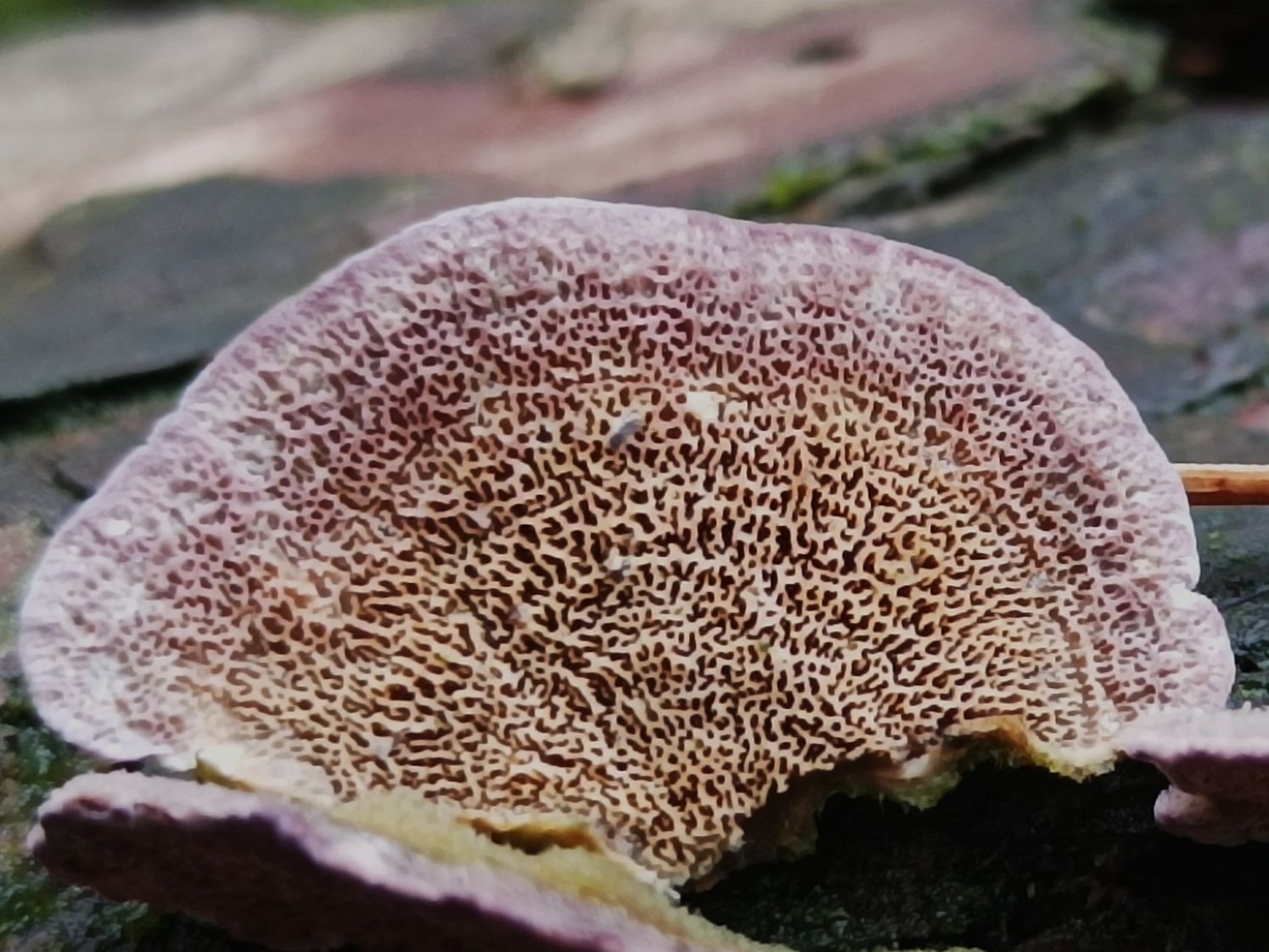
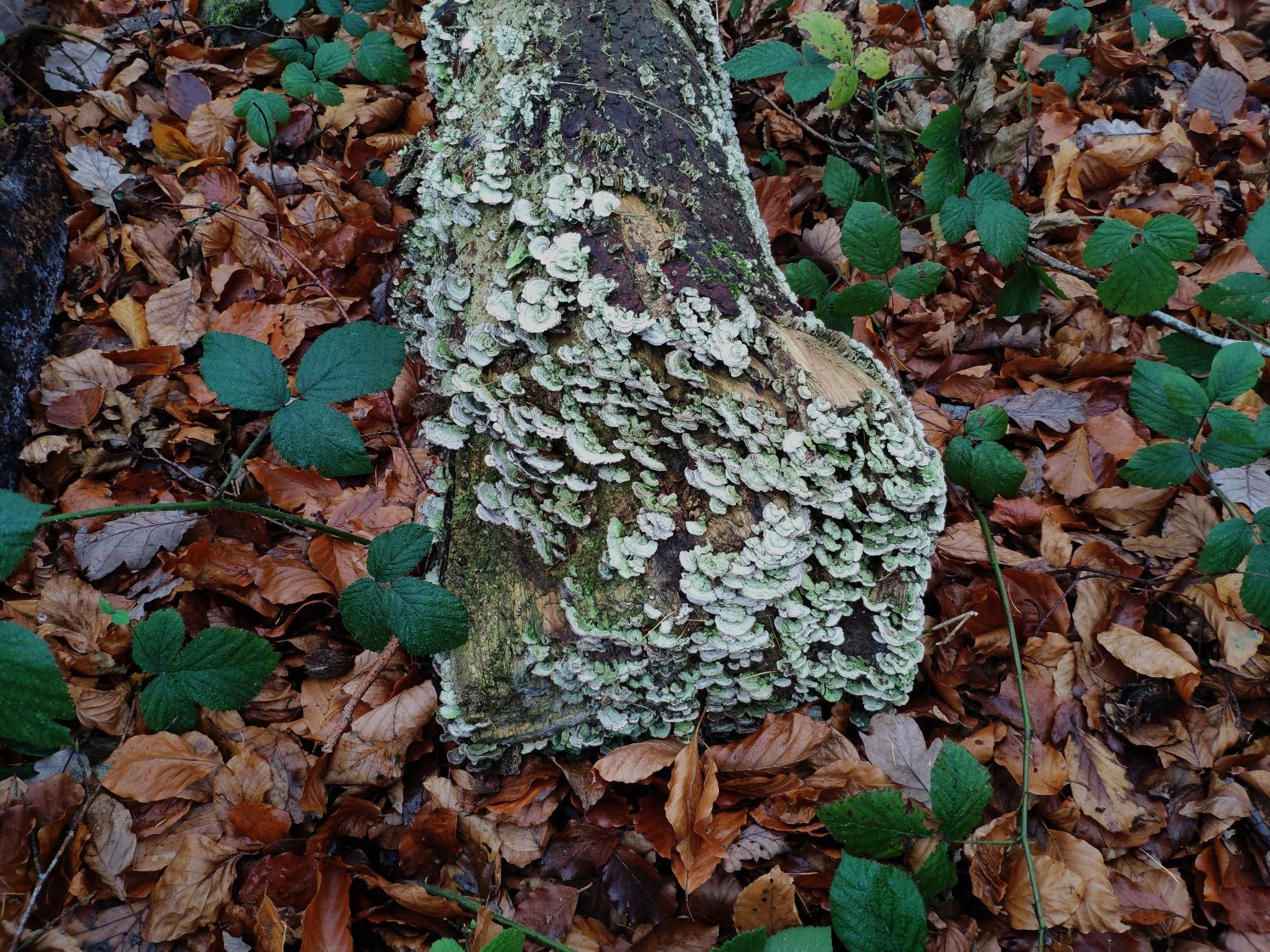
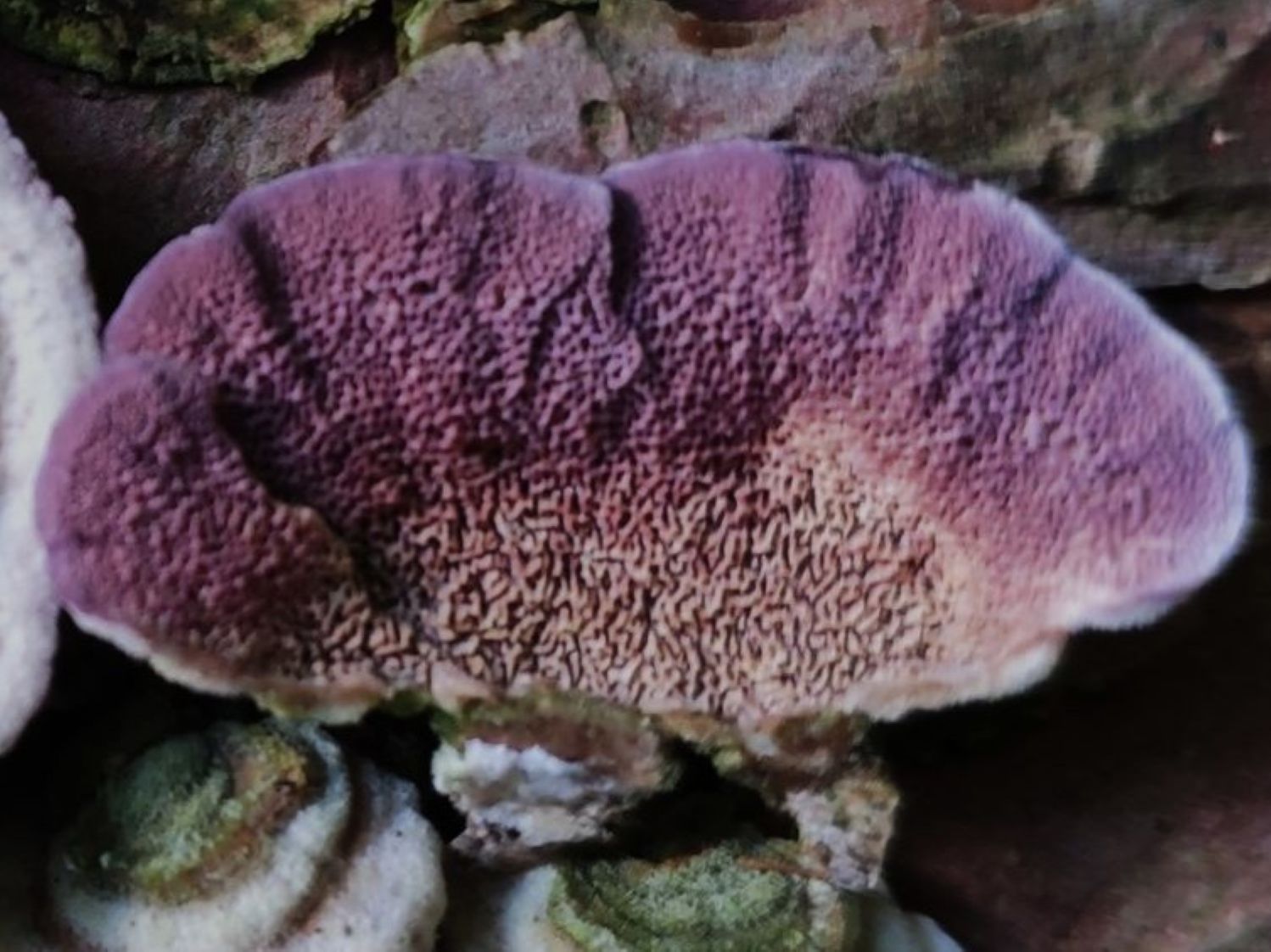
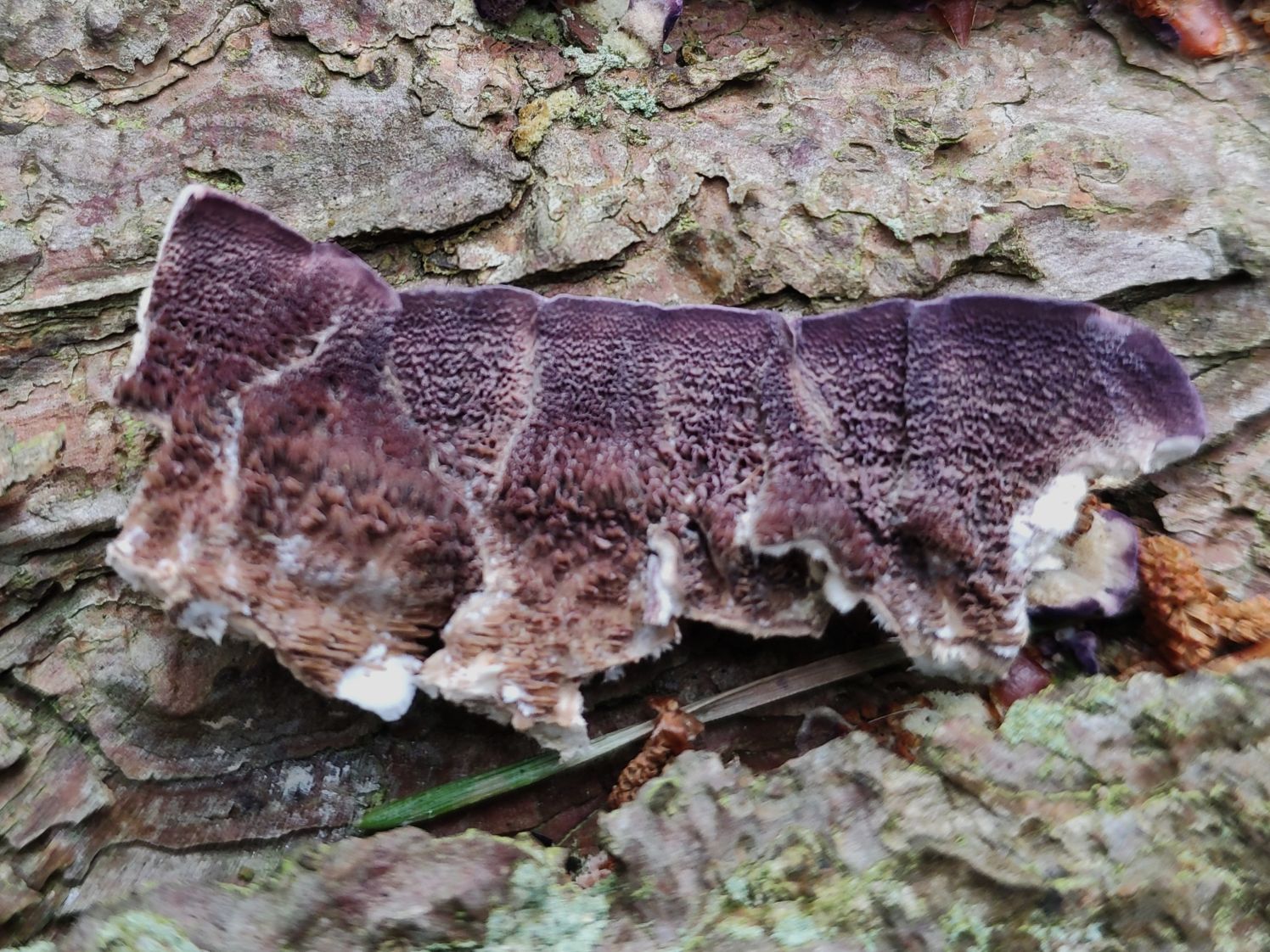
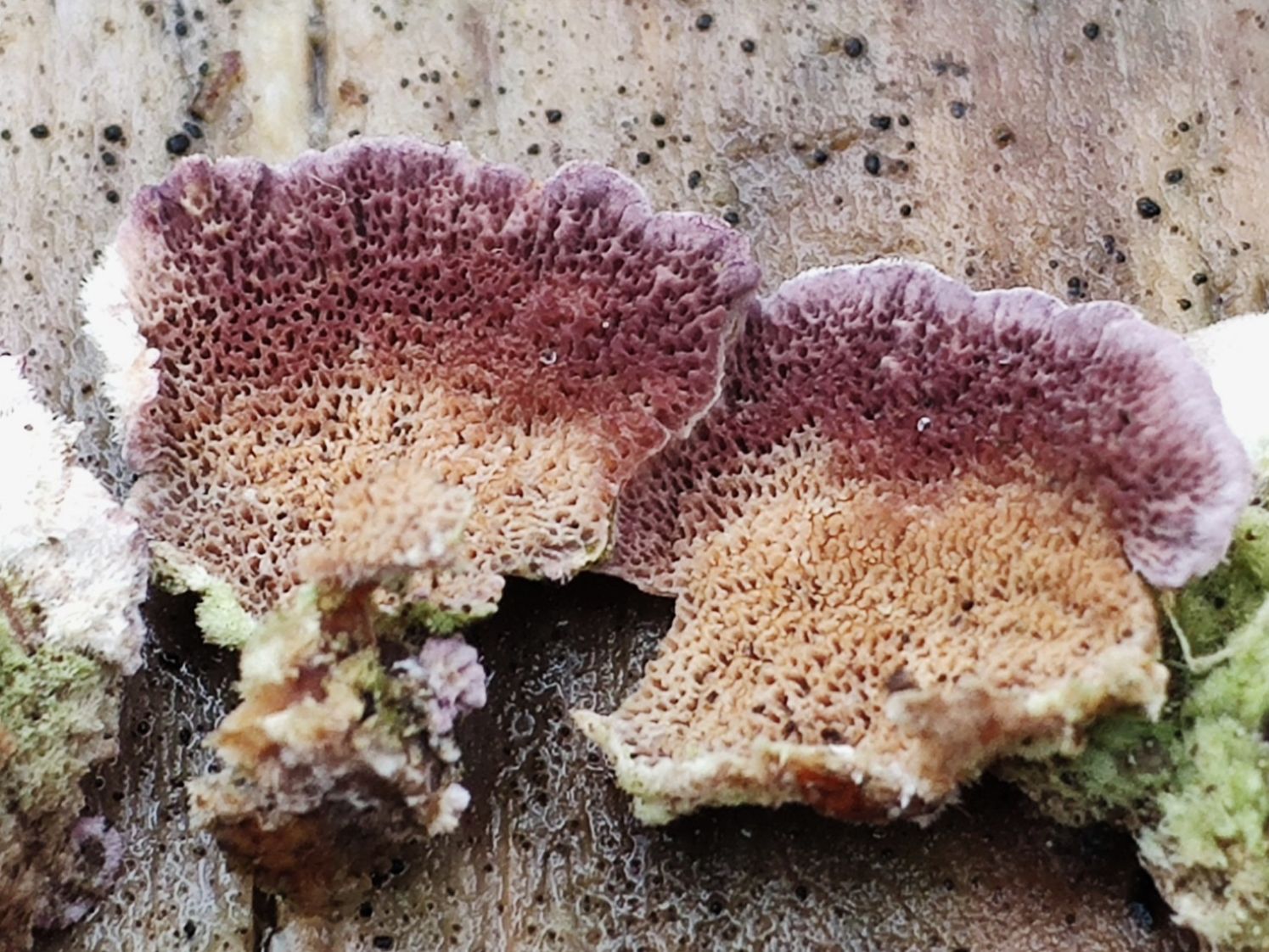
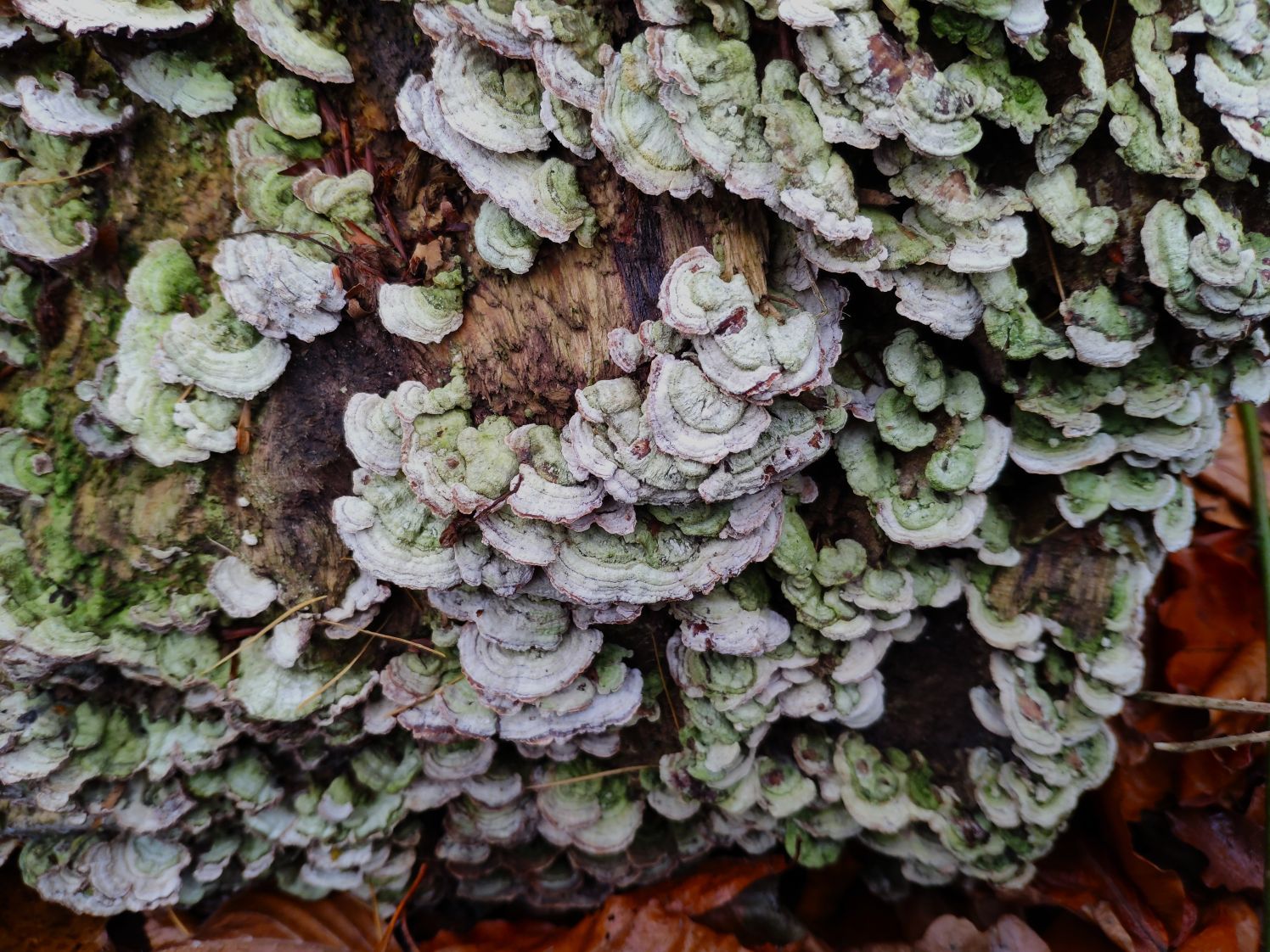
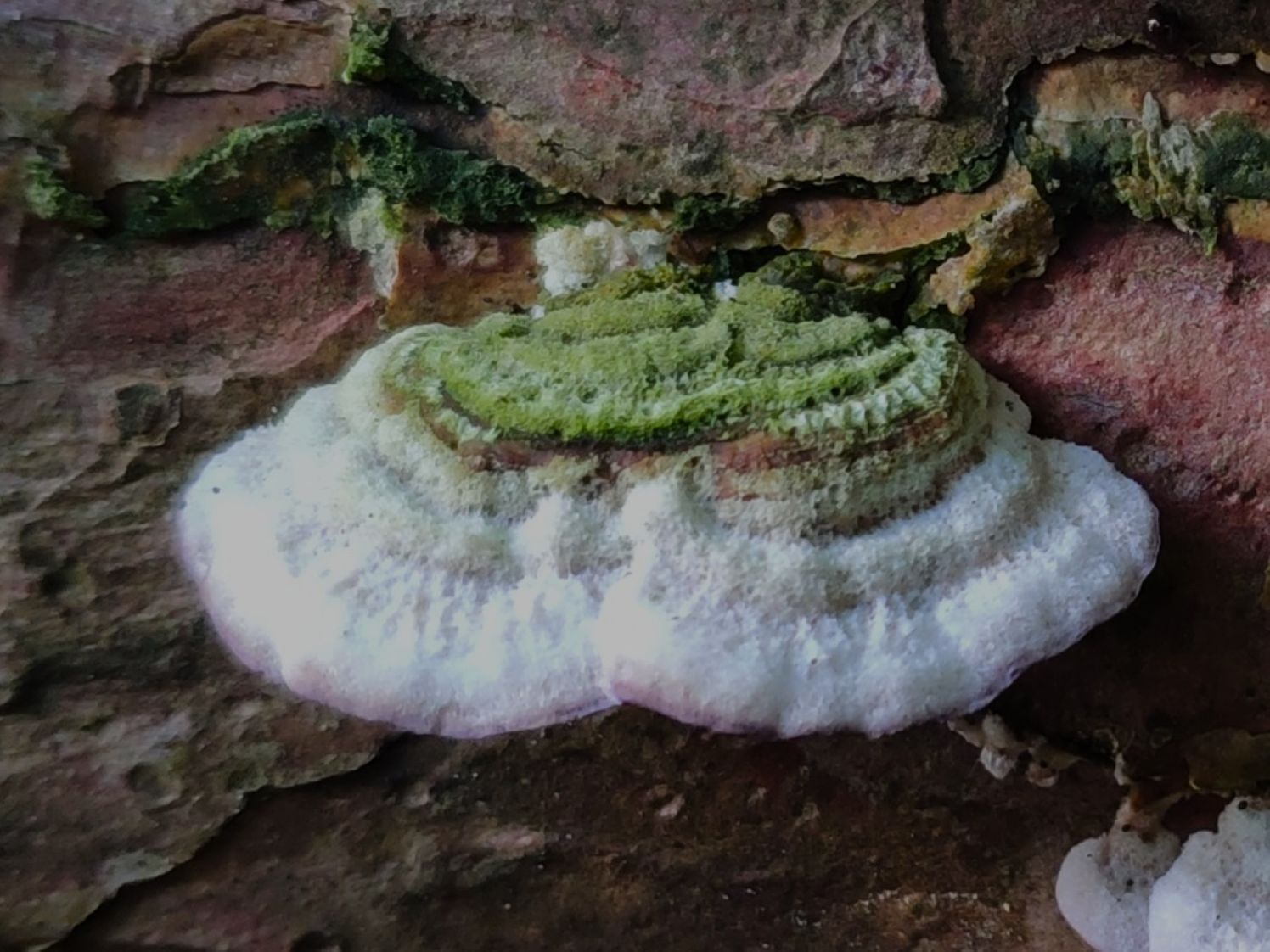
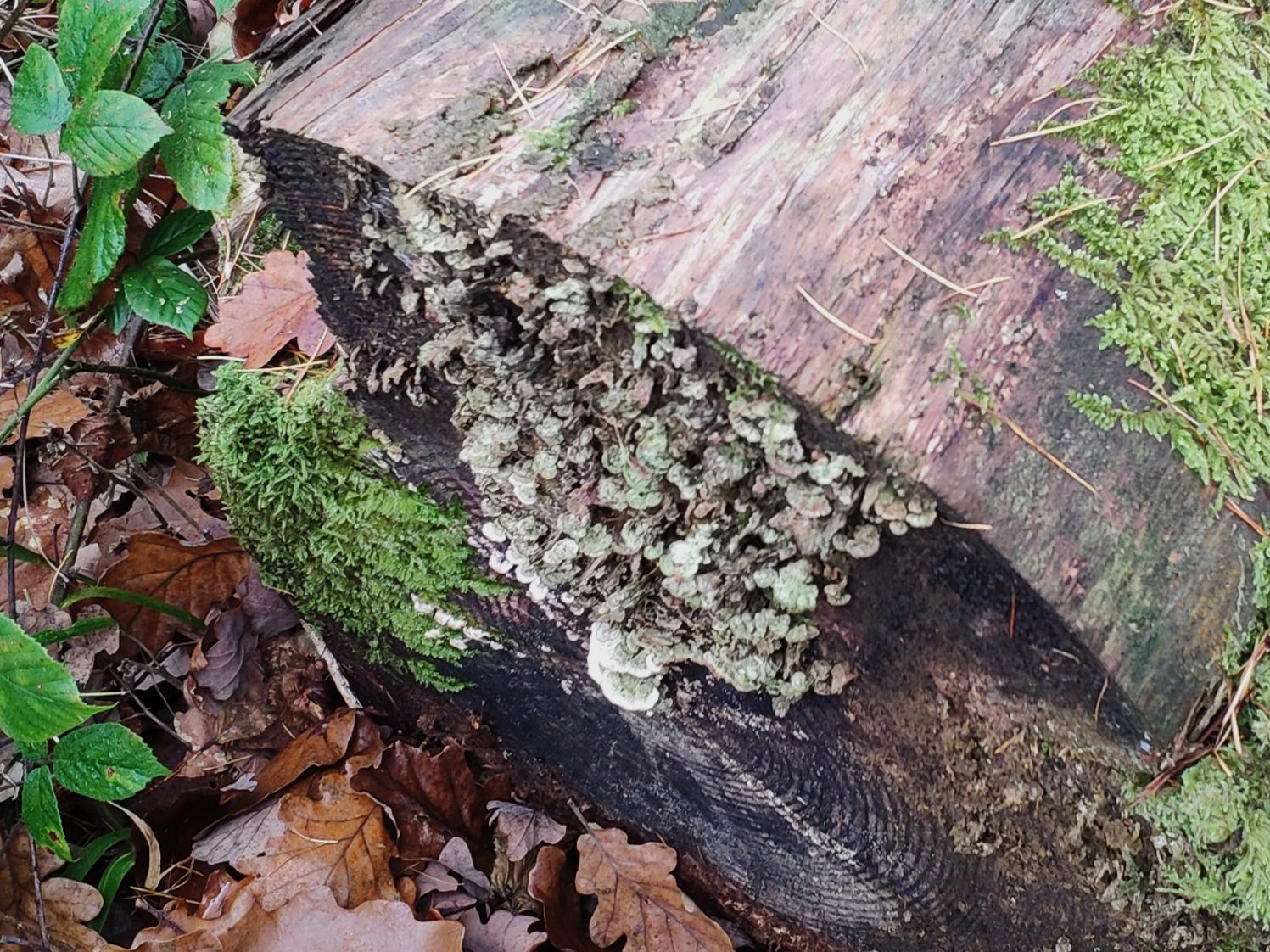
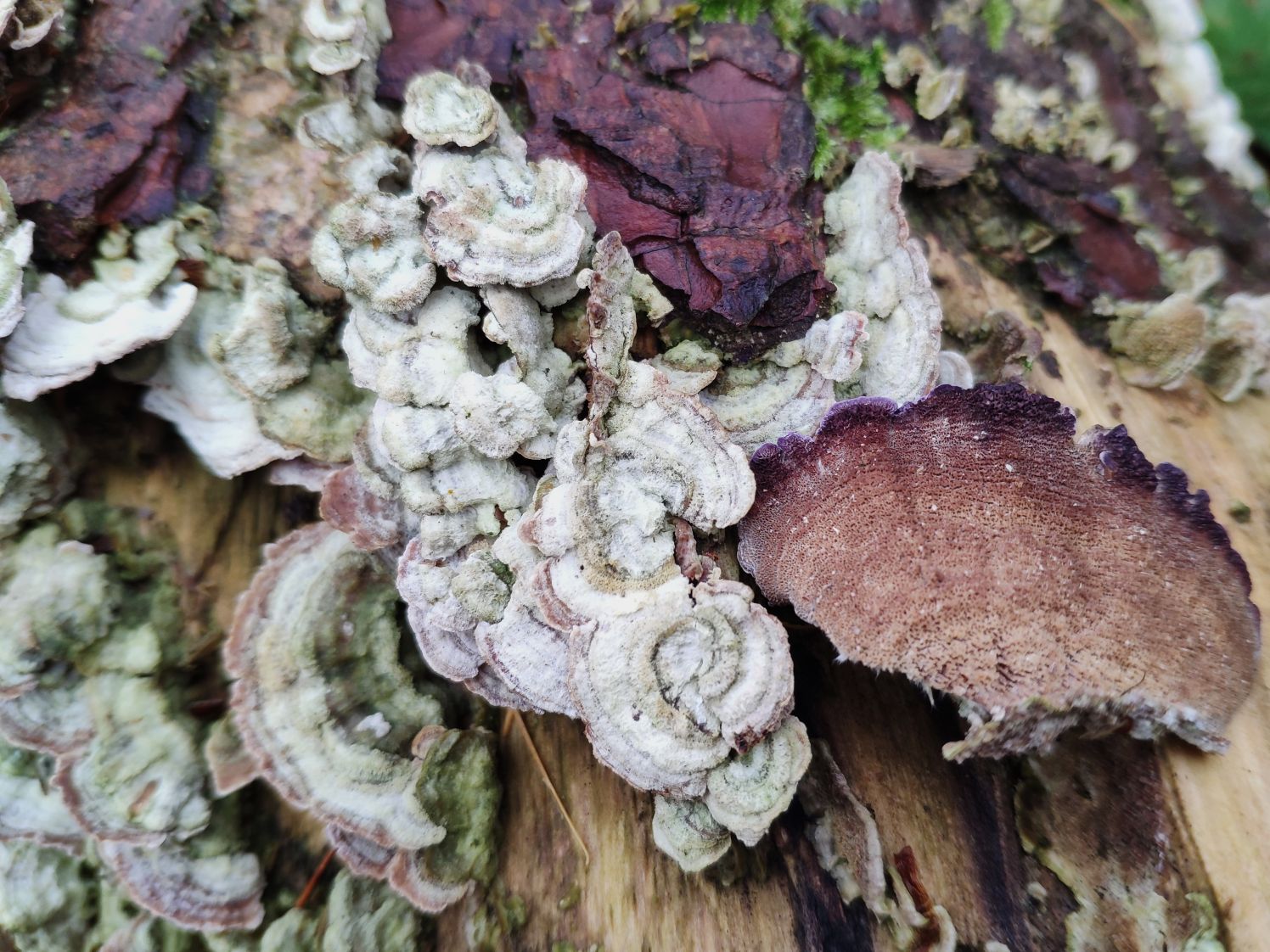
It is a medium-sized polypore mushroom, growing on fallen and decaying woods of conifers, such as Fir, Larch, Pine and Spruce. Might be completely resupinate, barely pileate or semicircular to fan-shaped.
Home / Mushroom Guide /
Purplepore Bracket

Purplepore Bracket


| Mushroom Type | |
| Common Names |
Purplepore Bracket, Ysgwydd Ffynidwydd (CY), Niszczyk Iglastodrzewny (PL), Fenyő-Egyrétűtapló (HU) |
| Scientific Name |
Trichaptum abietinum |
| Synonyms |
Trametes abietina, Hirschioporus abietinus, Coriolus abietinus, Polyporus abietinus |
| Season Start |
All |
| Season End |
All |
| Average Mushroom height (CM) | |
| Average Cap width (CM) |
1–6 |

Please note that each and every mushroom you come across may vary in appearance to these photos.
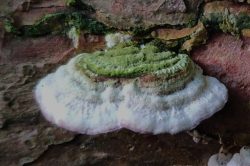
Fruiting Body
Annual. 1–6 cm across, rarely even up to 10 cm, semicircular, fan-shaped or kidney-shaped, broadly attached to the host/substrate. Sometimes it grows without forming a cap (resupinate) or only slightly pealing back (effused-reflexed) on a vertical surface. It is common that the smaller individual fruit bodies merge/fuse and form larger patches. The upper (sterile) surface is hairy or velvety at first, becoming bald (glabrous) later, concentrically zonate and variable in colours. It could be whitish to greyish, sometimes reddish brown. Often covered with algae, which makes it more or less green. Margin thin, obtuse, wavy with a lilac tinge.
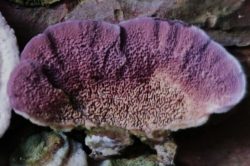
Pores
Tubes up to 1.5 mm long. Pores 4–6 per mm, irregular, round-angular to tooth-like (irpicoid); beautiful bright purple at first, purple-brown later, which fades with time, but a weak purple tinge might remain (especially on the margin).
Flesh
Thin, 1–1.5 mm thick, white when young, creamy or buff with age. Has two layers, the upper layer (close to the tubes) is soft, the lower layer is fibrous, tough.
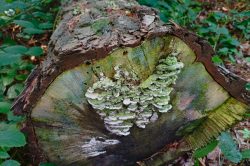
Habitat
On lying conifer logs, trunks and stumps, when the bark is still present. Main hosts/substrates are Fir, Larch, Pine and Spruce. Grows solitarily or in overlapping rows or tiers. Saprotrophic, causes white pocket rot, with small cavities filled with whitish mycelium.
Possible Confusion
It is hard to confuse with any other species in the UK.
In other parts of Europe, it is always worth checking your finding against Trichaptum fuscoviolaceum, which also prefers conifers, especially Pines, but it is not native to the UK. It has radially elongated, gill-like pores.
Taste / Smell
Inedible, without distinct taste or smell.
Frequency
Very common and widespread all across the UK.
Spores
Spore print is white. Spores are colourless (hyalin), cylindrical to slightly sausage-shaped (allantoid), smooth, thin-walled and inamyloid (not staining in iodine reagents, such as Melzer’s reagent and Lugol’s solution).
Other Facts
The epithet (2nd part of the Scientific Name) refers to one of its potential hosts, Fir (Abies).






Leave a Reply