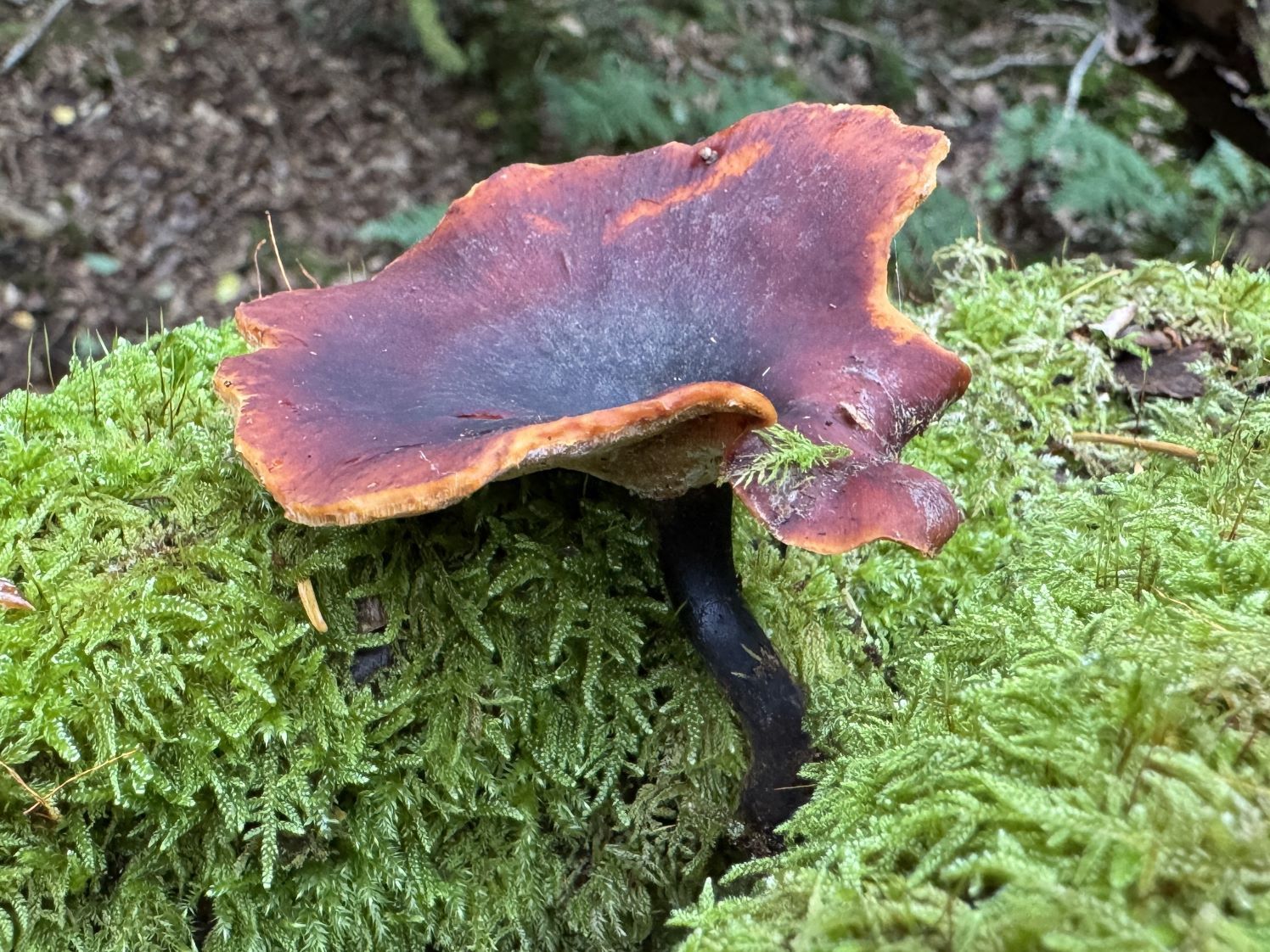
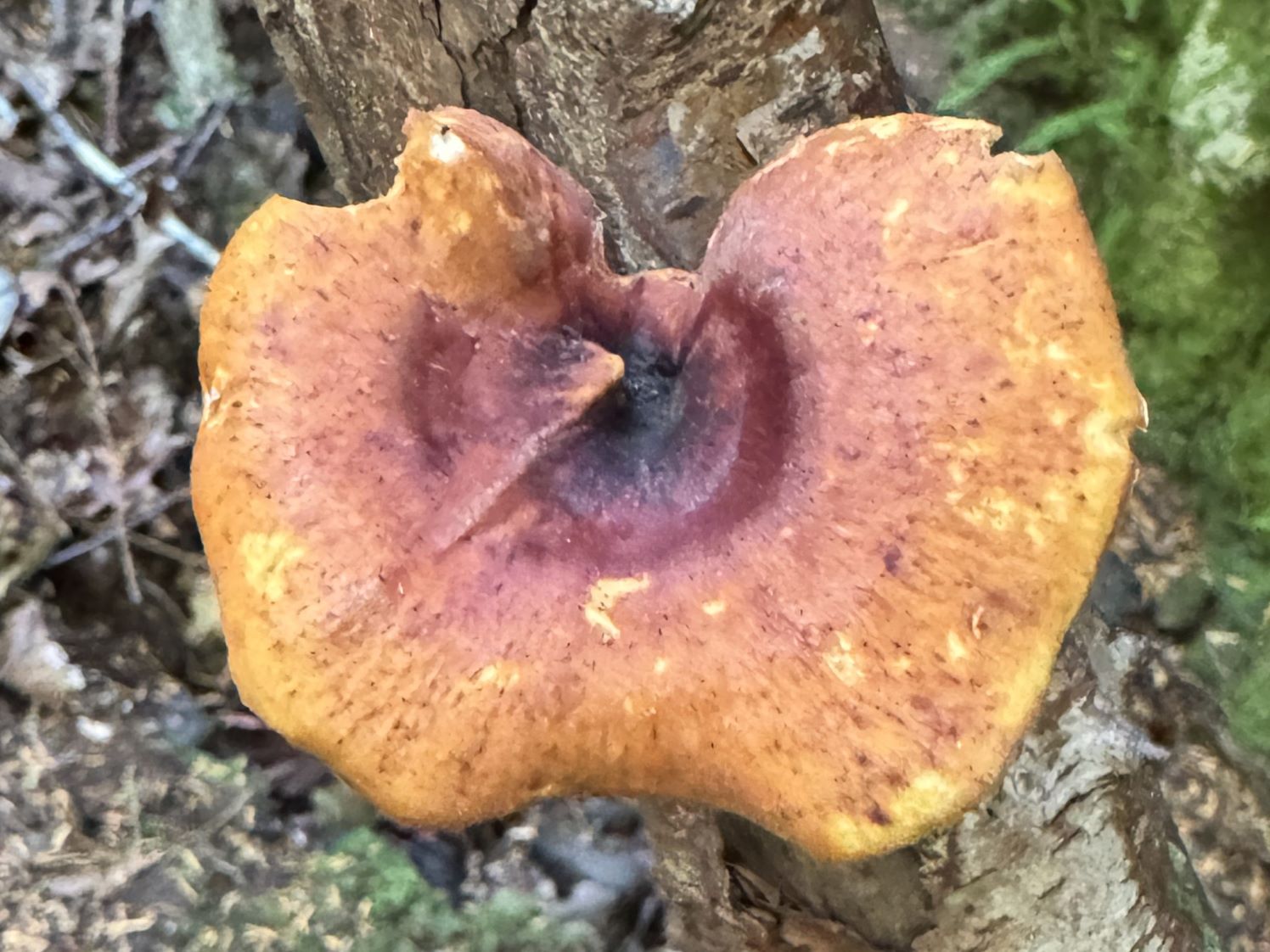
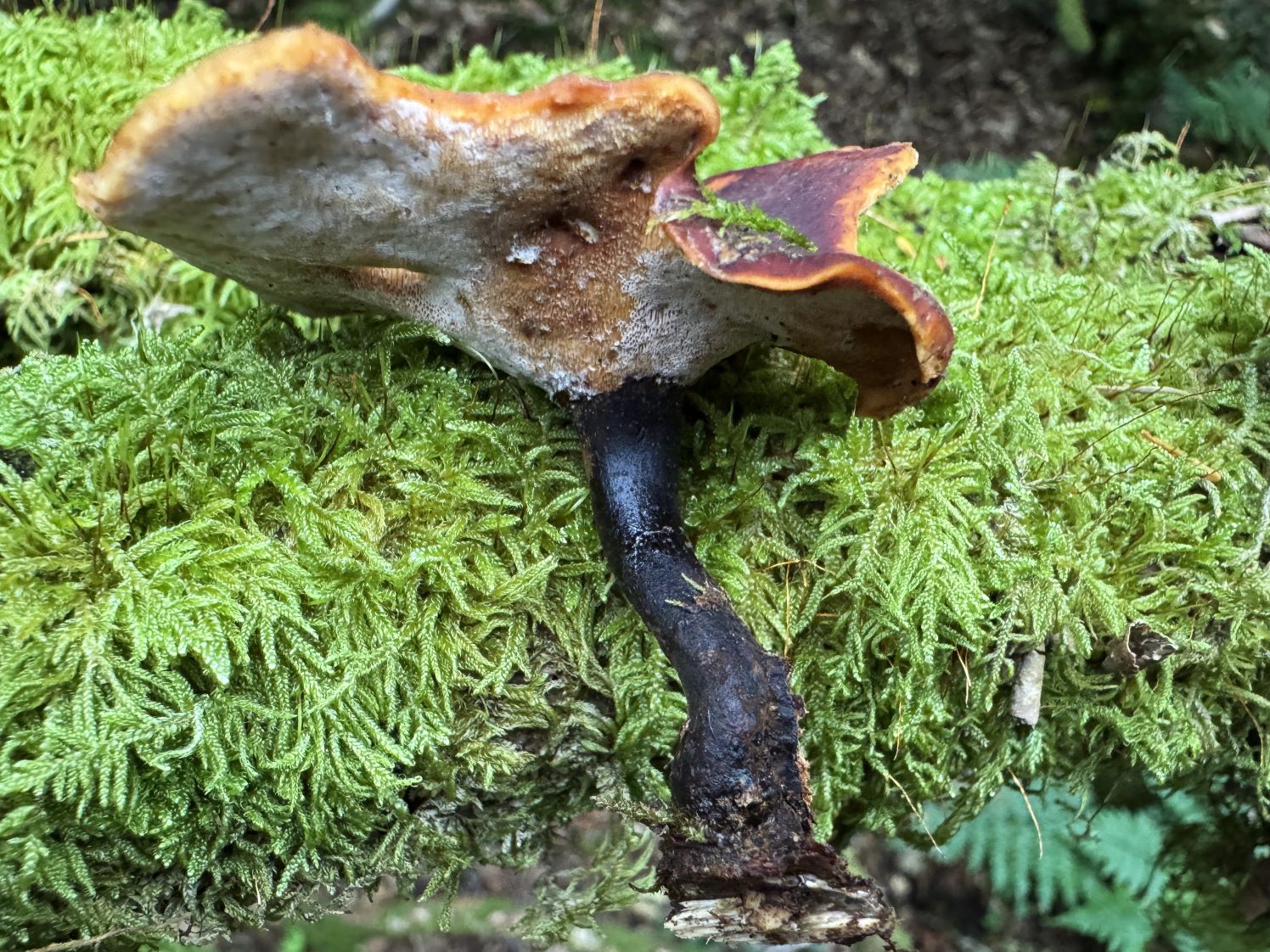
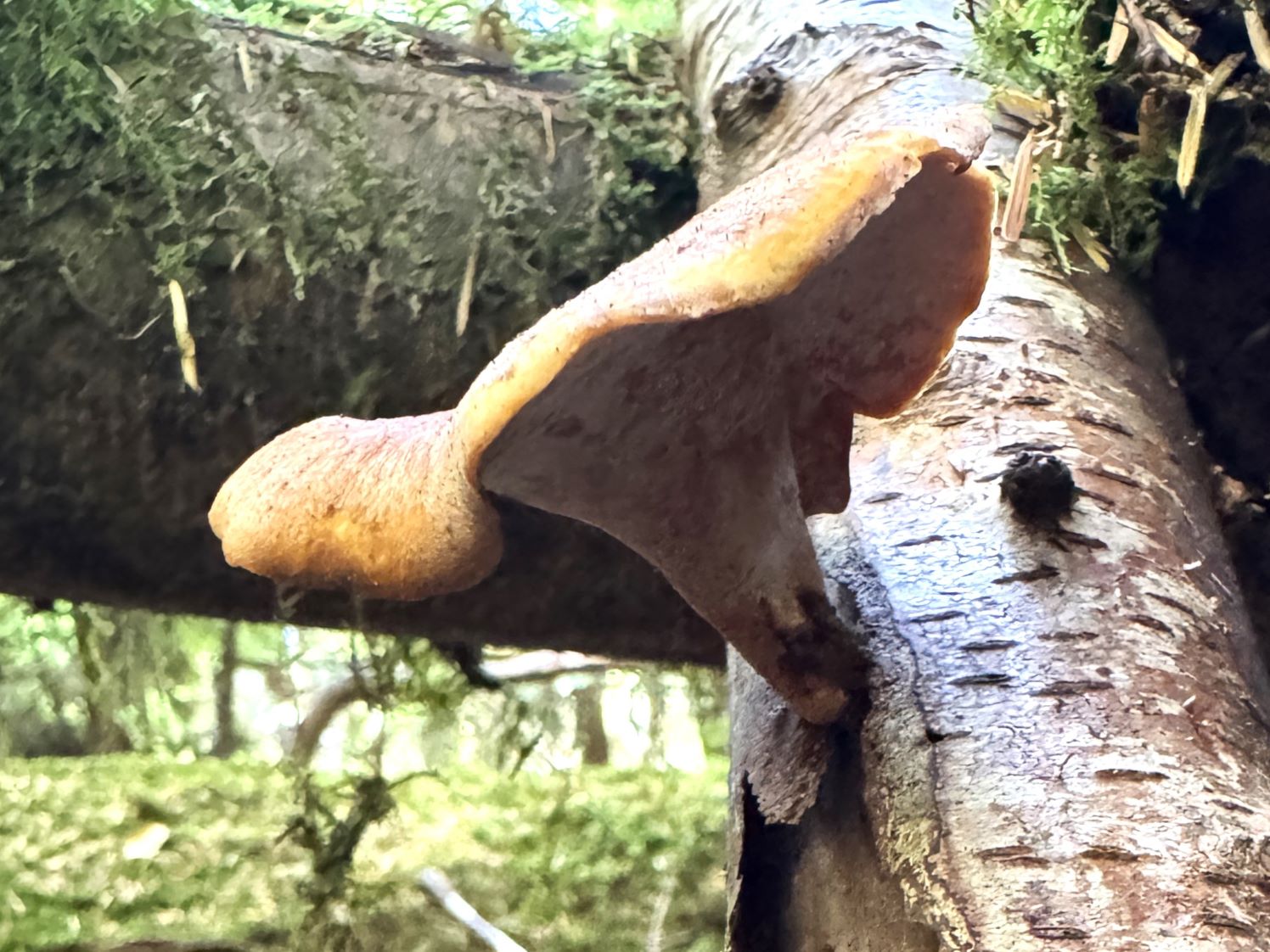
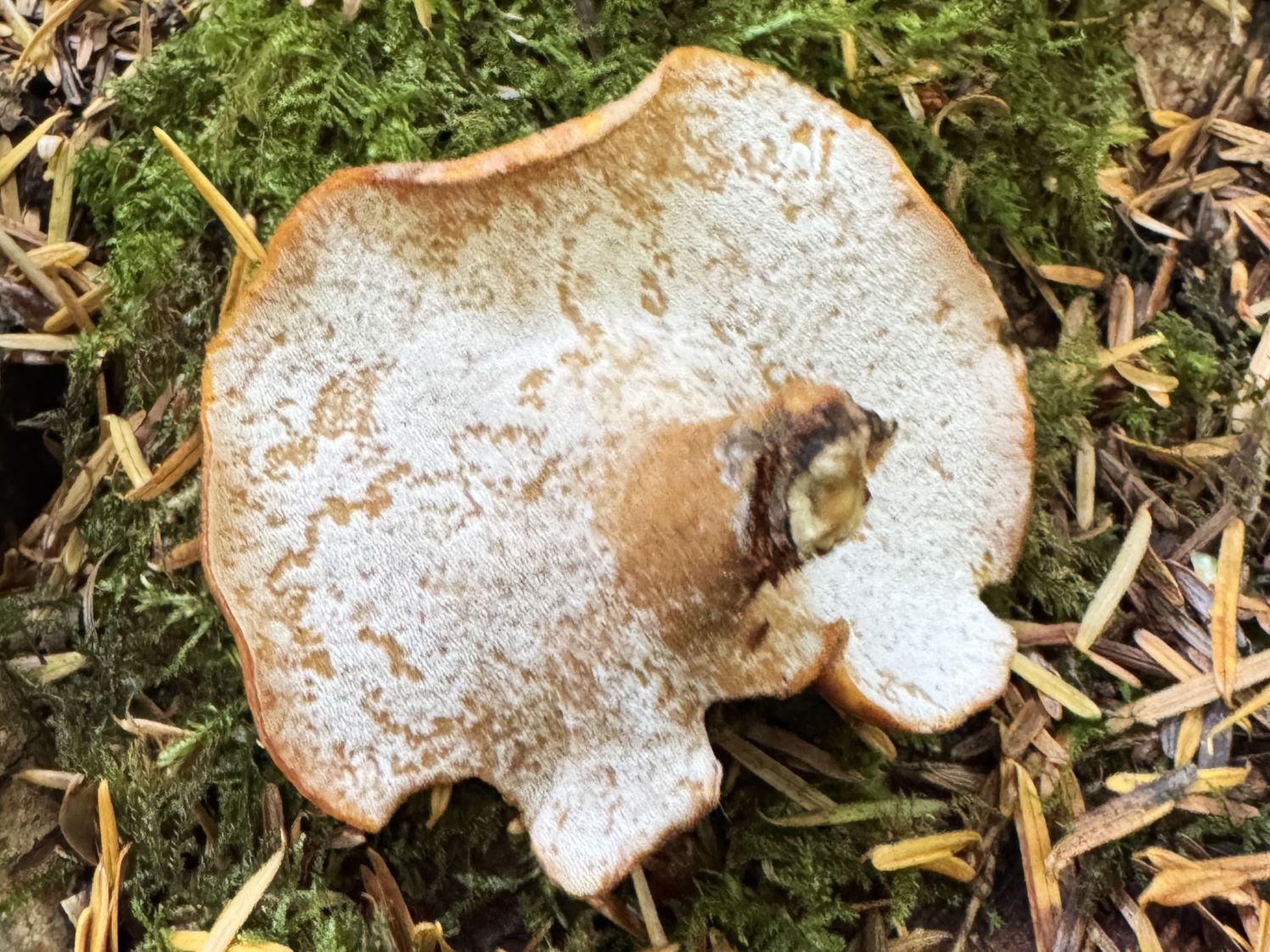
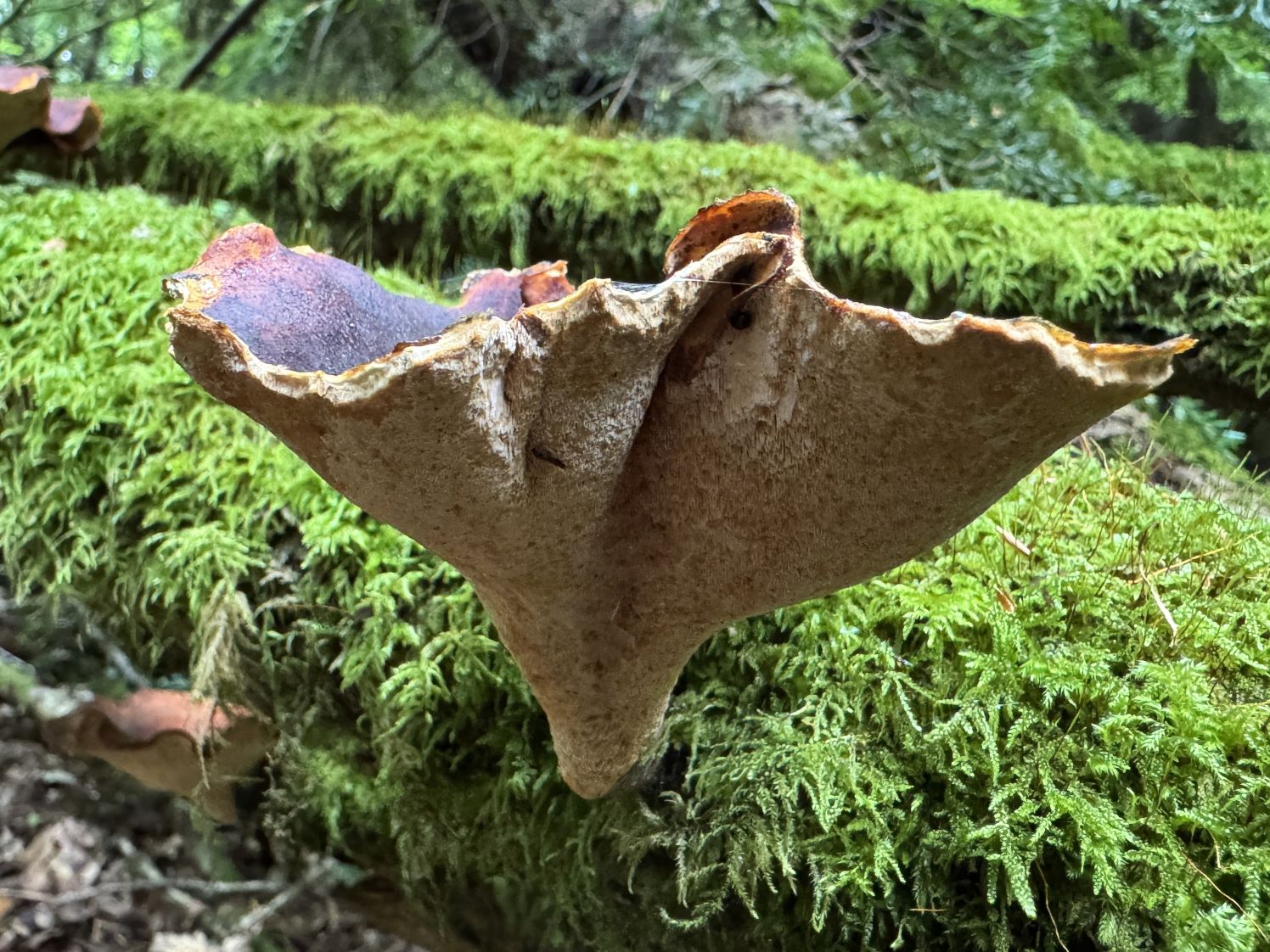
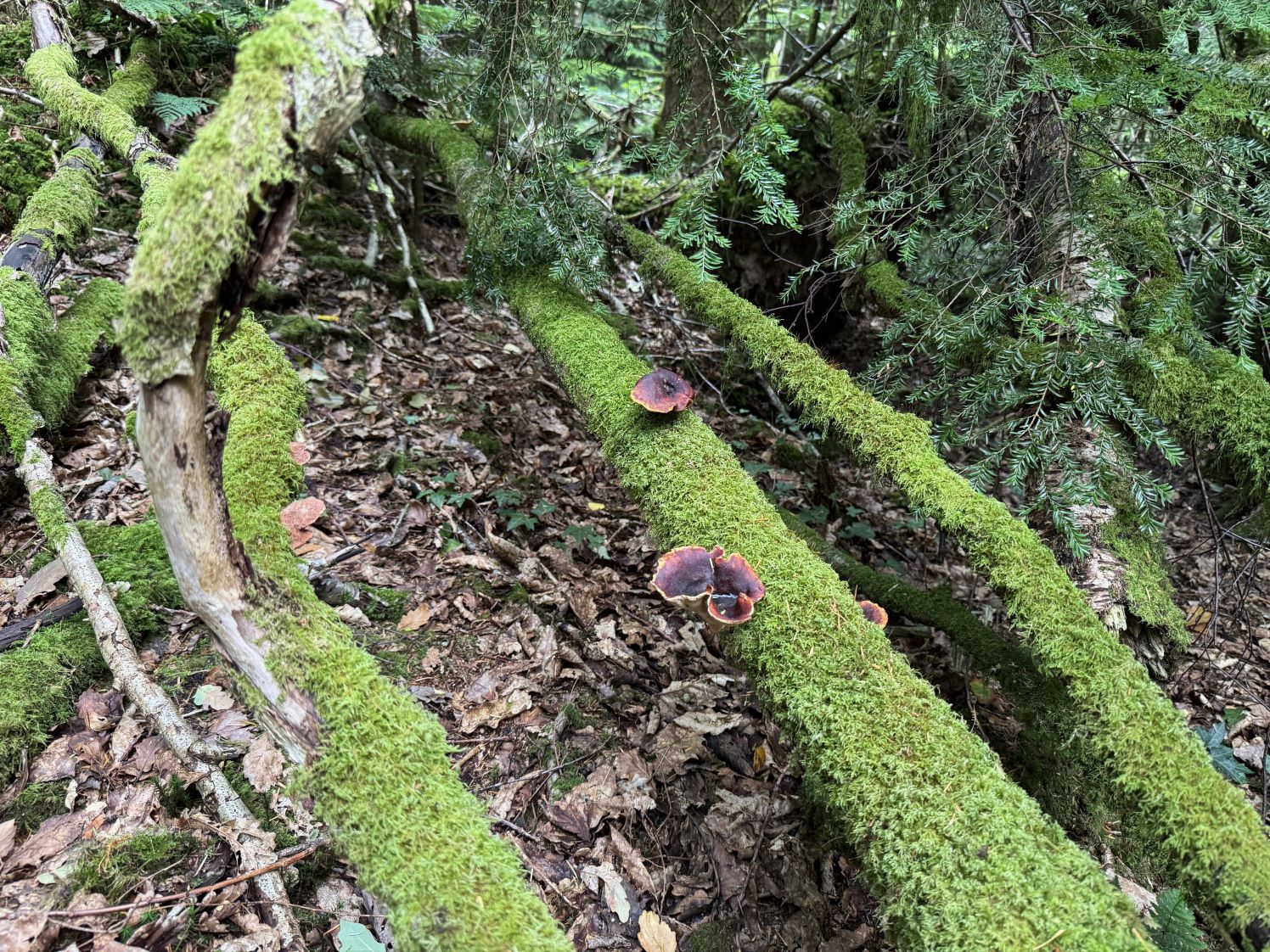
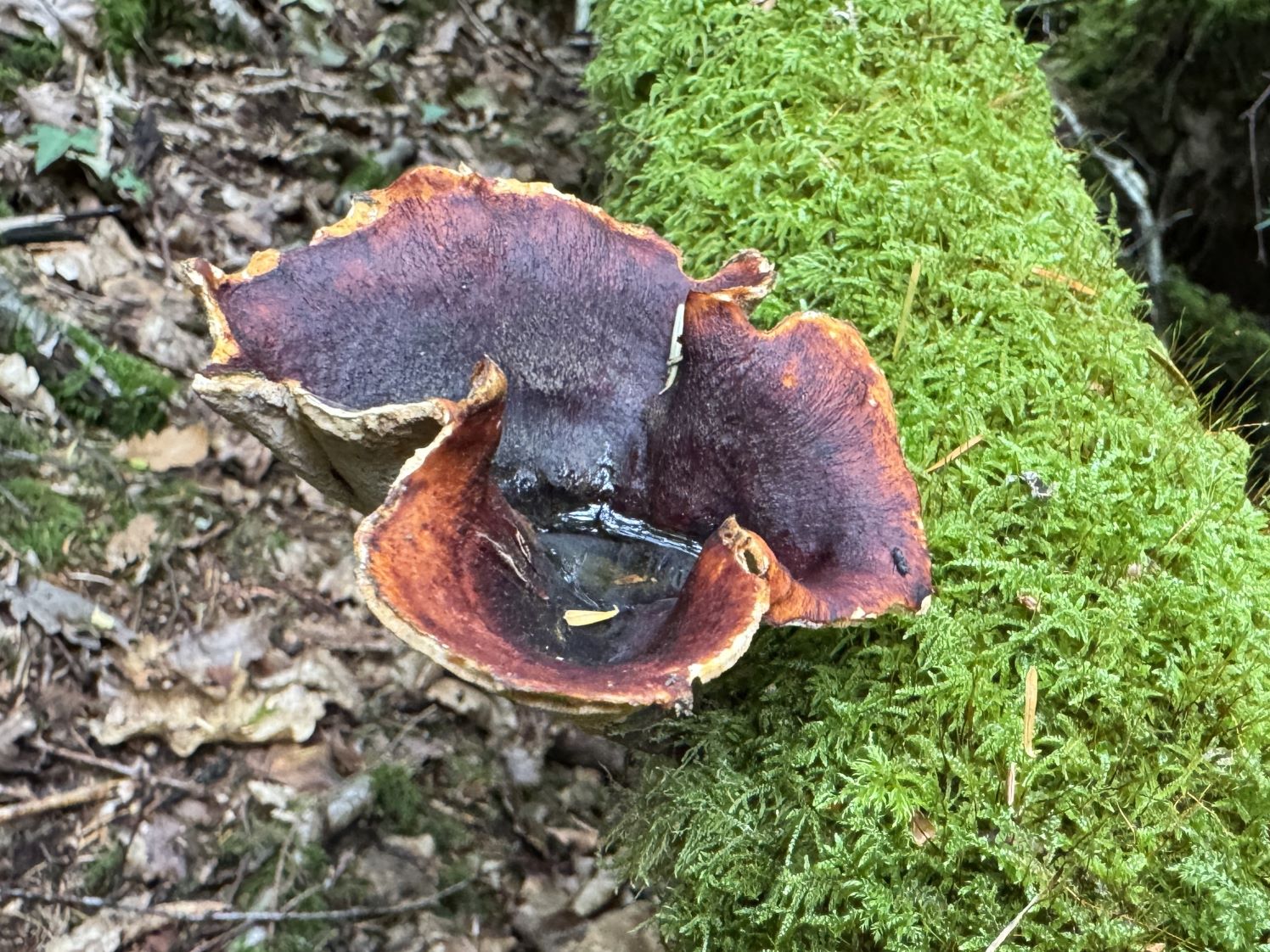
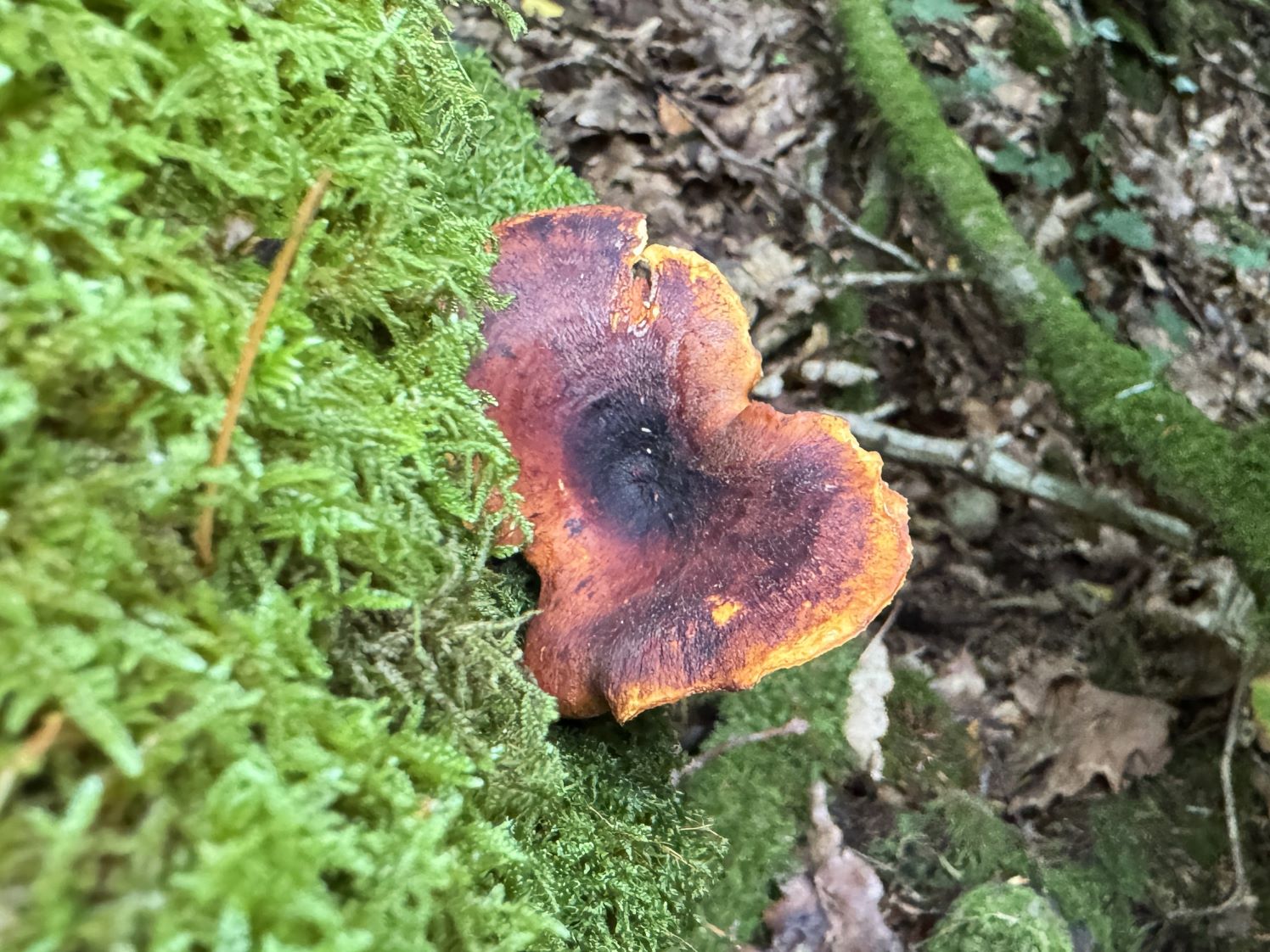
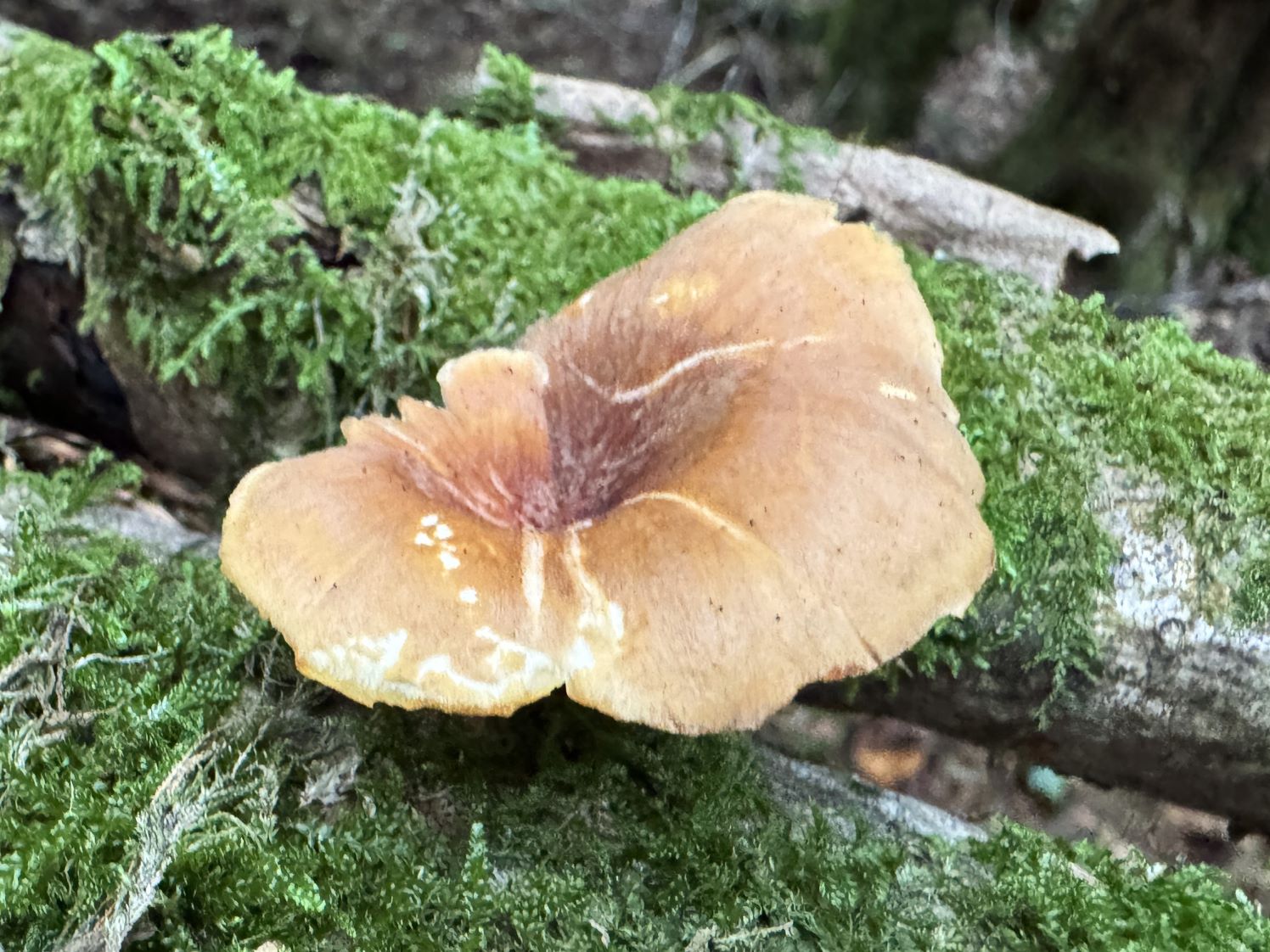
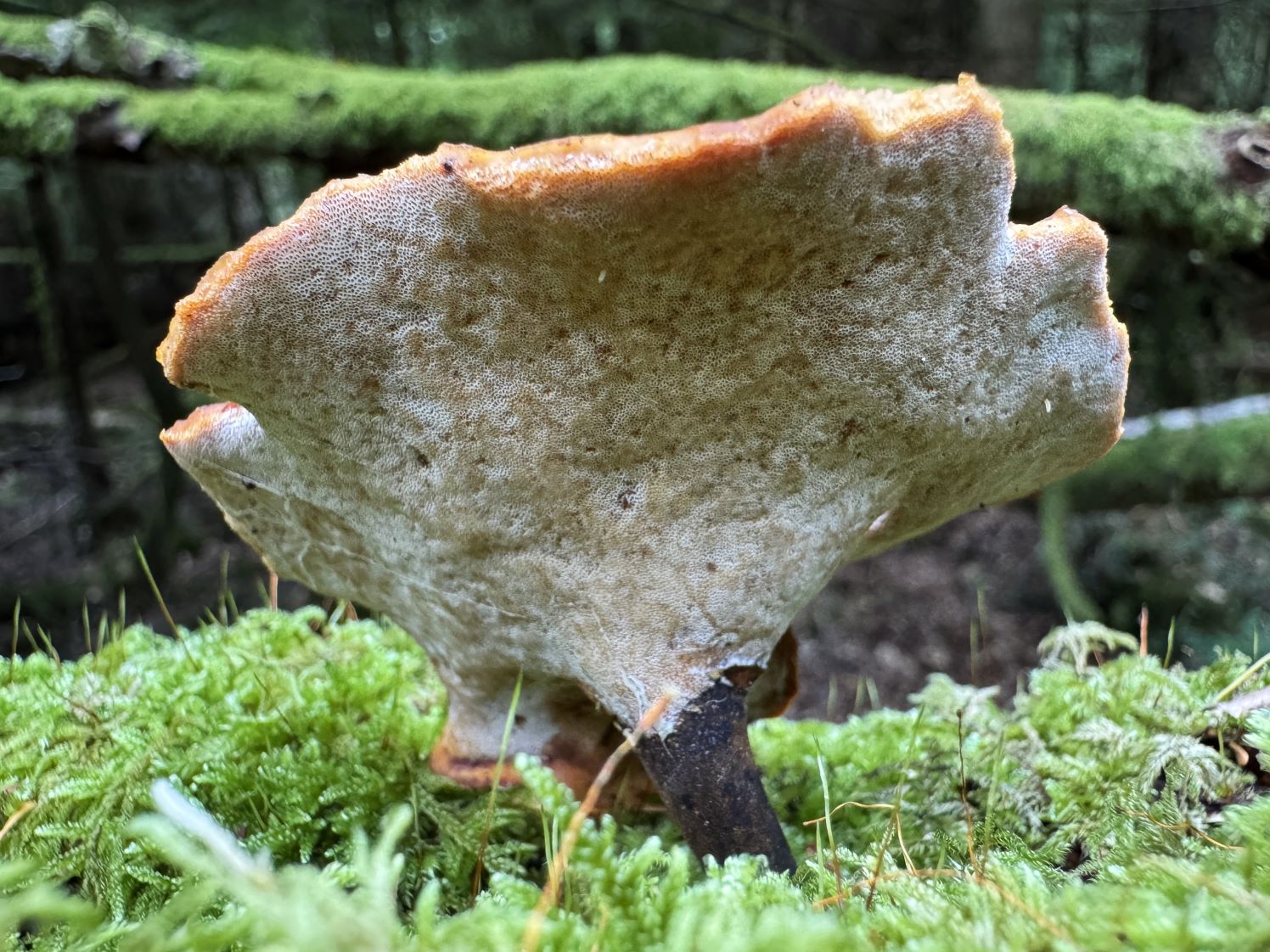
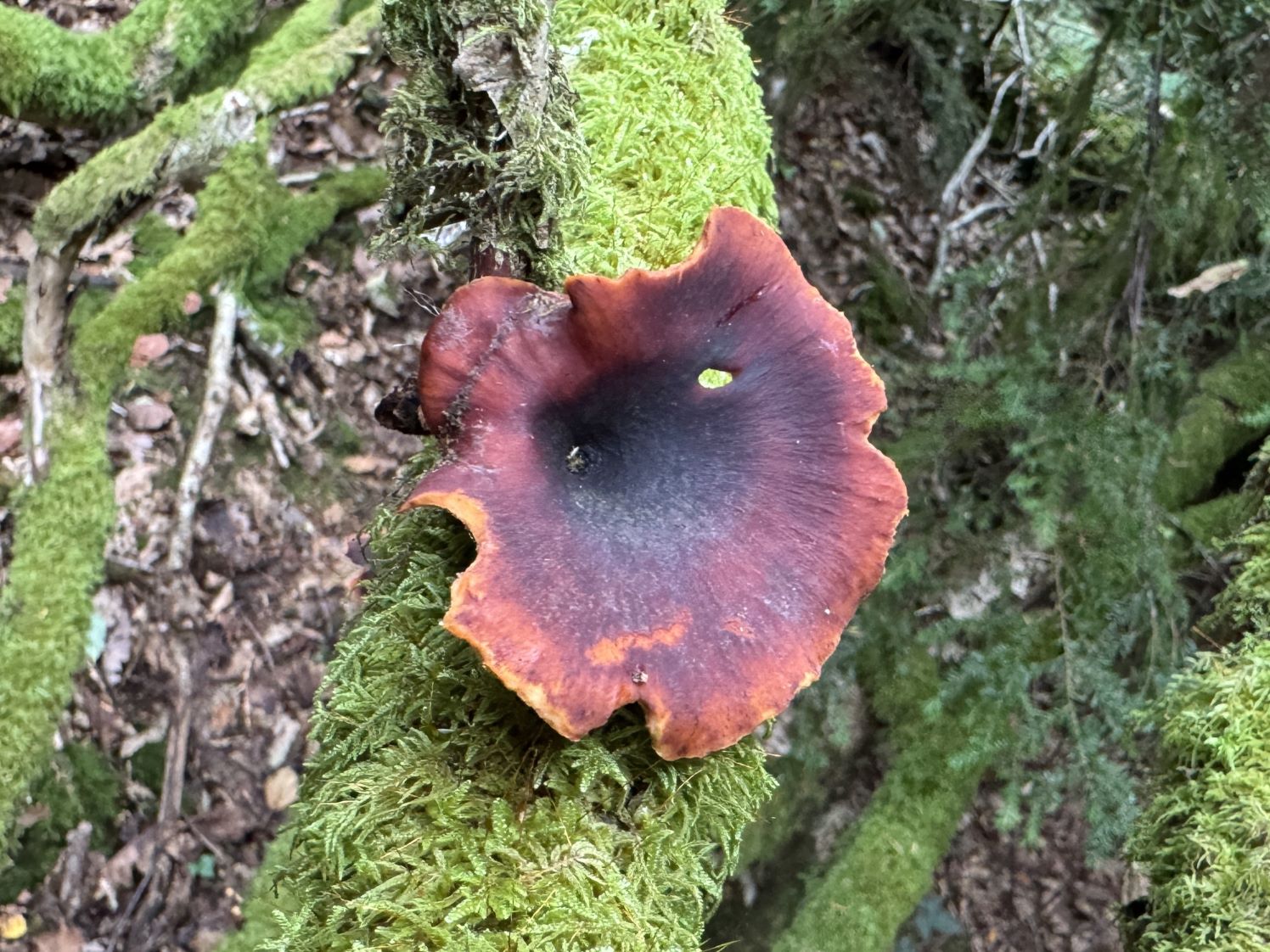
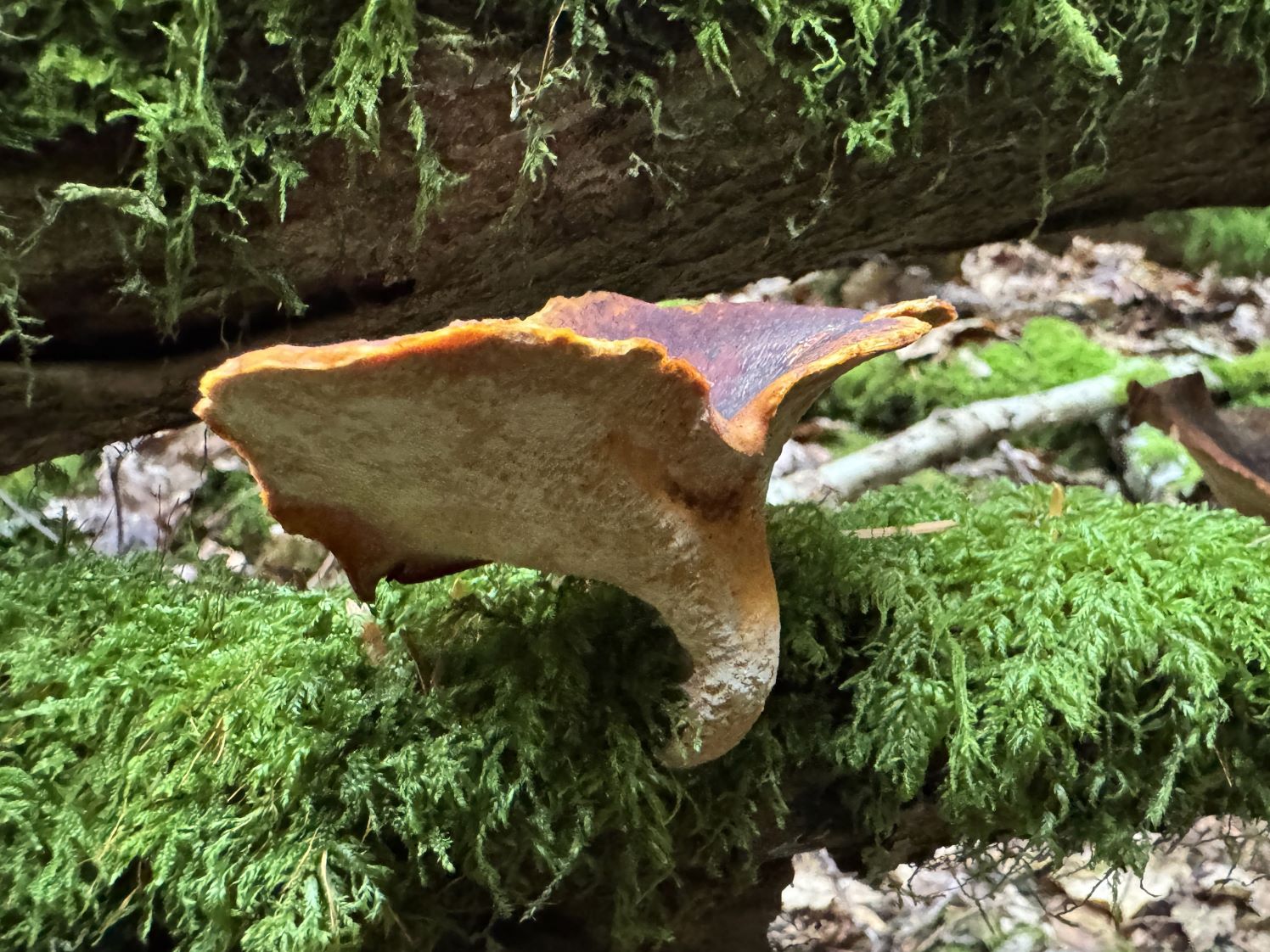
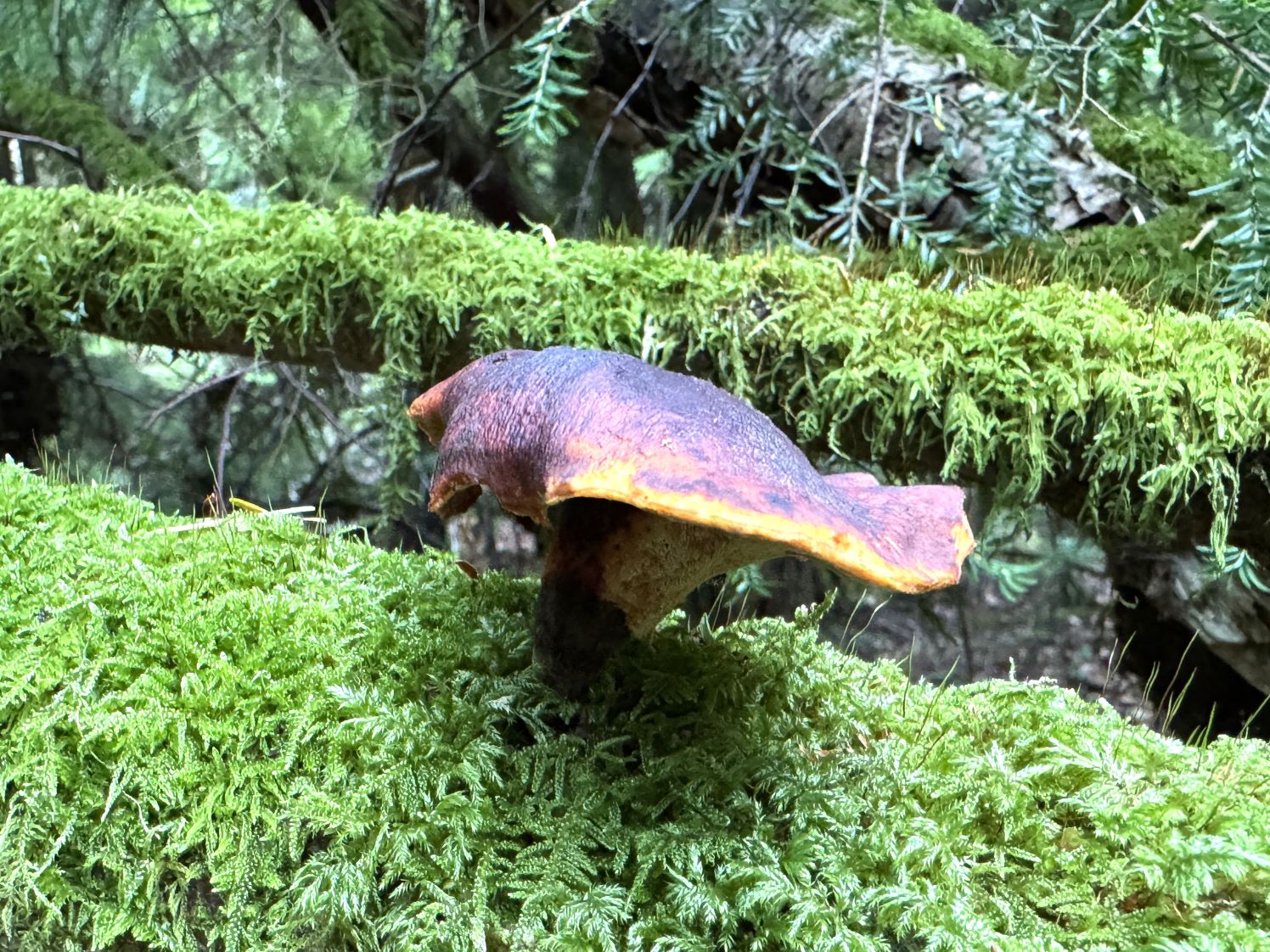
A really variable looking medium-sized, annual Polypore mushroom with a silky-shiny, somewhat reddish/brown coloured skin and often with a funnel shape fruitbody.
Home / Mushroom Guide /
Bay Polypore

Bay Polypore


| Mushroom Type | |
| Common Names |
Bay Polypore (EN), Bay-brown Polypore (US), Pitch-colored Polypore (US), Cyfrwy Caled (CY), Czarnostopka Kasztanowa (PL), Fényes Likacsosgomba (HU) |
| Scientific Name |
Picipes badius |
| Synonyms |
Royoporus badius, Polyporus badius, Polyporus durus |
| Season Start |
May |
| Season End |
Nov |
| Average Mushroom height (CM) | |
| Average Cap width (CM) |
5–12(20) |

Please note that each and every mushroom you come across may vary in appearance to these photos.
Cap
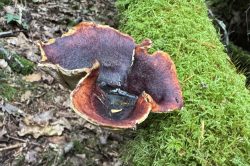
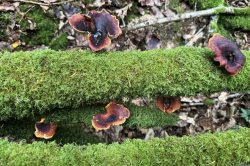
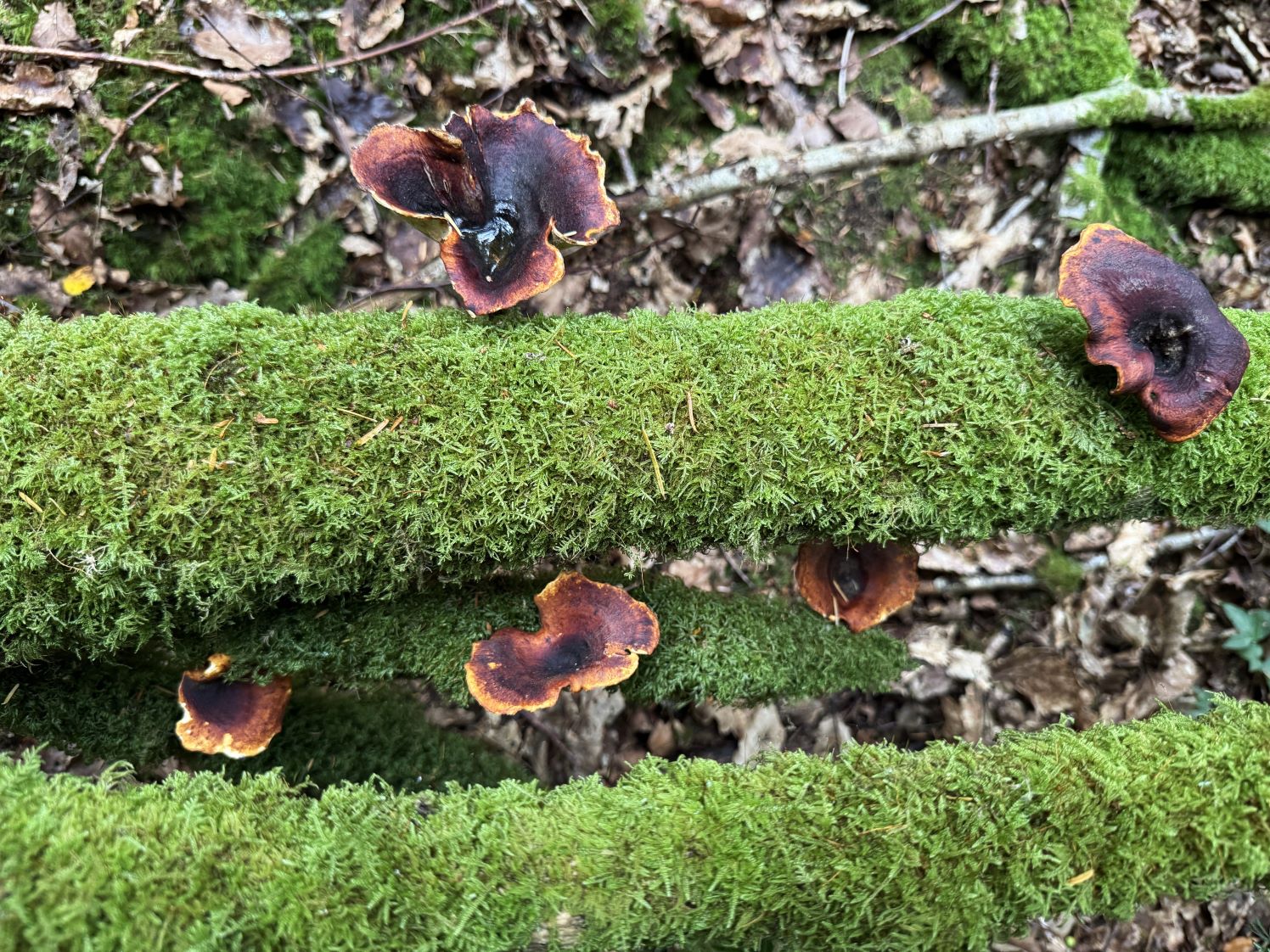
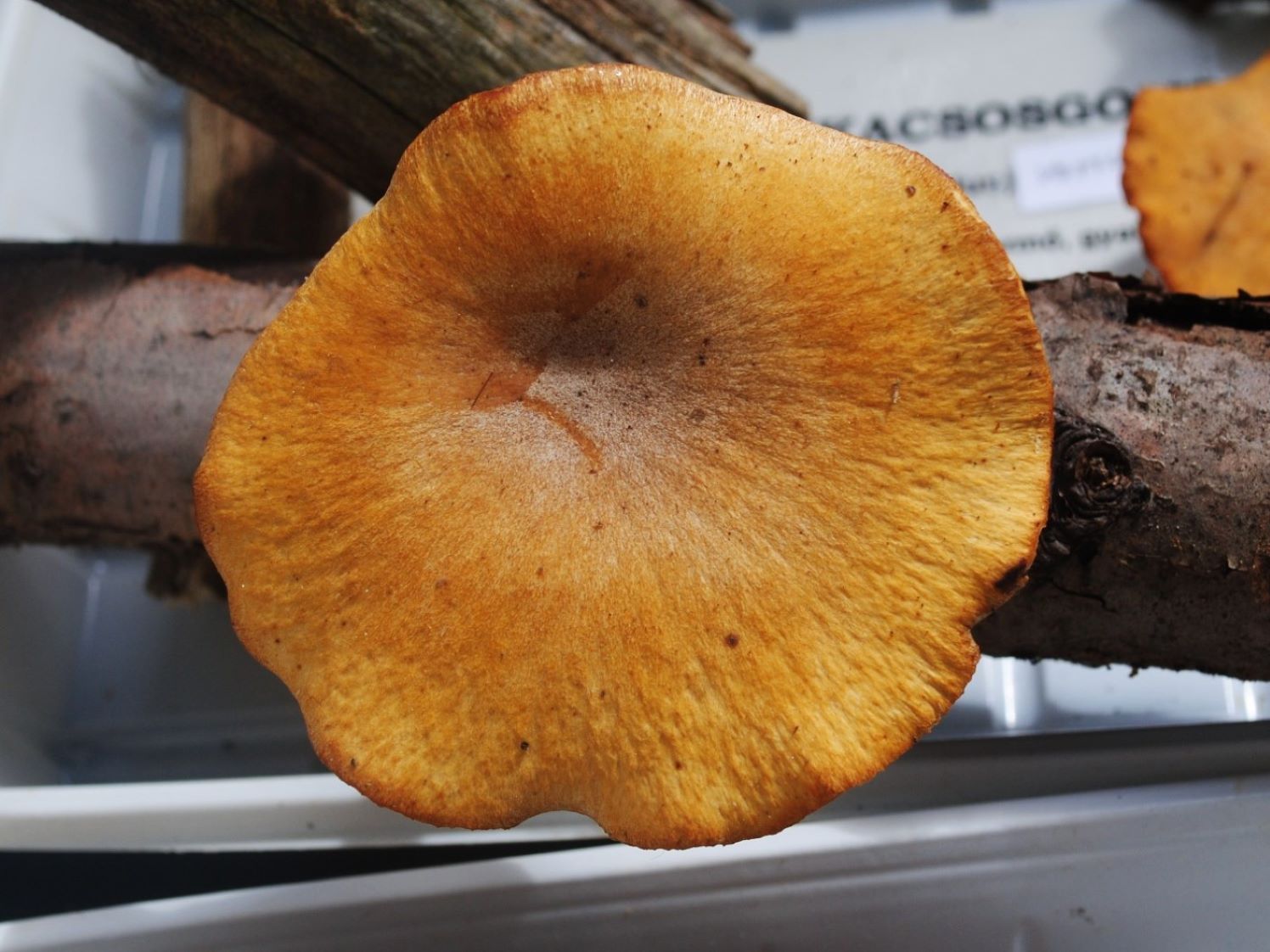
5–12(20) cm across, circular to irregular, convex, centrally depressed to funnel-shaped. Its upper, sterile surface is smooth, initially dull, pale greyish brown with a darker centre at first, turning deep reddish brown, maroon to chestnut brown with age. Margin initially inrolled, then thin and wavy or lobed later.
Pores
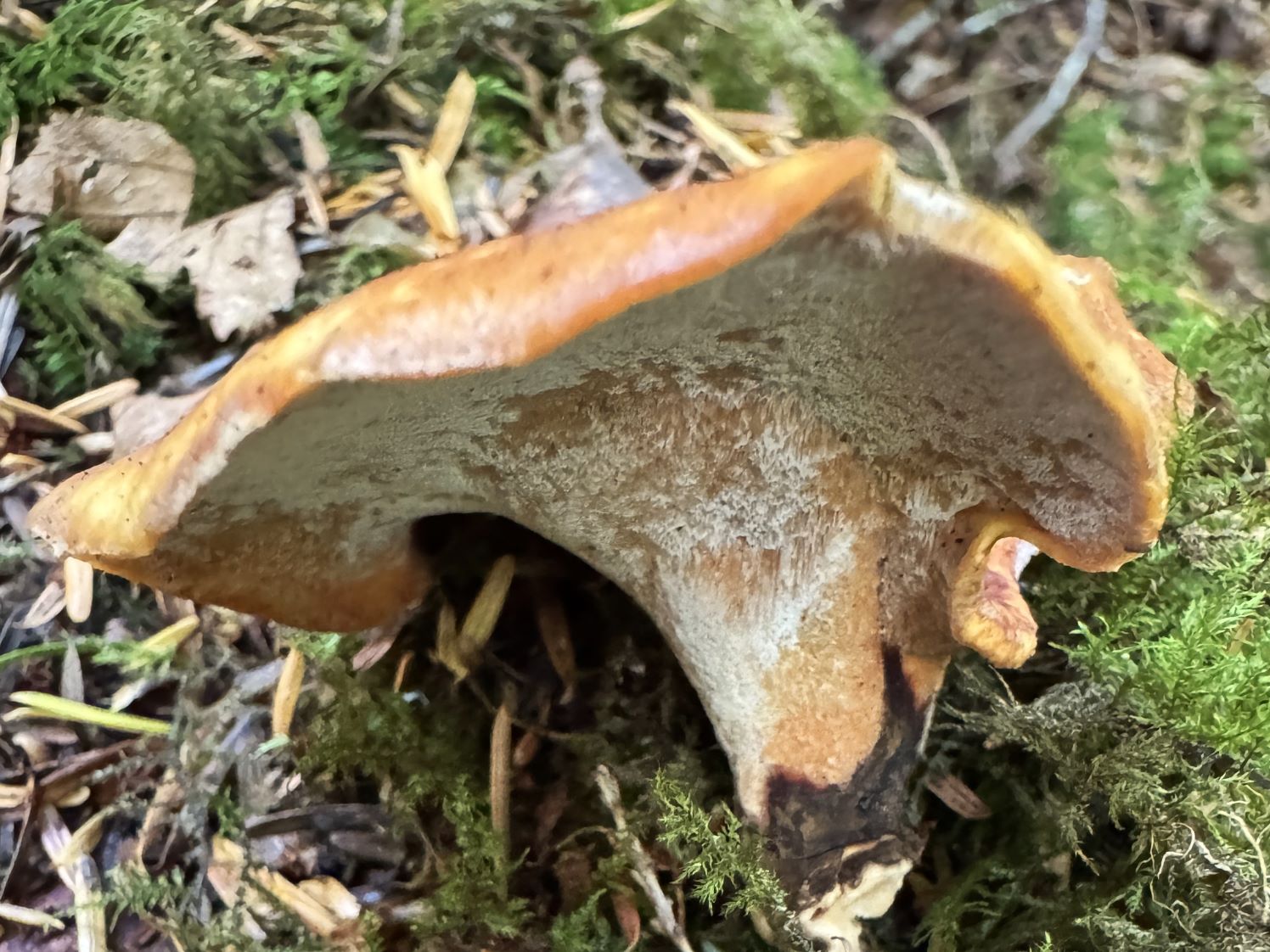
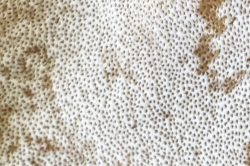
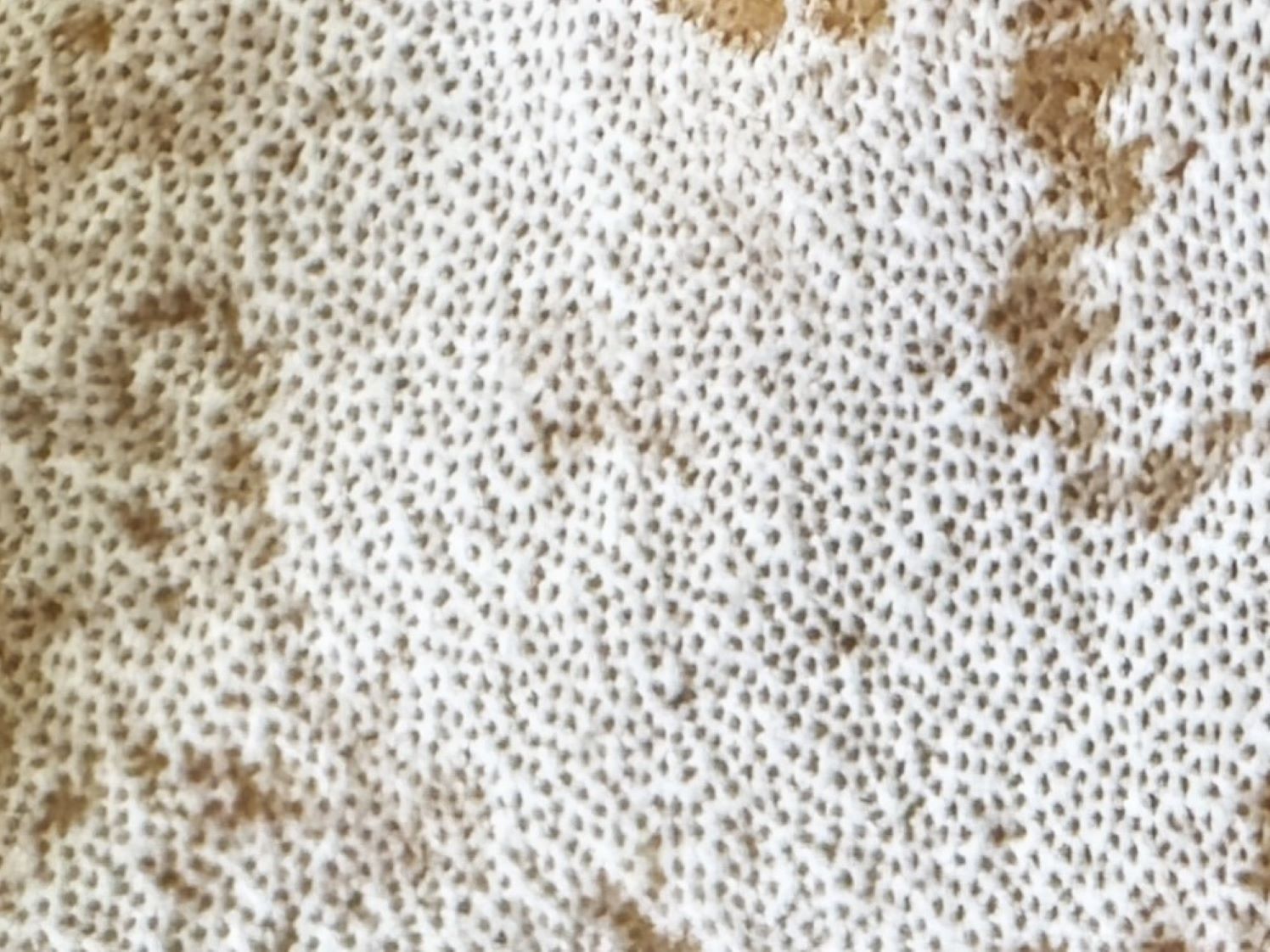
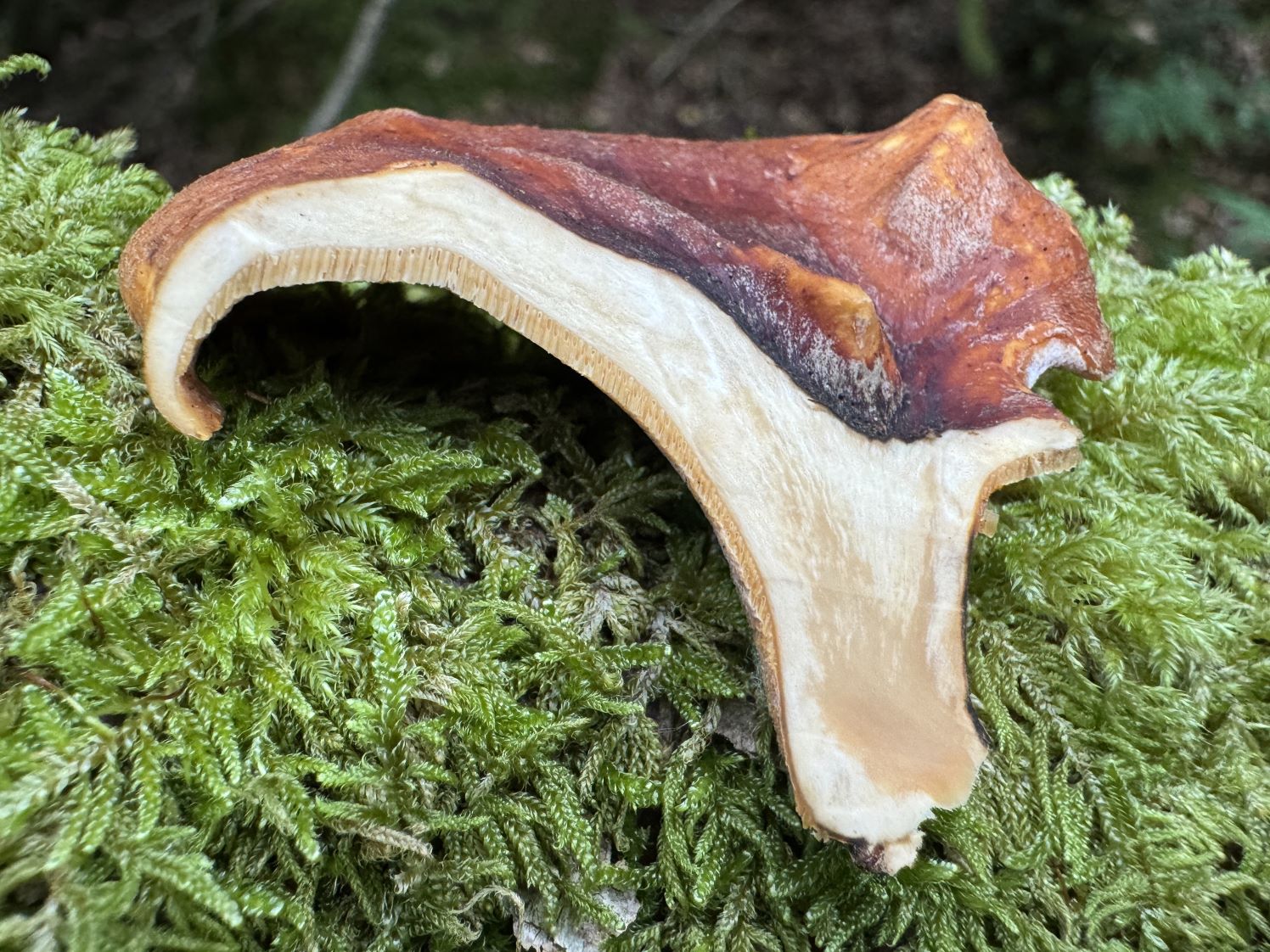
Tubes 0,5–1 mm long, whitish, slightly darker with age, decurrent (running deep down to the stem). Pores 5–7 per mm, round to angular; white at first, turning off-withe, cream or ochre with age.
Stem
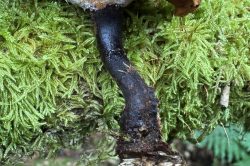
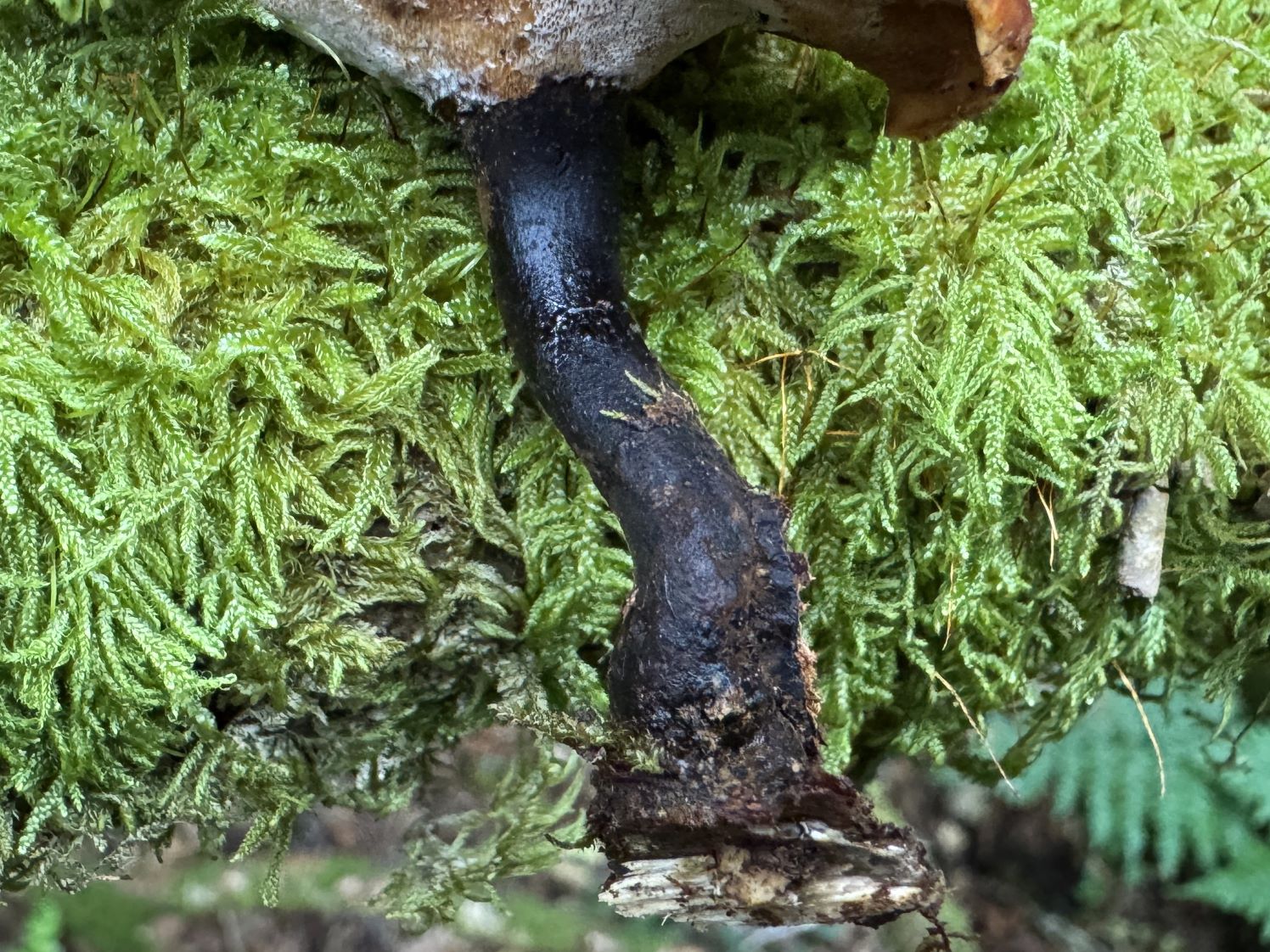
Usually short and thin, 1–3 cm long, 0.3–1.5 cm in diameter, but sometimes it could be much longer, up to 5–6 cm. More or less cylindrical (widened at the apex) or irregular, central or often slightly off-centre. Smooth, reddish brown at its upper part, turning black closer to the stem base. Black when mature.
Flesh
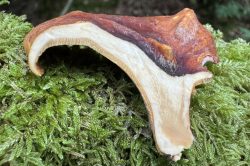
Really thin in the cap, up to 1–1.5 cm in the stem. Corky when fresh, brittle when dry, azonate, off-white to pale buff.
Habitat
Growing solitary, scattered or in smaller groups on many different hardwood genera (such as Elm, Beech, Alder, Birch, Chestnut, Oak, Willow, etc. ), and rarely on conifers (such as Fir). It prefers larger, fallen, dead woods. Saprotrophic, causes white-rot. Its main fruiting season is Late Spring to Late Autumn, but it can be found during the whole year.
Possible Confusion
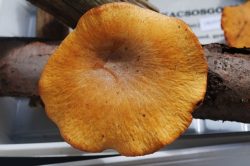
The closest lookalike of Bay Polypore is called Picipes melanopus, and it is rather rare in the UK (as far as we know it is only known from England and Scotland). It looks almost identical, but its cap is usually a smaller (up to 10 cm in diameter), and its pores are slightly larger (3–4(5) pores per mm). However, the main difference between these two closely related species is that P. melanopus mostly grows out of the ground as it is growing from buried roots of various hardwoods. It might also grow out of fallen branches of various hardwood species.
Blackfoot Polypore (Cerioporus leptocephalus, syn: Polyporus leptocephalus), pictured, also has an almost entirely black stem and a rather wavy, centrally depressed cap (which is mostly dark cinnamon brown). Some authors treat Cerioporus varius, syn: Polyporus varius as a separate species, but we treat them as the same species as Blackfoot Polypore, because both of our references, A. Bernicchia and S.P. Gorjón, also A.E. Bessette et al. treats them as synonyms, and both of them refer them as C. leptocephalus. Blackfoot Polypore has even smaller cap (6–8 cm across) and smaller pores (7–9 pores per mm), also, it grows mostly on various hardwoods (with the preference of Beech), rarely on conifers.
Taste / Smell
Inedible. Taste mild, smell not distinctive (to somewhat sweet).
Frequency
Common in southern England. Occasional but widespread elsewhere in the UK.
Spores
Spore print is white. Spores cylindrical, colourless (hyaline), thin-walled, smooth, inamyloid (not staining in iodine reagents, such as Melzer’s reagent and Lugol’s solution).





Leave a Reply