

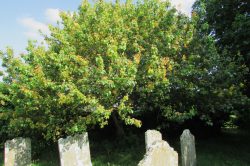
The Service tree is a relatively rare sight in the UK now but was more common in the past. Finding it in woodland is usually a good sign that the woods are very old and established.
Home / Hedgerow Guide /
Wild Service Tree

Wild Service Tree


| Hedgerow Type | |
| Common Names |
Service Tree, Chequers |
| Scientific Name |
Sorbus torminalis |
| Season Start |
Sep |
| Season End |
Nov |

Please note that each and every hedgerow item you come across may vary in appearance to these photos.
Leaves
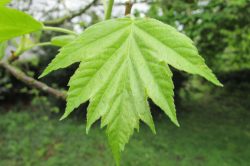
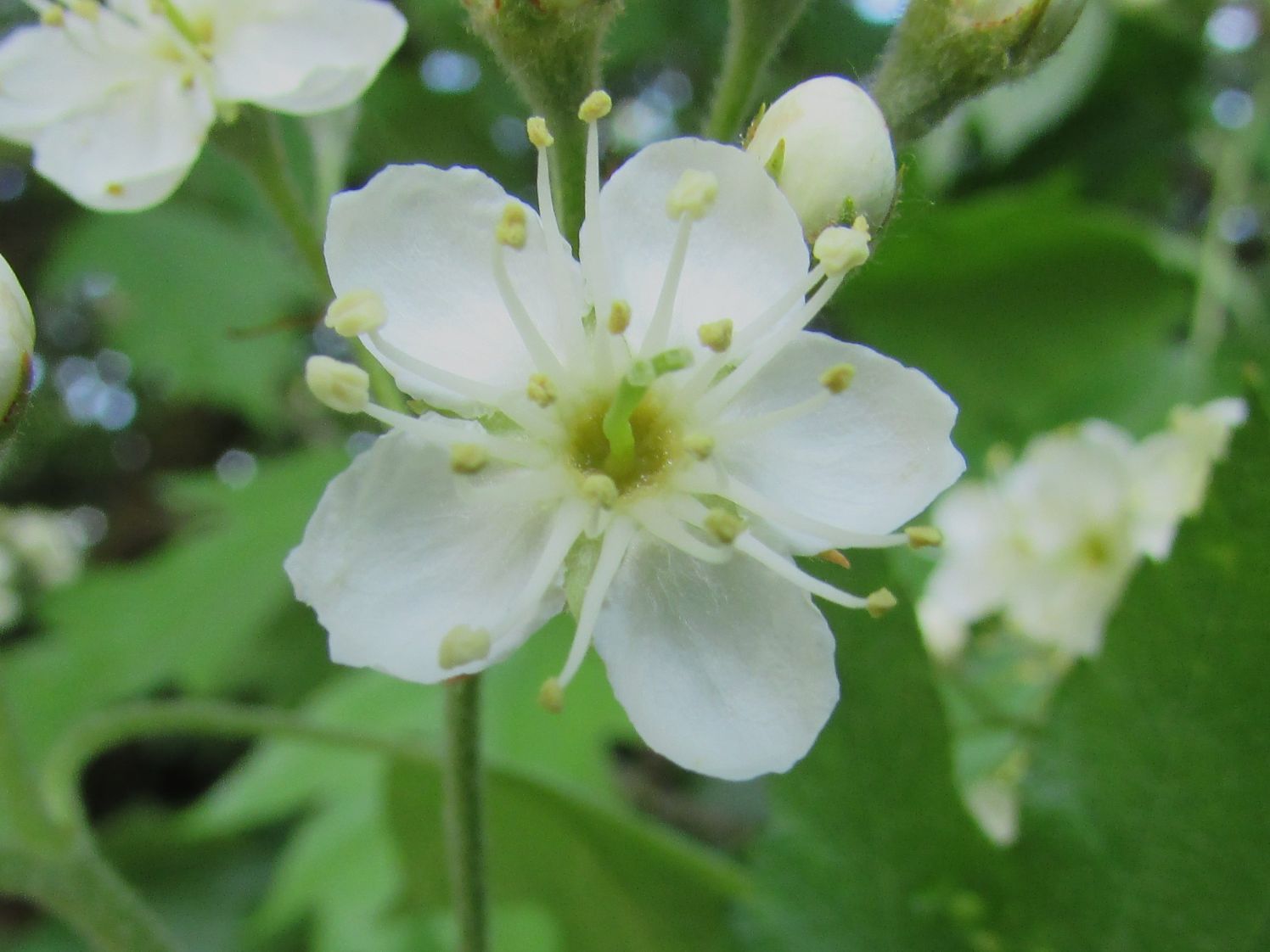
Palmate or a bit maple like but with forward facing, pointed lobes. The entire leaf edge is serrated.
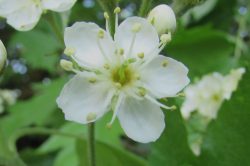
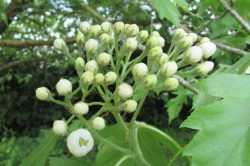
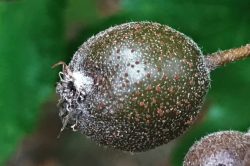
Fruit
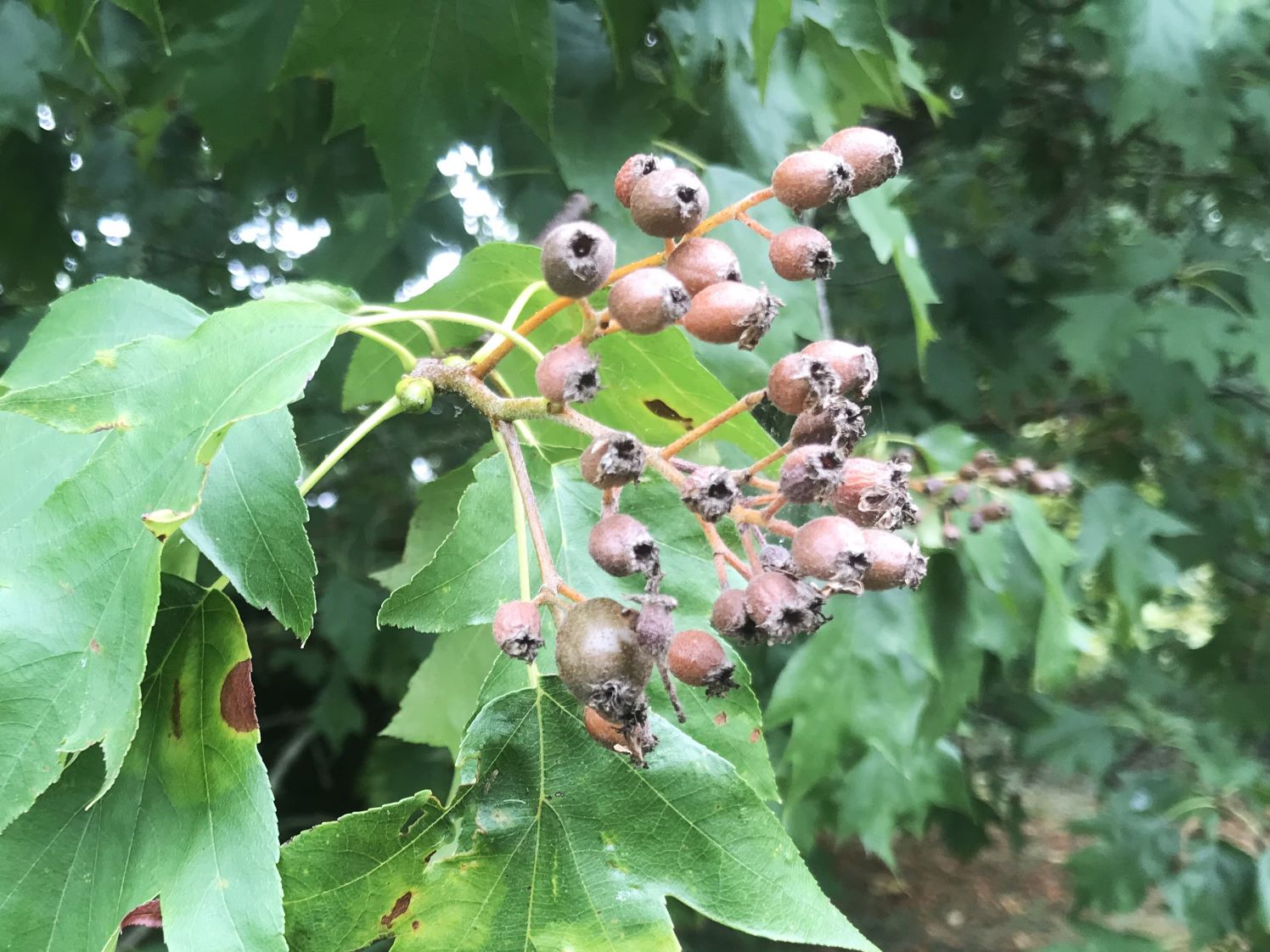
The pomes (the correct scientific name for service berry fruit) are mature by late Autumn and are ovoid, green to brown with small pale spots which are lenticels. The fruit are commonly referred to as Chequers. The pomes are about 10-15mm.
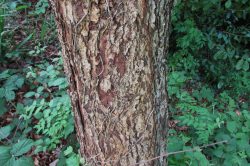


Taste
Similar to dates.
Frequency
Relatively rare.
Collecting
The fruits are collected in late Autumn and used to be used as sweets for children, jams, jellies or for making alcohol. They taste a bit like dates. They can be eaten raw or cooked but are better and sweeter after a frost. As we don’t have early frosts anymore, a night in the freezer will achieve the same effect.
Other Facts
Service berries were used to make alcohol when pubs brewed there own drinks and several pubs have ‘Chequers’ in the name.